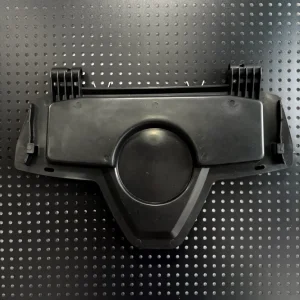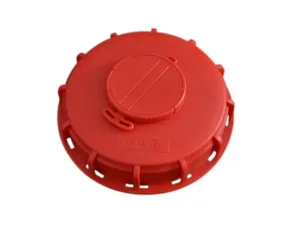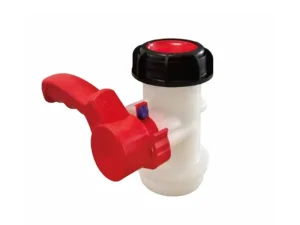
Featured Industrial IBC Valves & Storage Assemblies
Direct-from-factory engineered fluid transfer components and bulk liquid containers tested for harsh industrial operating environments.
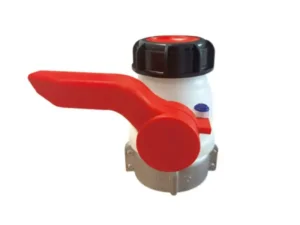
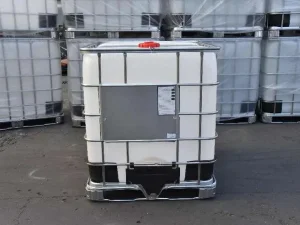
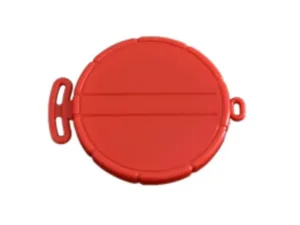
Executive Technical Overview: The Evolution of Fluoropolymer IBC Valve Technology
In global chemical logistics, Intermediate Bulk Containers (IBCs) serve as the backbone for transporting high-value, hazardous, and high-purity fluid media. While standard high-density polyethylene (HDPE) and polypropylene (PP) butterfly or ball valves suffice for general-purpose water-based solutions, they exhibit catastrophic vulnerabilities when exposed to concentrated acids, halogenated solvents, aromatic hydrocarbons, and ultra-pure semiconductor chemical streams.
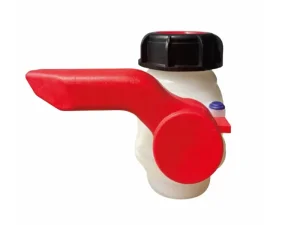
To overcome environmental stress cracking, chemical leaching, and vapor permeation, modern chemical processing plants and container fleet operators are rapidly transitioning to PVDF (Polyvinylidene Fluoride) IBC Valves. As leading wholesale PVDF IBC valve suppliers and manufacturing factories, our goal is to elucidate the material science, mechanical engineering, and economic imperatives that position PVDF as the premier material choice for mission-critical liquid logistics.
Zero-Permeation Chemistry
PVDF's semi-crystalline fluoropolymer structure presents an impenetrable barrier to organic solvents, chlorine gases, and low-molecular-weight hydrocarbons, preventing costly mass loss and atmospheric contamination.
Extreme Thermal Stability
Operates flawlessly across an expansive operational window ranging from -40°C (-40°F) up to +140°C (+284°F), maintaining structural rigidity during exothermic filling processes and steam sterilization cycles.
UN Packaging Compliance
Designed and certified to meet stringent UN 31HA1/Y packaging transport directives, ISO 16104 structural integrity norms, and DIN EN 14432 chemical compatibility protocols.
Material Science Analysis: PVDF vs Alternative IBC Valve Materials
Polyvinylidene Fluoride (PVDF) is a specialized fluoropolymer characterized by alternating $-\text{CH}_2-$ and $-\text{CF}_2-$ monomeric units. This unique chemical structure imparts an optimal synthesis of mechanical toughness, high purity, and chemical inertness. Unlike PTFE, which cannot be easily melt-processed via conventional injection molding, PVDF can be precision-molded into intricate valve bodies, ball cores, and flange stems with tolerances as tight as $\pm 0.005\text{ mm}$.
| Performance Metric | PVDF (Polyvinylidene Fluoride) | Standard Polypropylene (PP) | 316L Stainless Steel | PTFE Lined Composite |
|---|---|---|---|---|
| Max Operating Temp (°C) | 140°C | 90°C | 300°C+ | 160°C |
| Concentrated Hydrochloric Acid (37%) | Completely Inert | Moderate Degradation | Severe Pitting Corrosion | Completely Inert |
| Halogen Resistance (Wet Cl₂, Br₂) | Superior | Poor (Rapid Embrittlement) | Severe Stress Cracking | Superior |
| Leachable Ionic Purity | < 1 ppb (Semiconductor Grade) | 50 - 200 ppb | Metal Ion Contamination | < 5 ppb |
| Manufacturing Process | Precision Injection Molded | Injection Molded | Machined & Welded | Sintered & Machined |
| Cost-to-Lifecycle Ratio | Optimal TCO | Low Initial / High Failure | High Initial / Media Specific | High Initial & Maintenance |
Engineering Insight: Mitigating Environmental Stress Cracking (ESCR)
Standard Polypropylene (PP) valves subjected to surfactant-rich chemicals, organic peroxides, or strong oxidizers undergo progressive polymer chain scission, resulting in micro-fissures around the valve spindle and flange interfaces. Factory-molded PVDF IBC valves possess an exceptionally high ESCR resistance index, guaranteeing zero stress-crack failures throughout 5+ years of continuous heavy-duty liquid transport loops.
Global Commercial Landscape & Industry Demand Drivers
The global demand for wholesale PVDF IBC valves is undergoing exponential growth, driven by key macro-industrial inflections:
- Semiconductor Mega-Fab Expansion: The rapid rollout of 3nm and 2nm semiconductor fabrication plants across Taiwan, North America, and Europe requires ultra-pure electronic-grade hydrofluoric acid (e-HF), hydrogen peroxide, and ammonium hydroxide. PVDF valves ensure ultra-low cation leachables (sub-ppb levels), safeguarding wafer yield.
- Lithium Battery Supply Chains: The international movement of lithium hexafluorophosphate ($\text{LiPF}_6$) electrolytes and battery-grade precursor solvent solutions demands zero-leakage, zero-permeation IBC dispensing systems.
- Agrochem & Fine Chemical Export: Bulk shipment of aggressive organophosphates, concentrated herbicides, and acid chlorides requires UN-approved IBC containers fitted with PVDF ball or butterfly valve options.
Localized Application Scenarios & International Regulatory Standards
Procurement managers and OEM engineers must tailor their valve selections to regional compliance frameworks:
North America (DOT / OSHA compliance)
In the US and Canada, Hazardous Materials Regulations (HMR; 49 CFR) mandate strict drop-test, vibration-test, and hydrostatic-pressure compliance for 31HA1 composite IBCs. PVDF valves supplied by our factory feature heavy-duty acme threads and integrated secondary locking handles to satisfy Federal Railroad Administration and DOT transit safety requirements.
European Union (REACH & ADR)
EU chemical regulations emphasize environmental release prevention (ADR regulations for international carriage of dangerous goods by road). Our PVDF IBC valves conform to DIN EN 14432 testing, feature food-contact suitability (EC 1935/2004), and utilize full-bore fluoropolymer seals (FFKM/PTFE) to guarantee compliance with stringent zero-emission directives.
Asia-Pacific Industrial Hubs
In rapidly industrializing APAC zones, high-turnover IBC reconditioning plants require durable valve designs that withstand aggressive automated cleaning cycles, steam sterilization, and repeated mechanical connection/disconnection without thread degradation.
Technology Roadmap: Next-Generation Innovations in PVDF Fluid Control
As an industry-leading factory and supplier, our engineering research and development roadmap focuses on three crucial technological pillars:
- Smart Telemetry Valve Integration: Embedding passive RFID tags and real-time pressure micro-sensors directly inside the PVDF valve body casing to monitor internal tank pressure, temperature fluctuations, and cycle counts during transpacific container shipments.
- PFA/PVDF Hybrid Sealing Assemblies: Combining structural PVDF valve bodies with soft PFA dynamic seat rings to achieve zero-torque operational resistance while maintaining complete resistance to volatile aromatics.
- Closed-Loop Eco-Polymer Reclamation: Developing circular supply chain mechanisms to reclaim end-of-life PVDF valves, regrind the un-degraded core polymer under strict ISO 9001 standards, and remanufacture non-critical structural components for industrial containers.
Frequently Asked Technical Questions
Expert insights from our engineering team regarding PVDF IBC valve selection, chemical compatibility, and installation specifications.
Complete Container Components & Accessories
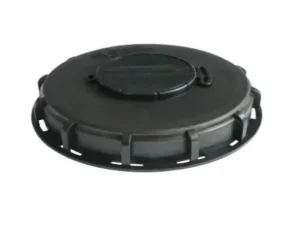
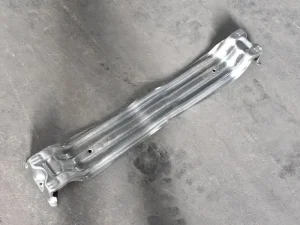
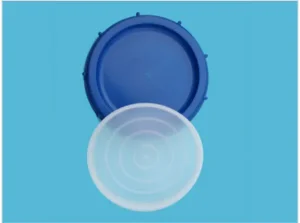
Explore our comprehensive industrial catalog of anti-sloshing baffles, breathable lids, transom bars, and specialized replacement hardware.