
Featured Product Series (Part I)
Factory-direct heavy-duty IBC totes, precision discharge valves, replacement frames, and specialized lid closures.
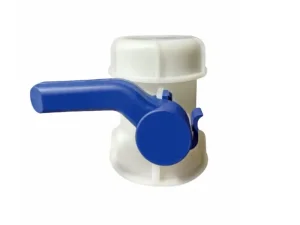
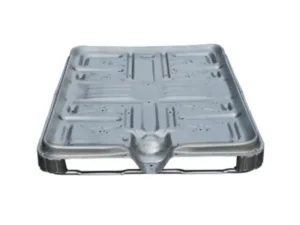
Global Chemical Logistics & IBC Engineering Dynamics
A deep-dive technical overview on standardizing Intermediate Bulk Containers (UN 31HA1) for global hazardous and non-hazardous chemical transport networks.
The Paradigm Shift in Bulk Liquid Containment
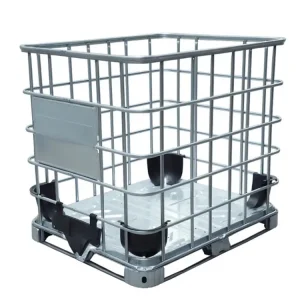
In the contemporary global chemical manufacturing landscape, procurement directors, logistics engineers, and plant managers face an increasingly complex challenge: balancing absolute containment safety with operational total cost of ownership (TCO). Traditional 55-gallon steel drums and rigid bulk tanks are rapidly giving way to 1000L Intermediate Bulk Containers (IBCs)—specifically composite UN 31HA1 containers featuring High-Density Polyethylene (HDPE) inner bottles encapsulated within heavy-gauge tubular galvanized steel cages.
As qualified wholesale chemical IBC tank suppliers and original equipment manufacturers (OEMs) in China, our engineering methodology centers on structural integrity, chemical permeation resistance, and hydrostatic pressure resilience. A standardized 1000L IBC tote replaces approximately five standard 200L drums, reducing discharge handling frequency by 80%, optimizing sea freight container spatial efficiency by up to 35%, and dramatically mitigating spill liabilities during multimodal transport across ocean, rail, and highway routes.
Core Regulatory & Testing Baseline
Chemical-grade IBC tanks manufactured in tier-1 Chinese facilities must adhere to international hazardous packaging regulations, including UN Chapter 6.5 recommendations, IMDG Code, and ADR/RID transport directives.
- UN Mark 31HA1/Y Rating: Certified for dangerous liquids with specific gravity up to 1.9 g/cm³.
- Vibration & Drop Resistance: Tested at drop heights up to 1.9 meters at low temperatures (-18°C).
- Bottom-Stacking Load Capacity: Engineered to withstand a static top load exceeded 4,600 kg.
China's Manufacturing Supremacy in Chemical IBC Tanks
How Shandong's industrial cluster infrastructure and vertical integration deliver unmatched precision, material purity, and cost resilience.
Vertical Petrochemical Integration
China's Shandong industrial corridor offers direct access to virgin polymer refiners (Sinopec, PetroChina) and specialized resin compounders. This proximity ensures consistent supplies of high-molecular-weight, high-density polyethylene (HMW-HDPE) with optimized environmental stress crack resistance (ESCR) index values exceed 1,000 hours under standard ASTM D1693 testing protocols.
Automated Large-Scale Blow Molding
Equipped with multi-layer continuous co-extrusion blow molding machinery ranging up to 100-liter accumulators, Chinese factories deliver precise wall-thickness control via 128-point parison programming. This eliminates micro-thin zones along container corners, ensuring uniform pressure distribution during liquid surge and static stack operations.
Robotic Steel Cage Fabrication
Outer cages are crafted utilizing automated CNC mesh bending and four-point resistance welding systems. Zinc-coated galvanized steel tubing provides superior salt-spray corrosion resistance (>500 hours without red rust), shielding against hostile marine transport environments and acidic factory atmospheres.
Industry Trends & Next-Gen Technological Breakthroughs
Key innovation drivers reshaping bulk liquid packaging, including smart telemetry, fluorination, and circular economy compliance.
1. In-Line Fluorination & Barrier Layer Co-Extrusion
To combat non-polar solvent permeation, swelling, and environmental degradation in standard HDPE, modern Chinese factories implement fluorine gas surface treatment (Level 3 to Level 5 fluorination) or 6-layer co-extrusion incorporating EVOH (Ethylene Vinyl Alcohol) barrier layers. This prevents organic solvent migration (such as xylene, toluene, and halogenated hydrocarbons) through the polymer matrix.
2. Anti-Static & Explosion-Proof (ESD) Architectures
In Zone 1 and Zone 2 hazardous chemical environments, electrostatic discharge presents a severe ignition risk. Innovations include conductive outer polymer layers, grounding cable attachments, and carbon-black enriched outer cages that maintain surface resistance below 106 Ohms, fulfilling IEC 61340-4-1 electrostatic safety standards.
3. Smart Telemetry & IoT Sensor Integration
The modern bulk chemical supply chain demands real-time visibility. Next-generation chemical IBC tanks integrate ATEX-certified IoT tracking modules embedded in lid housings or valve covers, monitoring GPS coordinates, internal liquid temperature, hydrostatic head pressure, fill volume, and impact tilt in real time.
4. Sustainable Circularity & Closed-Loop Reconditioning
With global ESG policies enforcing strict carbon footprint limits, Chinese manufacturers design IBC systems specifically for rapid bottle replacement ("rebottling") and automated caustic washing. Modular valve dismounting and standardized pallet geometry enable easy repair, extending total cage service life up to 10+ years while reducing raw polymer consumption.
Localized Application Scenarios & Sector Solutions
Tailored packaging configurations engineered for specific liquid properties, corrosion profiles, and hygiene mandates.
Fine Chemicals & Solvents
High-purity solvents, acids, and alkalis require zero-contamination transfer mechanisms. Our systems utilize virgin HMW-HDPE bottles paired with Viton/PTFE gasketed DN50 or DN80 butterfly valves to guarantee leak-proof chemical isolation.
Recommended Specs: Fluorinated Bottle | Viton Valve Gasket | Vented LidAgrochemical Formulations
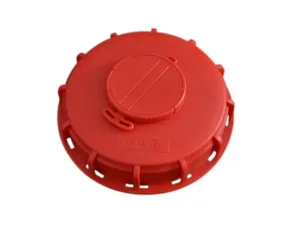
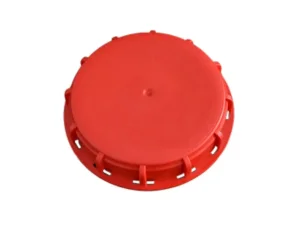
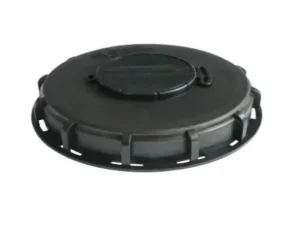
Liquid fertilizers, pesticides, and herbicides generate internal gas expansion under direct sunlight. UV-stabilized black/red breathable lids featuring hydrophobic PTFE venting membranes balance differential pressures effortlessly.
Recommended Specs: UV-Proof Black/Red Lid | PTFE Venting Membrane | Galvanized FrameFood & Pharmaceutical Intermediates
Sorbitol, food-grade additives, glycerol, and active pharmaceutical ingredients (APIs) demand strict compliance with FDA 21 CFR 177.1520 regulations. Cleanroom-molded bottles ensure zero heavy metal leaching.
Recommended Specs: FDA Virgin Resin | Hygienic Ball Valve | Aluminum Pallet BaseIndustrial Waste & Battery Recycling
Handling toxic industrial effluents, lithium battery electrolyte runoff, and spent plating acids requires high-density bottle wall profiles (>16kg net weight) to resist micro-punctures and dynamic stress cracking during road transit.
Recommended Specs: Heavy-Duty 17kg HDPE Bottle | DN80 High-Flow Valve | Steel PalletGlobal Enterprise Procurement Framework & Technical Benchmarks
A objective reference evaluation matrix for chemical sourcing officers, supply chain consultants, and plant managers.
Evaluating wholesale chemical IBC suppliers requires analyzing metrics far beyond initial FOB unit price. Procurement officers must calculate the Total Cost of Ownership (TCO), taking into account risk reduction against chemical leakage, container tare weight optimizing freight costs, valve cycle durability, and stack stability in high-bay logistics warehouses.
| Engineering Parameter | Standard Commercial Grade | Industrial Chemical Heavy-Duty | UN Hazardous Goods Class Y/Z |
|---|---|---|---|
| Nominal / Brimful Capacity | 1000 Liters / 1050 Liters | 1000 Liters / 1060 Liters | 1000 Liters / 1060 Liters |
| Bottle Net Weight (HDPE) | 13.5 kg - 14.5 kg | 15.5 kg - 16.5 kg | 17.0 kg - 18.5 kg |
| Inner Container Resin | Standard HDPE | High Molecular Weight HDPE | HMW-HDPE + UV / Fluorine Barrier |
| Outer Cage Specification | Galvanized Steel Pipe (1.0mm) | Galvanized Steel Pipe (1.2mm) | Heavy-Duty Steel Tube Grid (1.5mm) |
| Pallet Base Options | Wood / Steel Sheet | Steel Frame / Plastic Hybrid | Full Steel / Lightweight Aluminum |
| Discharge Valve Fitting | DN50 Integrated Butterfly Valve | DN50 / DN80 Welded Butterfly | DN50 Ball / DN80 High-Flow PTFE Seal |
| Hydraulic Test Pressure | 100 kPa (1.0 bar) | 150 kPa (1.5 bar) | 200 kPa (2.0 bar) for 10 minutes |
| Stacking Load Capacity | 2-High Stacking (Static) | 3-High Stacking (Static) | 4-High Stacking (Static: >4600 kg) |
Featured Product Series (Part II)
Specialized pallet bases, stainless steel components, vertical space-saving tanks, and precision valve guides.

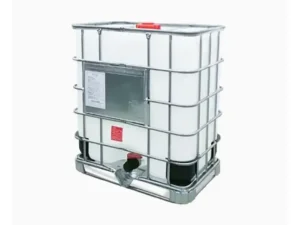
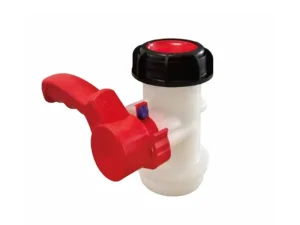
Frequently Asked Questions & Technical Sourcing Guide
Direct answers to engineering, quality compliance, and logistical inquiries raised by international chemical buyers.
- EPDM: Excellent for inorganic acids, alkalis, polar solvents, and aqueous solutions. Poor resistance to oils and aliphatic hydrocarbons.
- NBR (Nitrile): Ideal for petroleum products, mineral oils, fuels, and grease applications.
- Viton (FKM): Superior resistance to aggressive hydrocarbons, concentrated acids, and high temperatures up to 180°C.
- PTFE (Teflon): The universal chemical barrier with near-total inertness across virtually all hazardous media (pH 0-14).