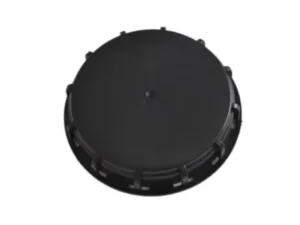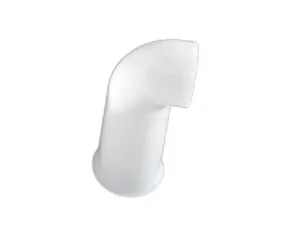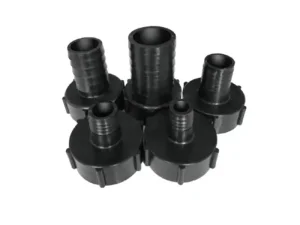
Precision Engineered IBC Fittings & Tank Hardware
Direct factory supply of high-integrity liquid containment hardware, precision-molded valve assemblies, and durable industrial accessories.

The Evolution of China's Plastic Tooling Infrastructure
An technical analysis of why China remains the central engine for industrial plastic mold tooling, precision injection molding, and complex packaging component manufacturing.
Localized Supply Clustering
Key industrial hubs (Shandong, Zhejiang, Guangdong) offer hyper-dense ecosystems connecting raw mold steel mills, hot runner suppliers, high-speed CNC shops, and specialized heat treatment facilities within a 50km radius.
Advanced Multi-Axis Machining
Integration of 5-axis Makino, Swiss-type CNC lathes, and AgieCharmilles EDM machines enables complex thread cores, deep cavity drafting, and zero-clearance parting lines for fluid containment hardware.
Strict Standard Compliance
Leading Chinese mold makers build to international SPI (Society of Plastics Industry) Class 101–105 tooling standards, compliant with DIN 16742 tolerances and ISO 20457 precision metrics.
Strategic Industrial Integration: Tooling & Bulk Packaging Synergy
Over the past two decades, China’s industrial manufacturing model has undergone a shift from basic contract molding to high-precision mold architecture and polymer application engineering. In the heavy-duty liquid handling sector—spanning IBC totes, chemical drums, valves, and specialized closures—tooling geometry directly dictates field reliability under pressure.
Tooling engineers in Chinese factories utilize advanced computer-aided design (CAD/CAM/CAE) paired with rheological simulation software (Moldflow) to predict molecular orientation, volumetric thermal shrinkage, weld line structural integrity, and cooling channel thermodynamic distribution before a single bar of steel is cut.
Engineering Insight: Polymer Flow & Wall Consistency
In blow-molded containers and injection-molded structural components (such as valve bodies and heavy-duty lids), wall thickness variations of just 0.15mm can cause uneven stress concentration. This leads to micro-cracking under hydrostatic loads during transit. Chinese precision mold design mitigates this through dynamic mold cavity balancing and conformal cooling design.
Tool Steel & Polymer Compatibility Matrix
Selecting the optimal mold steel and thermoplastic polymer pairing to maximize mold longevity, cycle speed, and chemical resistance.
| SPI Tool Class | Mold Steel Grade | Hardness (HRC) | Target Resin Application | Expected Mold Life (Cycles) |
|---|---|---|---|---|
| Class 101 (Extremely High Vol.) | S136, H13, NAK80, 1.2344 | 52 - 56 HRC (Fully Hardened) | HDPE, PP, PA66, POM (IBC Valves, Caps) | 1,000,000+ |
| Class 102 (High Production) | 718H, P20, 1.2738 | 32 - 38 HRC (Pre-Hardened) | ABS, PC, Structural PP (Pallet Bases) | 500,000 to 1,000,000 |
| Class 103 (Medium Production) | P20, 1.1730, S50C | 28 - 32 HRC | PE, PVC, General Industrial Housings | 100,000 to 500,000 |
| Class 104 (Low Production) | P20 / Mild Steel | 20 - 28 HRC | Prototyping, Short-Run Components | Up to 100,000 |
Rheological Considerations in Plastic Injection Tooling
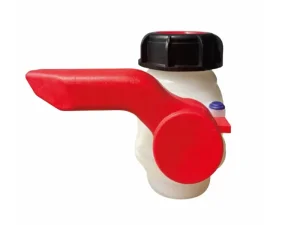
Engineering robust tooling for industrial packaging components—such as IBC DN50 welded butterfly valves, breathable venting lids, and chemical drum closures—requires an intimate understanding of polymer rheology under high injection speeds. High-density polyethylene (HDPE) and polypropylene (PP) display non-Newtonian shear-thinning behavior. Molds engineered in China's top tooling facilities incorporate engineered runner systems (valve-gated hot runners from Yudo, Mold-Masters, or Synventive) to minimize shear heat generation and polymer degradation during the injection pulse.
Why Global Buyers Source Plastic Tooling from China
From capital efficiency to rapid turnaround and comprehensive OEM customized solutions.
30–50% Total Cost of Ownership Reduction
Chinese mold suppliers provide world-class tooling at significantly lower capital expenditure compared to European or North American mold shops. This reduction allows global enterprises to expand product lines, run higher cavity counts, and shorten payback periods on tooling assets.
Aggressive Development Timelines (Rapid T1 Trials)
With 24/7 CNC machining shifts and in-house heat treatment services, Chinese mold factories cut prototype development cycles down to 30–45 days. Rapid tool refinement ensures quicker time-to-market for critical liquid logistics components.
Turnkey OEM/ODM Contract Assembly
Beyond toolmaking, major Chinese manufacturing plants offer fully integrated injection molding, sonic welding, gasket insertion, surface printing, and automated testing under a single Quality Management System (QMS).
Traceability & Global Quality Governance
Equipped with Zeiss Coordinate Measuring Machines (CMM), optical video measurement instruments, and melt flow indexers, top manufacturers execute rigorous First Article Inspection Reports (FAIR) and PPAP Level 3 documentation.
Macro Solutions Across Global Industrial Sectors
Examining how high-precision plastic components and specialized container tooling serve critical global supply chain demands.
Chemical & Hazardous Bulk Transport
Extreme duty requirements necessitate specialized tooling for UN-rated IBC tote containers. Components must withstand drop tests, stacking loads, hydraulic internal pressures, and chemical permeation resistance. Features like integrated breathing membranes in IBC lids and high-density EPDM/FKM gasket seatings originate from specialized mold tooling designs.
Food Grade & Hygienic Liquid Storage
In food-grade liquid logistics (syrups, edible oils, dairy ingredients), injection molds must feature mirror-polished core surfaces (SPI A1 finish using stainless S136 steel) to prevent bacterial entrapment. Precision thread geometry ensures leak-free coupling with sanitary filling lines.
Agrochemical & Special Medium Containment
Agrochemical packaging calls for anti-sloshing internal baffles, specialized drum lids with inner cores, and high-flow discharge valves. Molds designed for these products incorporate complex collapsible cores and hydraulic side slides to produce intricate undercut threads and interlocking features.
Procurement Lifecycle: From Tooling Design to Mass Production
A rigorous step-by-step verification protocol to ensure Chinese suppliers deliver zero-defect mold tooling and injection-molded components.
DFM & Flow Simulation
Initial Design for Manufacturability review analyzing wall thickness consistency, draft angles, gate locations, sink mark vulnerabilities, and mold cooling efficiency.
Steel Certification & CNC
Raw steel spectrum analysis verification, vacuum heat treatment hard testing (HRC), high-speed CNC milling, and EDM electrode spark erosion machining.
T1 Sample & CMM Audit
First Tool Trial (T1) executed under production molding parameters. Samples undergo full dimensional verification via CMM, pressure leak testing, and mechanical stress testing.
Mass Production & Shipping
Tool approval leads to full automated production, automated robot arm extraction, quality gate sampling, and protective export vacuum packing.
Emerging Technologies Shaping China's Mold Making Sector
Conformal Cooling Channels via 3D Metal Printing
Traditional straight-drilled cooling channels leave hot spots in complex mold cores. Modern Chinese mold makers integrate Selective Laser Melting (SLM) metal 3D printing to create conformal cooling passages that follow the exact contour of the cavity. This technology reduces injection cycle times by up to 30% while eliminating component warpage.
PCR & Eco-Polymer Processing Capabilities
Global sustainability mandates dictate the incorporation of Post-Consumer Recycled (PCR) resins in industrial container manufacturing. Advanced mold tooling features adaptive pressure sensing and widened gate geometries to accommodate the variable viscosity indices and melt flow rates of recycled resins without sacrificing dimensional tolerances.
Frequently Asked Questions on Tooling & Sourcing
Direct technical answers to common queries raised by procurement officers, industrial packaging engineers, and supply chain managers.
What sets Chinese Class 101 mold tooling apart from lower-tier tooling?
How do Chinese mold factories guarantee dimensional stability for threaded caps and valves?
What is the standard lead time from initial mold drawing approval to T1 samples?
Can Chinese plastic factories handle custom OEM logo engraving and custom color matching?
How are export molds protected during international maritime transport?
What quality inspection reports are provided before mold release or product dispatch?
How do breathable IBC lids prevent container deformation under thermal flux?
What is the difference between blow molding and injection molding tooling for IBC tanks?
Specialized Liquid Handling Components & Valve Assemblies
Explore our complete OEM range of industrial flow control valves, anti-sloshing baffles, and heavy-duty container seals.