
Featured Food-Grade & High-Flow IBC Valves & Accessories
Precision-engineered discharge valves, high-density polyethylene containers, aluminum bases, and lid assemblies manufactured to strict aseptic standards.
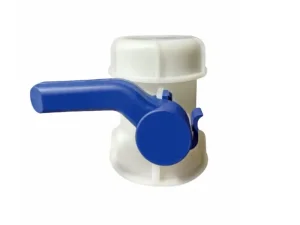
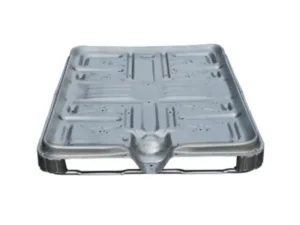
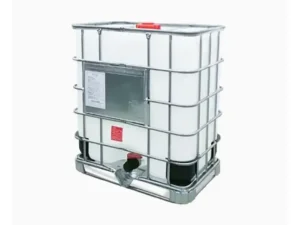
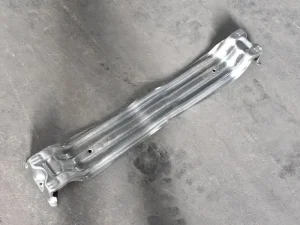
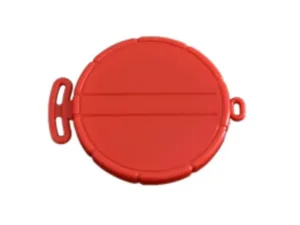
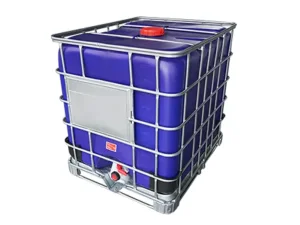
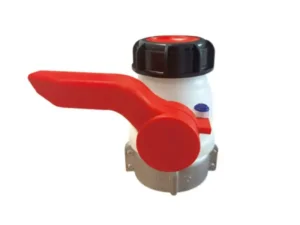
1. Macro Industry Paradigm Shift: Sanitary Flow Control in Global Bulk Packaging
The global food, beverage, and pharmaceutical ingredient supply chains are undergoing a fundamental transformation driven by stringent hygiene regulations, sustainability mandates, and the modernization of global logistics. Intermediate Bulk Containers (IBCs)—specifically 1000-liter and 500-liter composite totes—have emerged as the global standard for the storage, handling, and transoceanic shipment of high-value liquid food matrices, including edible oils, liquid sugars, fruit juice concentrates, dairy preparations, and wine base.
At the center of this bulk liquid containment system is the discharge mechanism: the Food Grade IBC Valve. Historically, industrial-grade valves utilized standard plastic polymers without standardized migration testing, leading to severe risks of chemical leaching, plasticizer contamination, and organoleptic degradation. Today's global food processing enterprises require certified China Food Grade IBC Valve suppliers capable of manufacturing sanitary butterfly, ball, and quick-connect valve systems that operate flawlessly under extreme mechanical stress while satisfying regulatory criteria set by the US FDA, European Union (EC 1935/2004), and China's National Food Safety Standards (GB 4806 series).
Zero Leachable Materials
Elimination of low-molecular-weight phthalates and non-approved plasticizers through virgin, food-grade HDPE resins and high-purity fluoropolymers.
Microbial Ingress Prevention
Crevice-free valve designs prevent residual organic entrapment, reducing bacterial bio-film formation during multi-cycle filling and discharge operations.
Extreme Thermal Stability
Engineered elastomeric seals (EPDM, FKM, food-grade PTFE) maintain seal elasticity across hot-fill processing (+85°C) and cold-chain logistics (-20°C).
2. Technical & Sanitary Engineering Architecture of Food-Grade Valves
From an engineering perspective, a food-grade IBC valve must perform two conflicting tasks: it must serve as an absolute hermetic seal during static storage and transoceanic shipping, while providing an unrestricted, low-shear flow path during automated discharge operations. Achieving this balance requires precision injection molding, advanced metallurgy, and sophisticated polymer chemistry.
A. Advanced Metallurgy & Polymer Selection
Leading China IBC valve factories employ two primary structural routes: virgin medical/food-grade High-Density Polyethylene (HDPE) injection-molded body structures, and forged AISI 304 / AISI 316L Stainless Steel housings. For acid-sensitive, low-pH food matrices (such as citrus concentrates or vinegar solutions), SS316L stainless steel integrated butterfly valves eliminate localized pitting corrosion. For general liquid packaging, HDPE copolymer resins with zero recycled regrind ensure compliance with international food contact regulation frameworks.
B. Sealing Elastomers & Overall Migration Standards
The seal interface is the primary contact zone where overall migration (OMT) must be strictly controlled. Standard industrial EPDM seals can leach trace peroxides or vulcanization byproducts under high-fat liquid exposure. Food-grade IBC valves utilize specialty fluoropolymer-encapsulated seals or peroxide-cured, FDA-compliant EPDM and Food-Grade PTFE (Polytetrafluoroethylene). These seals undergo rigorous solvent extraction tests using food simulants (3% Acetic Acid, 10% Ethanol, and Rectified Olive Oil / Iso-octane) to verify compliance with FDA 21 CFR 177.2600 and EU Regulation 10/2011.
C. Hydraulic Flow Dynamics & EHEDG Cleanability
Unrestricted flow geometry is critical for high-viscosity food liquids, such as liquid malt, honey, and corn syrup. DN50 (2-inch) and DN80 (3-inch) integrated butterfly and ball valves are engineered using Computational Fluid Dynamics (CFD) modeling to eliminate internal dead-legs, sharp internal right angles, and exposed screw threads. Internal surface roughness is electro-polished to an average roughness ($R_a$) under 0.8 µm, preventing organic residue accumulation and supporting full Clean-in-Place (CIP) and Steam-in-Place (SIP) sterilization routines without disassembling the valve assembly.
3. Global Regulatory Matrix & Certification Compliance Framework
Procurement directors and packaging engineers sourcing IBC valves from Chinese factories must evaluate compliance through multi-jurisdictional regulatory lenses. A true Food Grade IBC Valve supplier must provide comprehensive batch-specific certificates of compliance (CoC) and third-party laboratory test reports (from accredited bodies such as SGS, TÜV, or Intertek).
| Regulatory Standard | Target Region | Core Compliance Requirement | Testing Methodology & Thresholds |
|---|---|---|---|
| FDA 21 CFR 177.1520 | United States / Global | Olefin polymers in contact with food matrices | Maximum extractable fraction in n-hexane & soluble fraction in xylene at specified temperatures. |
| EU Regulation No 10/2011 | European Union / EEA | Plastic materials intended to come into contact with food | Overall Migration Limit (OML) < 10 mg/dm² using simulants A, B, and D2. Specific Migration Limits (SML) for heavy metals. |
| EC Regulation 1935/2004 | European Union | Framework for food contact traceability & inertness | Guarantees materials do not transfer constituents to food in quantities that endanger human health or alter taste/odor. |
| GB 4806.6 / 4806.7 | China National Standard | Food contact plastic resins & articles | Sensory inspection, potassium permanganate consumption, heavy metal content (as Pb), and overall migration. |
| EHEDG Certification Guidelines | Global / Hygienic Engineering | Cleanability, drainability, and self-sterilization design | Physical cleanability testing against micro-bacterial accumulation; crevice-free internal mechanical geometry. |
4. Specialized Application Scenarios Across Global Supply Chains
Food-grade IBC valves are not one-size-fits-all components; specialized liquid profiles dictate structural valve geometry, gasket selection, and venting mechanics:
Aseptic Dairy & Liquid Egg Processing
Requires total sterile boundary maintenance. Integrated SS316L DN50 butterfly valves paired with steam-traceable sanitary tri-clamp connections eliminate air contamination during high-speed aseptic filling.
Viscous Sweeteners, Syrups & Honey
Demands full-bore DN80 ball or butterfly valves with reinforced fiberglass-filled HDPE handles capable of executing high-torque manual opening without stem shear or handle deformation under cool storage temperatures.
Edible Oils & Fat Concentrates
High lipid concentrations can degrade standard rubber seals. Food-grade PTFE or specialized Viton (FKM) gaskets provide total chemical resistance against lipid swelling and seal erosion during transoceanic shipping.
5. Technology Roadmap: The Next Generation of Food Grade IBC Valves (2025–2030)
The manufacturing landscape for China IBC component suppliers is rapidly shifting from conventional mass plastic production to high-precision, smart, and sustainable manufacturing systems. As global food safety standards intensify, leading OEM/ODM manufacturers are investing in three core technical advancements:
1. Smart Valve Integration with IoT & Digital Tamper Detection:
Next-generation food-grade IBC valves feature embedded Passive RFID/NFC chips and micro-actuated tamper sensors directly within the valve body. This allows food processing plants to automatically track valve closure history, sterilization cycles, and discharge location logs via cloud-based HACCP management platforms, ensuring absolute supply chain integrity.
2. Bio-Based Polymers & Monomaterial Recyclability:
In alignment with European single-use plastic directives and global circular economy initiatives, advanced factories are developing 100% monomaterial IBC discharge valves. By matching the valve body resin, internal butterfly disc, and locking handle to the exact HDPE grade of the inner blow-molded tote bottle, empty containers can be ground, washed, and reprocessed without manual valve disassembly.
3. Advanced Nanocomposite Antimicrobial Coatings:
To further reduce bacterial adhesion during ambient liquid storage, internal valve contact surfaces are being integrated with inert silver-ion nanocomposite matrices and ultra-hydrophobic fluoropolymer micro-textures. This technology inhibits microbial cell division on contact while maintaining full compliance with global food contact regulations.
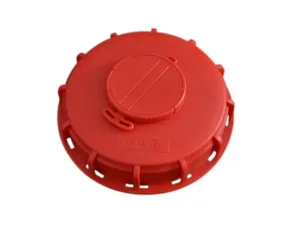
Complete IBC Packaging, Fittings & Seal Systems
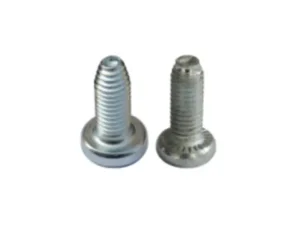
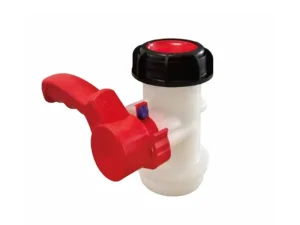
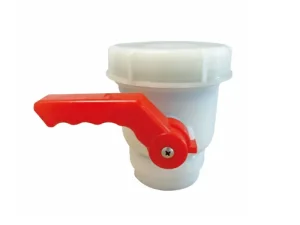
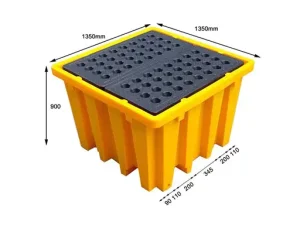
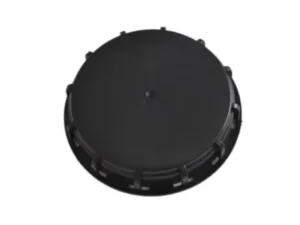
Explore our extended catalog of replacement caps, breathable lids, quick-connect camlocks, and heavy-duty composite containment pallets.
Frequently Asked Technical Questions (B2B Sourcing FAQ)
Engineering and procurement guidance regarding regulatory audits, material selection, valve customization, and international freight compliance.
How do China food-grade IBC valves differ from standard chemical-grade IBC valves?
Food-grade IBC valves are manufactured exclusively using virgin polymers (free from recycled scrap regrind) and certified food-safe elastomers (such as peroxide-cured EPDM or pure PTFE). They undergo strict overall migration testing (OMT) under FDA 21 CFR 177 and EU 10/2011 standards, ensuring zero transfer of heavy metals, plasticizers, or flavor-altering volatile organic compounds into liquid food products.
What seal elastomer is recommended for high-fat food liquids like vegetable oils or dairy creams?
For high-fat food matrices, pure PTFE (Polytetrafluoroethylene) or food-grade FKM (Viton) gaskets are strongly recommended. Standard nitrile (NBR) or basic EPDM seals can absorb lipids, causing swelling, seal softening, and premature leakage. PTFE provides complete chemical inertness and dimensional stability across broad temperature ranges.
Can your food-grade IBC valves withstand Clean-in-Place (CIP) and Steam-in-Place (SIP) routines?
Yes. Our integrated stainless steel (AISI 316L/304) butterfly and ball valves are engineered specifically for CIP and SIP sterilization protocols. They withstand hot caustic wash solutions (up to 2% NaOH at 85°C) and pressurized steam sterilization (up to 121°C for 30 minutes) without seal degradation or structural warping.
What documentation is provided to clear custom compliance and food safety audits?
Every shipment is accompanied by a comprehensive Quality Assurance Package, including Batch Certificate of Analysis (CoA), Declaration of Conformity (DoC) for FDA and EU Regulation 10/2011, Third-Party Heavy Metal & Phthalate Test Reports (SGS), and Material Traceability Logs linking back to raw resin lots.
What thread standards are available for international discharge compatibility?
We supply food-grade valves with all major global thread configurations, including coarse thread S60x6 (European standard), S100x8 high-flow coarse thread, standard NPT fine threads, and sanitary Tri-Clamp / Camlock quick-connect couplings (DN50 2-inch and DN80 3-inch sizes).
What are the factory lead times for custom OEM mold manufacturing of IBC valves?
For standard stock items (DN50/DN80 butterfly valves), dispatch is completed within 3 to 5 working days. For custom OEM/ODM valve designs requiring precision injection tooling, 3D prototype sampling takes 7 to 10 days, with complete mold fabrication finalized within 25 to 30 days.