Featured Industrial Packaging & Fluid Protection Systems
Explore our core engineering catalog engineered for maximum chemical resistance, structural durability, and leak-proof sealing across global logistics networks.
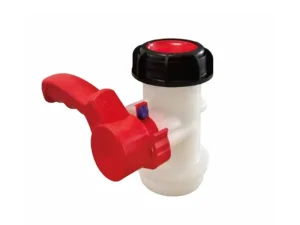
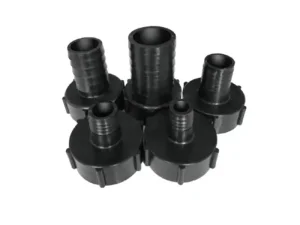
The Global Industrial Footprint of PVC End Caps
Analyzing structural shifts, material science advances, and procurement realities across international piping, construction, and fluid management sectors.
Polyvinyl Chloride (PVC) end caps serve as critical terminal components in modern piping architecture, pressure vessel containment, industrial valve protection, and structural framing. While often perceived as standard commodity items, their engineering integrity directly influences system longevity, environmental compliance, and pressure containment security. Globally, the demand for high-performance wholesale PVC end caps has surged, driven by massive investments in municipal water infrastructure, chemical processing automation, agricultural micro-irrigation, and heavy construction.
According to industrial manufacturing indices, the global plastic pipe fittings market—where PVC end caps hold a crucial operational share—is expanding at an unprecedented rate. Modern industrial specifications demand caps capable of resisting hydrostatic pressures up to 320 PSI (depending on Schedule 40 vs. Schedule 80 classifications), withstanding severe UV degradation in desert environments, and offering chemical inertness against aggressive acids, alkalis, and saline solutions.
China's Manufacturing Efficiency & Production Scale
How state-of-the-art Chinese injection molding facilities optimize total cost of ownership (TCO) without compromising international quality standards.
Upstream Polymer Integration
Chinese production hubs feature direct access to integrated petrochemical refining complexes. This localized resin sourcing eliminates raw material volatility, providing wholesale buyers with guaranteed price stability and uninterrupted batch manufacturing schedules even during global supply shocks.
Automated High-Cavitation Tooling
Leveraging multi-cavity hot runner injection molds engineered via computer-aided mold flow simulation, premier Chinese factories produce up to 100,000 precision PVC caps per unit per day. Automated robotics handle gate removal, quality monitoring, and inline packaging to eliminate human error.
Custom OEM/ODM Prototyping
From initial CAD modeling and 3D resin rapid prototyping to final hardened steel tooling creation, lead times for custom-branded or specialized dimension PVC end caps are reduced from the industry average of 8 weeks down to just 14 business days.
Information Gain Insight: Sourcing directly from top-tier Chinese PVC cap manufacturers offers a structural cost advantage of 28% to 42% compared to Western regional converters, while fully complying with ASTM D2466, ISO 1452-3, and NSF/ANSI 61 health standards for potable water delivery.
Localized Engineering Application Scenarios
Granular application analysis across critical industrial sectors requiring tailored PVC termination solutions.
1. Municipal Water & Wastewater Treatment
In municipal clean water networks and industrial effluent pipelines, rigid socket-weld PVC end caps act as permanent or semi-permanent pressure seals. Engineered with smooth internal radius transitions, these caps prevent sediment buildup and bio-film accumulation while enduring continuous hydrodynamic stress.
2. Structural Scaffolding & Construction Safety
Flexible vinyl and heavy-duty dip-molded PVC caps serve as impact-absorbing safety closures on tubular steel construction frames. They protect exposed pipe ends against weather-induced internal corrosion, shield workers from sharp metal burrs, and feature high visual contrast for site safety compliance.
3. Chemical Processing & Corrosive Fluid Lines
In aggressive acid/alkali processing facilities, metallic caps suffer from swift galvanic and chemical pitting. Unplasticized PVC (uPVC) and Chlorinated PVC (CPVC) end caps provide total chemical resistance, operating reliably at elevated temperatures up to 93°C (200°F) in CPVC variants.
4. Logistics, Valve Protection & Thread Guarding
During international transit of pre-fabricated spool piping, valves, and precision IBC totes, temporary push-on PVC caps prevent dust ingress, moisture contamination, and physical thread shearing, guaranteeing zero-defect arrival at job sites worldwide.
Industrial PVC End Cap Specification & Material Matrix
Standardized engineering parameters for procurement officers and system designers.
| Feature Parameter | Schedule 40 PVC Caps | Schedule 80 Heavy Duty PVC | Flexible Vinyl Dip Caps |
|---|---|---|---|
| Primary Material | Unplasticized PVC (uPVC) | High-Density Rigid CPVC / uPVC | Plasticized Polyvinyl Compound |
| Pressure Class Rating | 140 to 300 PSI (by diameter) | 200 to 450 PSI (Maximum dynamic) | Atmospheric / Dust Dust-proof Seal |
| Joining Method | Solvent Cement / Socket Slip | Threaded NPT / Heavy Socket | Friction Fit / Push-On Stretch |
| Temperature Threshold | 0°C to 60°C (32°F - 140°F) | -20°C to 93°C (-4°F - 200°F) | -40°C to 105°C (-40°F - 221°F) |
| Standard Compliance | ASTM D2466, NSF 61 | ASTM D2467, ASTM F439 | RoHS 3.0, REACH Compliant |
| UV & Weathering Resistance | Standard / TiO2 Stabilized | Enhanced Carbon Black / UV-Shield | High Weatherability Additives |
Emerging Technologies & Green Manufacturing Trends
How progressive PVC cap manufacturers are integrating smart materials, automated AI inspection, and circular economy practices.
Eco-Friendly Non-Phthalate Formulations
Regulatory frameworks such as EU REACH and California Prop 65 have accelerated the adoption of bio-based, non-phthalate plasticizers in flexible PVC cap production. Premier factories now utilize soybean oil-based bio-stabilizers to achieve non-toxic, eco-compliant flexibility.
AI-Powered Optical Defect Sorting
Leading manufacturers have replaced manual visual checking with 360-degree high-speed AI vision cameras. This technology detects micro-cracks, flash excess, thread deformities, and wall thickness variance down to micron levels in real time, delivering zero-defect shipments.
Smart RFID-Embedded Protection Caps
For high-value oil & gas tubular logistics, heavy-duty PVC end caps are now integrated with passive UHF RFID chips. This permits remote asset tracking, automated digital inventory management, and pipe maintenance history logging during field operations.
Global Enterprise Procurement & Vendor Evaluation Audit
A structured strategic checklist for enterprise buyers sourcing bulk PVC end caps and fluid sealing fittings.
Phase 1: Factory Certification & Testing Traceability
Verify that your prospective vendor holds ISO 9001:2015 Quality Management and ISO 14001 Environmental certifications. Request independent lab test reports (SGS, TUV, or Intertek) verifying compliance with NSF/ANSI 61 for potable water safety or ASTM D2466 pressure burst thresholds.
Phase 2: Resin Purity & Virgin Material Guarantees
Beware of suppliers using un-sterilized, low-grade recycled regrind material which drastically lowers impact strength and thermal deflection limits. Demand 100% virgin PVC resin guarantees with lot-specific Melt Flow Index (MFI) and tensile strength analysis documentation.
Phase 3: Tooling Ownership & Dimensional Control
Clarify mold ownership rights for custom dimensions. Ensure contract clauses stipulate mold maintenance cycles every 500,000 shots and mandate strict tolerance boundaries (e.g., ±0.05 mm on thread pitch and socket inner diameters) to prevent field leakage.
Phase 4: Landed Cost & Freight Optimization
Evaluate Total Cost of Ownership (TCO) beyond the FOB unit cost. Work with suppliers capable of optimizing nested export packaging (nesting smaller caps inside larger components) to maximize shipping container volume utilization and minimize ocean freight expenses per unit.
Frequently Asked Questions (Technical Sourcing & Engineering)
Expert answers addressing the most common questions raised by industrial buyers, engineers, and supply directors.
What is the key functional difference between Schedule 40 and Schedule 80 PVC end caps?
Schedule 40 PVC end caps feature thinner walls designed for standard pressure and non-pressure applications such as residential drainage, light irrigation, and basic cable conduits. Schedule 80 caps feature significantly thicker walls engineered to handle higher internal hydrostatic pressures (often up to 300-450 PSI depending on sizing), harsh industrial chemical flows, and demanding industrial fluid handling systems.
How do China manufacturers guarantee consistent wall thickness in mass-produced PVC caps?
Top-tier Chinese injection molders utilize automated closed-loop pressure controllers, precision CNC-machined hardened steel molds, and real-time ultrasonic wall thickness sensors. This ensures uniform material distribution across the entire cap dome and sidewalls, preventing localized structural weak points or premature pressure blowouts.
Can PVC end caps be customized for specialized colors, branding logos, and UV protection?
Yes. Custom OEM/ODM manufacturing allows for full color matching (via RAL or Pantone codes), laser-engraved or molded brand logos, and specialized chemical masterbatch additives including Titanium Dioxide (TiO2) or Carbon Black for maximum UV weatherability during outdoor exposure.
What solvent cement procedures should be followed for permanent leak-proof socket cap jointing?
To achieve a homogeneous chemical weld, first clean and deburr the pipe end and cap socket. Apply a heavy coat of suitable PVC pipe primer to soften both surfaces. Immediately apply a uniform layer of heavy-bodied PVC solvent cement, push the cap firmly onto the pipe with a quarter-turn twist until seated, and hold firmly for 30 seconds. Allow proper cure time per diameter and ambient temperature guidelines before pressure testing.
What is the typical minimum order quantity (MOQ) and production lead time for bulk wholesale orders?
Standard inventory items usually carry flexible MOQs starting from 500 to 1,000 units. Custom injection-molded caps generally carry an MOQ of 5,000 to 10,000 units depending on size. Standard stock items dispatch within 3 business days, while mass custom production runs take approximately 14 to 21 days from sample sign-off.
Are flexible vinyl push-on caps suitable for high-pressure fluid retention?
No. Flexible vinyl dip-molded caps are engineered for dust-proofing, moisture protection, thread guarding, and mechanical impact protection during transportation and painting operations. For high-pressure liquid or gas retention, rigid socket-weld or threaded NPT PVC caps must be selected.
Associated Industrial Tote Fittings & Hardware Series
Complete your supply chain orders with our factory-direct bulk components engineered for heavy industrial deployment.