Precision Molded Industrial Components & Assemblies
Direct factory supply for heavy-duty IBC liquid containers, chemical closures, and high-flow valve tooling.


The Global Landscape of Plastic Mold Design & Tooling
Analyzing macro-economic shifts, precision tolerance requirements, and how leading enterprise procurement teams evaluate wholesale plastic mold suppliers worldwide.
In modern industrial manufacturing, the plastic injection mold serves as the fundamental catalyst for mass production across every core commercial sector. From high-tolerance medical micro-components and automotive structural panels to heavy-duty industrial liquid storage systems like 1000-liter Intermediate Bulk Container (IBC) valves and caps, the precision of the initial mold design determines structural integrity, cycle time efficiency, unit production costs, and overall commercial profitability. As global supply chains prioritize resilience, speed-to-market, and total cost of ownership (TCO), selecting an expert wholesale plastic mold design supplier is no longer merely a purchasing decision—it is a critical strategic partnership.
Global Market Expansion
The global plastic injection mold market size exceeds $45 billion, driven by surging demand for lightweight polymer alternatives in automotive, chemical packaging, and consumer electronics sectors.
High-Precision Engineering
Modern tooling demands dimensional tolerances as fine as ±0.005 mm, utilizing advanced CAD/CAM/CAE systems and multi-axis CNC machining to handle complex part geometries.
Cycle Time Optimization
Superior thermal management and conformal cooling channel design within molds can reduce cycle times by 15% to 35%, significantly lowering per-unit production expenditure.
Information Gain Key Takeaway: Tooling design accounts for less than 10% of total product project costs but dictates up to 80% of downstream manufacturing efficiency and part quality. Partnering with a supplier capable of full-stack Design for Manufacturability (DFM) and automated Moldflow simulation is vital to preventing catastrophic mold failure during mass production.
China Factory Efficiency & Supply Chain Synergy
China has firmly established itself as the world’s leading hub for wholesale plastic mold manufacturing and precision tooling fabrication. The concentration of specialized industrial clusters—such as those in Shandong, Zhejiang, and Guangdong—delivers unmatched advantages in raw material sourcing, mold base standardized manufacturing, heat treatment, and rapid prototyping.
Chinese mold suppliers leverage advanced high-speed CNC milling centers, mirror EDM (Electrical Discharge Machining), and wire-cutting machinery from Western Europe and Japan, combined with highly trained engineering teams. This synergy allows Chinese factories to execute complex tooling projects at 30% to 50% lower capital outlay compared to Western tooling shops, without compromising material grade or dimensional accuracy.
- End-to-End Vertical Integration: From steel stock selection (H13, S136, P20) to in-house injection trial runs (T0-T2 samples).
- Agile Lead Times: Standard mold production delivered within 25 to 35 business days, cutting traditional procurement delays in half.
- Scale & Flex Capability: Facilities equipped to handle low-volume custom prototyping as seamlessly as high-cavitation Class 101 production molds.
Cross-Industry Engineering & Tailored Tooling Solutions
Custom plastic mold design requires precise material selection, shrinkage compensation, and mechanical kinematic design tailored to specific industrial environments.
Industrial Packaging & IBCs
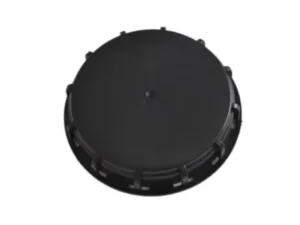
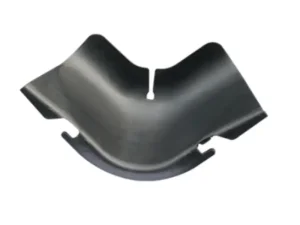
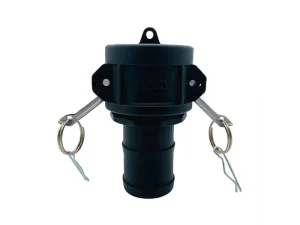
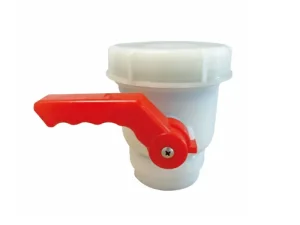
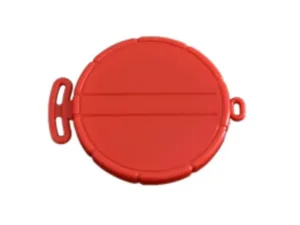
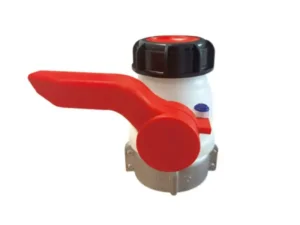
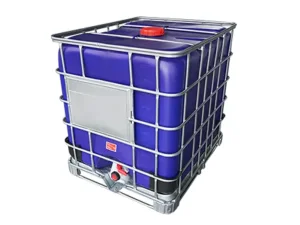
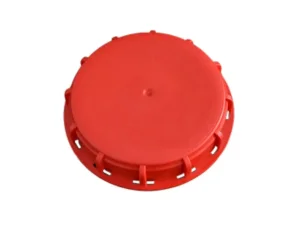
Precision tooling for heavy-duty 1000L IBC tank valves, heavy sealing caps, camlock fittings, and protective corner guards requiring high stress-crack resistance and leak-proof threads.
Automotive Components
Molds for bumper fascia, structural door panels, light housings, and engine bay enclosures using glass-filled polymers requiring minimal warpage and zero sink marks.
Medical & Cleanroom
Multi-cavity high-speed injection molds crafted with medical-grade S136 stainless steel for syringes, diagnostic cartridges, and fluid delivery connectors under ISO Class 7 specs.
Consumer Electronics
Ultra-thin wall injection molds for smart home devices, handheld enclosures, and wearable technology requiring micro-textures and precise insert-molding pins.
Emerging Technological Trends in Plastic Mold Engineering
How AI, additive manufacturing, and sustainable materials are transforming global mold manufacturing paradigms.
AI-Driven Moldflow & Virtual Digital Twins
Modern CAD/CAE environments now integrate artificial intelligence algorithms to simulate resin fill, shear stress, fiber orientation, and cooling non-uniformities prior to steel cutting. Digital twin models allow real-time monitoring of sensor-equipped smart molds during production, predicting component wear and maintenance cycles dynamically.
3D-Printed Conformal Cooling Inserts
Direct Metal Laser Sintering (DMLS) 3D printing technology enables complex cooling channels that follow the exact curved contours of the mold cavity. Conformal cooling resolves hot spots in deep-draw plastic parts, decreasing cycle times by up to 30% and eliminating internal residual stresses that cause part warping.
Adaptation for Recycled PCR & Bio-Polymers
As global environmental regulations tighten, mold suppliers must design tooling capable of handling Post-Consumer Recycled (PCR) resins and biodegradable polymers (PLA, PHA). These materials exhibit wide melt flow index (MFI) variations, requiring adaptive hot runner systems and specialized venting design.
Multi-Shot (2K/3K) & Overmolding Tooling
Integrating dual-material molding (e.g., hard rigid PP cores with soft TPE sealing gaskets in a single mold cycle) eliminates secondary assembly labor. High-precision rotary table tooling and core-back mechanisms represent the peak of modern automated mold design.
Mold Steel Classification & Engineering Standards
A technical benchmark guide for international buyers evaluating tool steel selection, cavity ratings, and expected mold lifespan.
| SPI Mold Class | Expected Life (Shots) | Core & Cavity Steel Selection | Hardness (HRC) | Typical Industrial Applications |
|---|---|---|---|---|
| Class 101 | 1,000,000+ | S136, H13, 1.2344, Beryllium Copper | HRC 48 - 54 | High-volume continuous production: standard IBC caps, closures, medical diagnostics. |
| Class 102 | Up to 1,000,000 | 420 Stainless, NAK80, P20 Pre-hardened | HRC 36 - 48 | Medium-to-high volume industrial fittings, automotive interior trims, electronic housings. |
| Class 103 | Up to 500,000 | P20, 718H, 1.2311 | HRC 28 - 36 | General commercial plastic parts, low-corrosion consumer goods, specialized housings. |
| Class 104 | Up to 100,000 | P20 Pre-hardened Steel or Quality Aluminum | HRC 28 - 32 | Low-volume short production runs, market testing products, secondary replacement parts. |
| Class 105 | Under 500 | Cast Aluminum or Soft Carbon Steel | N/A | Prototype development, design concept validation, preliminary physical samples. |
Crucial Quality Control Checkpoints for Procurement Audit
When executing a wholesale plastic mold design contract with a Chinese supplier, enterprise procurement officers should verify the following five quality control stages:
- 1. Complete DFM Report Review: Verification of wall thickness uniformity, draft angle allocations (minimum 1.5° to 2° for textured surfaces), gate location strategy, and ejector mark positioning.
- 2. Steel Material Certification: Inspection of original mill certificate documentation for steel origin, heat treatment hardness test reports, and ultrasonic flaw detection data.
- 3. CMM Dimensional Full-Inspection: Coordinate Measuring Machine validation of critical dimensions on T1 sample molded parts against master 3D CAD files.
- 4. Tooling Operational Dry Run: Automated continuous dry-run test of the mold base for a minimum of 2 hours to ensure smooth mechanical slide and lifter movement.
- 5. Export Packaging Standards: Application of anti-rust coating, vacuum plastic wrapping, and reinforced fumigated wooden box enclosure for safe ocean transport.
Frequently Asked Questions (FAQ)
Expert answers regarding custom plastic mold design, OEM manufacturing lead times, and global procurement procedures.
Industrial Liquid Storage & Container Fitting Molds
High-grade plastic closures, heavy-duty valves, and durable replacement accessories.