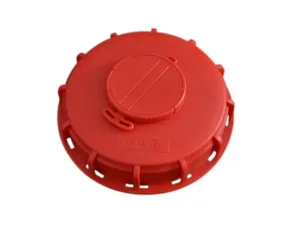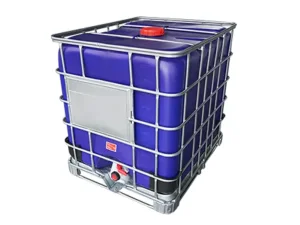
Industrial Equipment & Container Solutions (Part I)
Direct factory supply of heavy-duty industrial handling hardware, valves, and bulk storage equipment engineered to exact global standards.





Macro-Industry Transformation in Avian Supply Chains
Evaluating the paradigm shift from single-use paper pulp packaging to precision-engineered polymer tray systems across modern industrial hatcheries.
The global poultry and avian production ecosystem is undergoing a profound structural shift driven by three macro forces: hyper-automation in hatchery operations, stringent global biosecurity mandates (such as ISO 22000 and HACCP protocols), and escalating ESG (Environmental, Social, and Governance) demands to reduce carbon footprints. As commercial hatcheries scale up to process hundreds of millions of eggs annually, legacy single-use paper pulp trays represent a major bottleneck due to structural degradation, dust generation, inconsistent dimensions, and high cross-contamination risks.
Industrial wholesale plastic egg tray manufacturing relies on advanced polymers—primarily High-Impact Polypropylene (HPP) and High-Density Polyethylene (HDPE)—engineered with custom additive packages including anti-static agents, UV stabilizers, and antimicrobial compounds. These trays are not merely static packaging; they are specialized logistics vectors designed to interface seamlessly with modern incubators, setter trolleys, automated packing lines (such as Moba, Sanovo, and Staalkat systems), and temperature-controlled reefer freight systems.
Biosecurity & Washability
Non-porous polymer formulations withstand automated high-pressure washing (up to 90°C) with caustic sanitisers, eliminating Salmonella and Avian Influenza vectors.
Automation Compatibility
Strict injection mold tolerances prevent structural warp, ensuring 99.9% pick-and-place accuracy for automated de-stackers and robotic arms.
Optimized TCO & Reusability
Engineered to endure over 250 operational wash-and-reuse cycles, reducing per-unit egg transport costs by up to 68% compared to pulp.
Materials Science & Structural Dynamics
Evaluating polymer formulations, thermal dissipation vectors, and shock-absorption cone geometries for optimal egg protection.
The failure of an egg tray under load leads to shell micro-cracking, hairline fractures, and catastrophic liquid leaks that contaminate entire pallet stacks. Factory-direct engineering of wholesale plastic egg trays focuses on balancing impact resistance, flexural modulus, and heat distortion temperature (HDT).
| Performance Benchmark | Virgin High-Impact Polypropylene (PP) | High-Density Polyethylene (HDPE) | Recycled / Re-reground Blends |
|---|---|---|---|
| Flexural Modulus (GPa) | 1.4 - 1.7 (Superior Stiffness) | 1.0 - 1.3 (Flexible Shock Absorption) | 0.9 - 1.2 (Variable) |
| Notched Izod Impact (kJ/m²) | 7.5 - 10.0 (High Shock Resistance) | 9.0 - 12.0 (Exceptional Cold Tolerance) | 4.0 - 6.0 (Brittle under cold) |
| Heat Deflection Temp (0.45 MPa) | 95°C – 110°C (Hot-wash safe) | 75°C – 85°C (Warm-wash safe) | 65°C – 80°C (Risk of warping) |
| Static Stacking Capacity | Up to 36 Trays High (Heavy Duty) | Up to 24 Trays High | Up to 15 Trays High |
| Thermal Airflow Efficiency | Optimized vent holes (>38% open area) | Standard vent holes (~30% open area) | Restricted vent channels |
| Target Application | Automated Hatcheries & Export Logistics | Farm Collection & Cold Storage | Single-way domestic transport |
Finite Element Analysis (FEA) of Cone Geometry
The individual egg cup geometry utilizes a four-point radial spring structure. By incorporating engineered vertical flex-ribs along the interior walls of each cell, dynamic vibrations during road or rail transport are absorbed and dissipated away from the egg shell apex. Furthermore, the interstitial spacing between cells is optimized to allow multi-directional laminar airflow during forced-air cooling in cold rooms and climate-controlled incubation cabinets, reducing chilling cycle duration by up to 22%.
Global Commercial & Industrial Footprint
Analyzing global consumption patterns, regulatory shifts, and economic total cost of ownership models.
Across key production regions—North America, Europe, Asia-Pacific, Latin America, and the Middle East—the adoption of wholesale plastic egg trays varies based on supply chain maturity:
- North America & Europe: Fully automated closed-loop systems dominate. Hatcheries utilize standardized 30-cell and 42-cell setter trays that transfer directly from farm collection trucks into incubator racks without human contact. Strict bio-security legislation favors easily disinfected polymer surfaces.
- Asia-Pacific & Latin America: Rapid expansion of mega-scale layer farms is driving a massive transition from single-use paper trays to heavy-duty, nestable plastic egg trays for long-distance transport between rural farms and urban distribution hubs.
- Middle East & Africa: High ambient temperatures require superior thermal stability and ventilation. UV-stabilized plastic trays are critical to prevent brittle fractures caused by intense solar exposure during open-air logistics loading.
Localized Application Scenarios & Operational Workflows
Tailored tray configurations engineered for specific nodes within the global poultry value chain.
Commercial Layer Farms
Standard 30-cell (5x6 matrix) trays designed for bulk stacking on pallets. Nestable design reduces empty return transport volume by up to 70%.
Breeder & Incubation Hatcheries
Specialized setter trays featuring pin-locking mechanisms and egg-tilting structural tolerance compatible with Petersime, Jamesway, and Chick Master incubators.
Cold-Chain Export Logistics
Ultra-durable HDPE formulations resistant to micro-cracking under freezing temperatures (-30°C) during international marine container transport.
Quality Assurance & Compliance Standards
Rigorous factory testing protocols ensuring absolute structural reliability and international food contact compliance.
As a premier wholesale factory and global supplier, our manufacturing facilities adhere to strict ISO 9001 quality management systems. Every batch of plastic egg trays undergoes severe mechanical stress and chemical exposure testing before export authorization:
- FDA & EU Food Contact Compliance: All raw resin compounds comply with FDA 21 CFR 177.1520 and EU Regulation No. 10/2011 for direct food contact safety.
- Compressive Load-to-Failure Testing: Trays are subjected to vertical static loads exceeding 450 kg per stack to verify zero deformation during multi-layer warehouse stacking.
- Free-Fall Impact Resistance Test: Loaded trays dropped from a height of 2.0 meters at -10°C to guarantee structural integrity against transport drops.
- Caustic Wash Cycle Validation: Accelerated exposure testing with 5% sodium hydroxide solution at 85°C for 500 continuously simulated wash cycles to ensure zero micro-surface degradation.
Technological Roadmap (2025–2030)
Pioneering smart tray innovations, IoT connectivity, and sustainable circular-economy polymers.
RFID & Data-Matrix Smart Trays
Direct integration of over-molded UHF RFID tags into the tray rim during injection molding. Enables real-time tracking of egg origin, flock age, incubation history, and wash history across the cold chain without manual scanning.
Bio-Based Circular Polymers
Transitioning towards ISCC PLUS certified bio-attributed polypropylene derived from post-industrial organic waste. Delivers identical mechanical strength while achieving a 45% reduction in cradle-to-gate carbon footprint.
Frequently Asked Technical Questions
Expert technical insights addressing key procurement, engineering, and logistics queries.
Industrial Equipment & Container Solutions (Part II)
Explore our comprehensive inventory of heavy-duty industrial fittings, liquid transfer valves, and containment systems.