
Featured Industrial Leak-Proof IBC Assemblies
Explore our factory-direct wholesale inventory of heavy-duty replacement fittings, valves, lids, and custom tank adapters optimized for critical fluid containment.
Global Commercial Dynamics of Leak-Proof IBC Tote Infrastructure
Analyzing the critical role of precision-engineered components in preventing chemical contamination, lowering total cost of ownership (TCO), and meeting global UN dangerous goods transport standards.
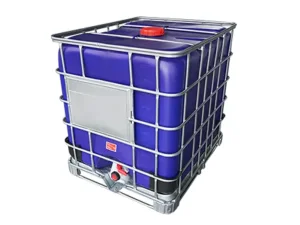
The global market for Intermediate Bulk Containers (IBCs) has surpassed $10.4 billion, driven by the explosive expansion of specialized chemical manufacturing, pharmaceutical cold chains, liquid food processing, and bulk agricultural formulations. At the core of every 1000-liter rigid tote system lies a complex assembly of high-stress mechanical components: bottom discharge butterfly and ball valves, top filling closures with pressure-relief membranes, structural galvanized steel cages, and chemical-resistant sealing washers.
Failure at any single interface—whether a microscopic micro-fracture in an injection-molded thread or chemical degradation of a standard EPDM gasket under aromatic solvent exposure—can cause catastrophic liquid leaks. Industrial studies reveal that cargo leakage during maritime or intermodal transit costs the chemical logistics sector over $420 million annually in hazardous material containment fees, environmental fines, packaging replacement, and supply chain disruptions.
Modern enterprise procurement directors are rapidly shifting away from generic commodity fittings toward certified leak-proof IBC parts manufactured under rigorous Quality Management Systems (ISO 9001:2015 and ISO 16103). High-density polyethylene (HDPE) polymer formulas integrated with UV stabilizers and fluorinated barrier layers now represent the mandatory baseline for international compliance.
Core Requirements of Hazardous Material Transportation
Under UN 31HA1 certification guidelines, composite IBCs carrying packing group II and III liquid chemicals must demonstrate absolute hydraulic seal integrity under pressure decay testing up to 100 kPa and drop impact testing at -18°C.
Advanced Materials and Structural Leak-Proof Mechanisms
A technical breakdown of valve flange geometry, multi-layer fluorination, and hydrophobic ePTFE venting membranes designed for extreme operating environments.
Valves: Ultrasonic Welded Flanges vs Threaded Collars
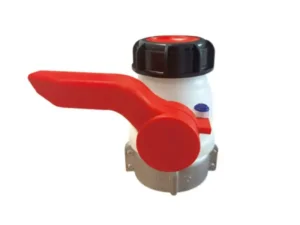
Our DN50 (2-inch) and DN80 (3-inch) quick-connect butterfly and ball valves utilize heavy-duty HDPE resin with glass-reinforced polybutylene terephthalate (PBT) handles. The ultrasonic butt-welding process connects the inner bottle neck directly to the valve flange, creating a monolithic seal that eliminates micro-leak paths prevalent in traditional threaded valve-to-bottle connections.
Gaskets: PTFE-Faced Viton & Fluorinated Rubber
Standard rubber gaskets degrade rapidly when exposed to aggressive organic solvents, concentrated acids, or petroleum distillates. We employ dual-layer composite sealing washers featuring a high-resilience EPDM/Viton core encapsulated in an inert PTFE (Teflon) jacket, maintaining zero permanent compression set even under continuous 45 N·m assembly torque.
Lids: Vented ePTFE Gas-Permeable Membranes
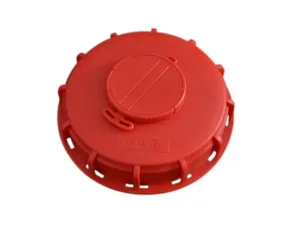
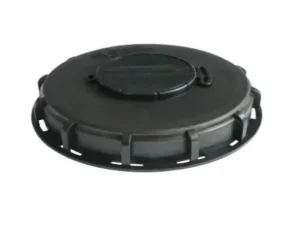
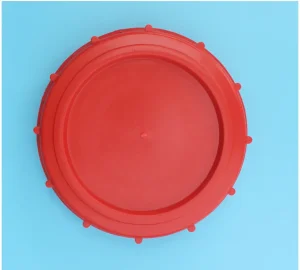
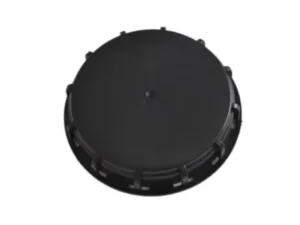
Off-gassing liquids such as hydrogen peroxide, peracetic acid, or specialized liquid fertilizers cause extreme pressure spikes during thermal expansion. Our red and black breathable lid assemblies integrate hydrophobic microporous ePTFE membranes that allow gas venting while maintaining an absolute liquid barrier against internal pressures up to 0.3 bar.
Comprehensive Material & Performance Specification Matrix
| Component Category | Standard Material Grade | Sealing Seal / Gasket Options | Operating Temperature Range | Chemical Compatibility | Pressure Rating |
|---|---|---|---|---|---|
| DN50 Butterfly Valve | High-Density Polyethylene (HDPE 5502) | PTFE-Coated EPDM / Viton / Silicone | -20°C to +70°C | Alkalies, Inorganic Acids, Alcohols | PN 1.6 Bar (Test: 2.5 Bar) |
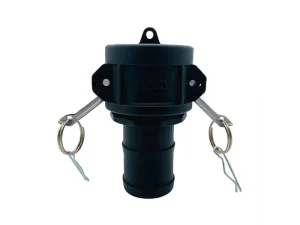
| DN50 Camlock Quick Adapter | AISI 316 Stainless Steel / Polypropylene | NBR / FKM (Viton) Seal Ring | -30°C to +120°C | Aromatic Solvents, Fuels, Esters | PN 4.0 Bar |
| 150mm / 225mm Top Cover | UV-Stabilized HDPE (UV8) | Expanded EPDM Gasket / PE Foam Ring | -40°C to +60°C | Agrochemicals, Food-Grade Liquids | Hermetic Seal / 0.2 Bar Vent |
| Breathable Venting Plug | Microporous Hydrophobic ePTFE Membrane | Silicone Check Valve Gasket | -20°C to +80°C | Off-Gassing Acids, Peroxides, Organic Waste | Airflow: >150 L/h @ 10 mbar |
China Factory Efficiency & Operational Scale Superiority
How our centralized production ecosystem in Linyi, Shandong delivers unbeatable cost-performance ratios, extreme precision mold-making, and ultra-fast global order dispatch.
In-House Tooling & Multi-Billion Unit Scale
Located in the Jinluo Technology Industrial Park in Linyi City, Shandong Province, our manufacturing facilities integrate over 26 years of specialized plastic injection molding and mold design expertise. Operating 3 dedicated production bases staffed by more than 300 skilled technicians, we maintain fully automated KraussMaffei and Haitian injection molding machines equipped with robotic pick-and-place arms.
Unlike regional assemblers who outsource critical components, our facility handles every stage in-house: from masterbatch plastic color blending and computer-simulated mold flow analysis to precision CNC tooling machining with tolerances controlled strictly down to ±0.005 mm.
- Integrated Supply Chain: Direct sourcing of virgin Dow HDPE resin and Baosteel galvanized steel tubing within a 50 km logistics radius lowers raw material acquisition costs by 14%.
- Rapid Tooling Development: Custom OEM/ODM molds for specialized valve threads or custom logo-embossed covers designed, machined, and sample-verified in under 15 days.
- Mass Stock Buffer: Over 100,000 standard DN50 valves, 150mm breathable caps, and tank adapters maintained in perpetual warehouse inventory, enabling ~3-day container loading.
Quality Assurance Protocol (Zero-Defect Standard)
Every produced valve undergoes an automated 0.3 MPa air-submersion leak test to guarantee perfect seal seating before boxing.
Raw HDPE materials are analyzed via X-ray fluorescence to ensure zero heavy metal contamination and 100% compliance with FDA food contact regulations.
Batch samples are cold-conditioned to -18°C and drop-tested from 1.9 meters while threaded caps undergo 5,000 continuous cycle torque tests.
Localized Application Scenarios & Engineering Requirements
Tailored component configurations matching regional regulatory mandates and hazardous material transport requirements across key continental markets.
Petrochemical & Solvent Distribution
Requires UN 31HA1 dangerous goods approval, EX-zone anti-static grounding cables, Viton/PTFE encapsulation gaskets, and 316 stainless steel quick-connect camlocks to handle volatile organic compounds (VOCs).
Agrochemical Bulk Storage
Demands heavy UV-8 resin stabilization to withstand extreme equatorial solar radiation without polymer chalking. Integrated red breathable caps prevent tote collapse caused by pesticide outgassing in high-heat warehouses.
Food & Beverage Bulk Liquids
Utilizes virgin, 100% BPA-free FDA and EU 10/2011 compliant food-grade HDPE inner containers. Features tamper-evident pull-ring closures, dust caps, and hygienic stainless steel butterfly valves for edible oil and syrup transfer.
Tote Refurbishment & Re-Bottling
Provides universal replacement adapters (DN50/DN80 threads) fitting Schuetz, Mauser, Greif, and Werit tote frameworks. Allows reconditioners to standardise on a single high-durability leak-proof valve ecosystem.
Enterprise Buyer’s Guide: Evaluating IBC Fitting Suppliers
Mitigate supply chain vulnerability by inspecting critical technical specs before signing high-volume B2B contract agreements.
1. Bottle Wall Consistency & Resin Melt Flow Index (MFI)
Budget tote manufacturers often dilute resin with unverified post-consumer scrap, reducing environmental stress crack resistance (ESCR). Sourcing teams must demand virgin HDPE with an MFI between 0.02 and 0.05 g/10min (190°C/21.6kg) to ensure wall flexure durability under multi-tier stacking loads.
2. Valve Thread Engagement & Gasket Seat Geometry
Leaks frequently originate from irregular pitch tolerances on S60x6 buttress threads. Verify that the supplier’s valve threads feature full-profile molded roots and smooth sealing faces that provide continuous 360-degree contact against the elastomeric washer without pinch gaps.
3. Structural Cage Galvanization & Base Load Distribution
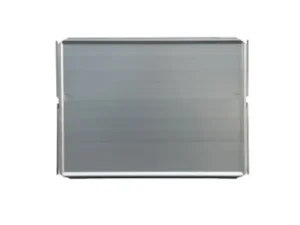
For maritime export, steel cages must feature hot-dip or continuous electro-galvanized coatings exceeding 15 microns to prevent rust scale formation under salt-spray conditions. Pair cages with lightweight aluminum or composite plastic pallets to prevent base sag during forklift transport.
4. Comprehensive Batch Traceability & Nameplate Identification
Every industrial IBC tote should feature a corrosion-resistant laser-engraved stainless steel nameplate detailing manufacturer UN code, wall thickness, test pressure, manufacture date, and lot number to streamline compliance auditing across international customs ports.
Future Trends Shaping Next-Generation Liquid Packaging
How digital connectivity, circular economy initiatives, and advanced fluorination technologies are revolutionizing the intermediate bulk container ecosystem.
Smart IoT-Integrated Valve Cap Modules
Emerging logistics frameworks embed passive RFID and active BLE (Bluetooth Low Energy) sensors into IBC valve dust covers and lid caps. These sensors provide real-time monitoring of internal fill levels, ambient temperature, pressure fluctuations, and unauthorized valve handle actuation during transit.
PCR Polymer Integration & Closed-Loop Circularity
In response to global corporate ESG mandates, leading factories are pioneering multi-layer co-extrusion technology. By sandwiching 30% Post-Consumer Recycled (PCR) HDPE between outer and inner layers of virgin polymer, manufacturers achieve full sustainability compliance without compromising tensile strength or chemical compatibility.
In-Line Gas Fluorination Barrier Upgrades
Direct exposure of HDPE to fluorine gas creates a protective fluorocarbon layer along the inner surface of bottles and valve bodies. This technical treatment reduces solvent permeation by up to 99%, allowing cost-effective HDPE totes to safely hold aggressive non-polar solvents previously requiring expensive stainless steel containers.
High-Performance IBC Tanks, Covers & Specialized Drum Caps
Explore our additional wholesale product range manufactured for industrial chemical containment, UV protection, and drum storage applications.

Frequently Asked Questions (Procurement & Engineering FAQ)
In-depth technical answers addressing chemical compatibility, fitting replacement protocols, order lead times, and custom OEM manufacturing.