
Featured IBC Container Components & Valves
High-precision replacement valves, secure closures, and hazardous chemical transfer accessories sourced directly from our certified manufacturing lines.
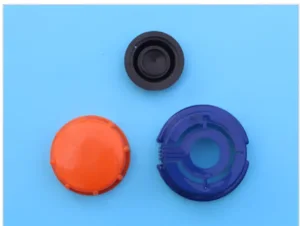
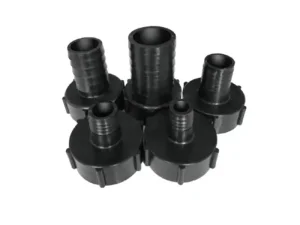
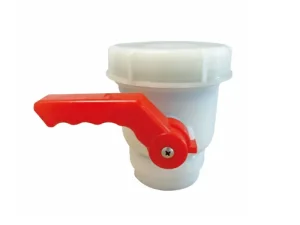
The Critical Role of IBC Safety Labels in Global Chemical Supply Chains
A technical deep-dive into dangerous goods identification, regulatory compliance, structural adhesive dynamics, and environmental degradation barriers.
Regulatory Mandates (GHS & UN)
Intermediate Bulk Containers (IBCs) are the backbone of global liquid chemical transport. Modern safety labels are not mere identification stickers; they are statutory hazard communication tools governed by strict international codes including GHS (Globally Harmonized System), UN Recommendations on the Transport of Dangerous Goods, IMDG (International Maritime Dangerous Goods), and US DOT 49 CFR. A single non-compliant or degraded label can result in severe port detentions, astronomical regulatory fines, and critical safety hazards during intermodal transit.
Environmental Stress Resistance
Industrial safety labels operating on 1000-liter composite IBC totes must endure aggressive environmental exposure. From prolonged outdoor UV radiational degradation to oceanic saltwater immersion, cryogenic winter transit, and tropical humidity, specialized wholesale IBC safety label factories engineer pressure-sensitive substrates that maintain legibility and adhesion over multi-year operational cycles without peeling, fading, or bubbling.
BS5609 Marine Immersion Standard
For chemical shipments traveling by sea, compliance with BS5609 (British Standard for marine adhesive labels) is mandatory. Leading manufacturing facilities utilize Section 2 certified base substrates (evaluating label construction, binder integrity, and adhesive durability after 3 months of continuous saltwater immersion) and Section 3 certified ink/print system combinations to guarantee structural retention under extreme marine stress scenarios.
Information Gain Insight: Sourcing high-durability safety labels directly from specialized high-volume packaging factories reduces total cost of ownership by preventing re-labeling downtime, eliminating port authority rejection risks, and ensuring flawless scanning readability of critical tracking bar codes across automated freight hubs.
Material Engineering & Substrate Specifications Matrix
Technical comparison of label substrates, chemical-resistant adhesives, and protective laminates used in high-grade industrial packaging manufacturing.
| Substrate Material | Adhesive Chemistry | Temperature Tolerance | Chemical & Solvent Resistance | Primary Industrial Application |
|---|---|---|---|---|
| Co-Extruded Polypropylene (PP) | High-tack permanent solvent acrylic | -40°C to +120°C | High against acids, bases, and aqueous salt solutions | Standard Chemical 1000L IBC Totes & Reconditioned Drums |
| Cast Vinyl (PVC) Film | Modified rubber resin / aggressive tack | -50°C to +90°C | Excellent flexibility over curved or textured cage plates | Textured Low-Density HDPE Containers & Curved Drums |
| Biaxially Oriented PET (Polyethylene Terephthalate) | Cross-linked acrylic micro-encapsulated | -50°C to +150°C | Exceptional resistance to aromatic hydrocarbons & solvents | High-Temperature Industrial Chemical Dispensing & Processing |
| BS5609 Synthetic Paper | Marine-grade marine immersion acrylic | -40°C to +100°C | 100% Saltwater Immersion Certified & Weather Proof | Oceanic Intermodal Freight, Hazmat IBC Export Shipping |
China Factory Supply Chain Ecosystem & Manufacturing Scale
Unmatched throughput, automated precision die-cutting, custom formulation capability, and global logistical integration from established industrial clusters.
Vertical Integration
China’s leading packaging factories maintain full vertical integration—from polymer synthesis for adhesive backings to multi-color flexographic printing, UV coat curing, and automated optical inspection (AOI) lines. This eliminates intermediary markups and guarantees rigorous quality control.
Custom OEM / ODM Formulation
Whether your application requires specialized anti-tamper security slits, thermo-chromic temperature indication inks, custom logo branding, or multi-language warning matrix layouts, Chinese manufacturing hubs provide rapid prototyping within 48 to 72 hours.
Scalable Bulk Logistics
Utilizing automated roll-to-roll slitting and specialized moisture-sealed barrier packaging, factories ship millions of labels weekly via major coastal ports (Qingdao, Shanghai, Ningbo), ensuring fast lead times and low maritime freight costs.
Industry 4.0 & Future Trends in Industrial Identification
Emerging technology integration: Smart RFID/NFC tagging, circular economy recyclability, and dynamic tracking for global reconditioning fleets.
RFID & NFC Hybrid Labels
The global IBC packaging industry is rapidly shifting toward smart asset management. Wholesale safety label factories are embedding ultra-thin RFID inlays (UHF 860-960 MHz) directly beneath chemical-resistant printed face stocks. This allows logistics operators to track container location, maintenance history, tare weight, and content chemical data without line-of-sight optical scanning.
Wash-Off Adhesives for Reconditioners
With environmental ESG regulations pressing for container reusability, specialized label factories have developed "wash-off" alkali-soluble adhesives. These formulations keep labels firmly attached during normal operation and heavy rain, but cleanly detach when processed through automated alkaline washing systems at IBC reconditioning facilities, eliminating manual scraping damage.
Dynamic Variable Data Printing
High-speed digital printing infrastructure now allows factory clients to order serialized labels with dynamic QR codes, unique 2D DataMatrix sequences, and batch-specific batch numbers printed on demand. This enables real-time ERP integration and blockchain-verified chemical origin tracking across international borders.
Localized Application Scenarios & Industrial Implementation
Tailored label engineering solutions designed for specific industrial sectors and regional regulatory frameworks.
Hazardous Chemical Manufacturing
Scenario: Highly corrosive acids, alkalis, and flammable solvents stored in 1000L HDPE intermediate bulk containers.
Solution: Heavy-duty PET film labels featuring double-layer UV over-lamination, high-tack cross-linked solvent acrylic adhesives, and full GHS 9-pictogram hazard matrix color printing.
Food & Pharmaceutical Ingredients
Scenario: Liquid sugar, edible oils, flavors, and active pharmaceutical ingredients (API) requiring cleanroom filling.
Solution: FDA-compliant non-toxic adhesive labels with low-migration inks, tamper-evident security tear strips, and food-grade synthetic face stocks designed for clean detachment.
IBC Reconditioners & Fleet Leasing
Scenario: Multi-trip IBC tote fleets leased across international logistics networks requiring frequent relabeling.
Solution: High-durability plate labels for steel cages combined with wash-off container face labels that streamline automated refurbishing cycles.
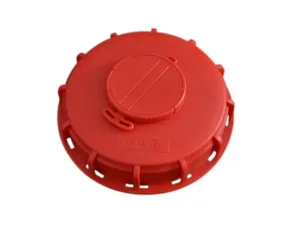
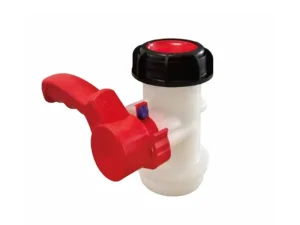
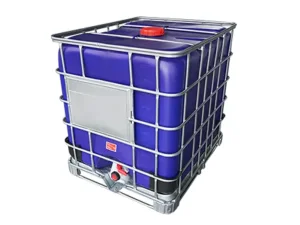
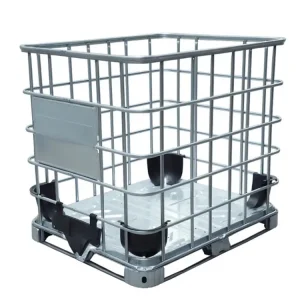
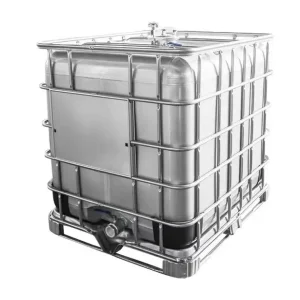
Complete Tank Assemblies, Lids & Replacement Hardware
Explore our broader product portfolio manufactured under ISO 9001 quality systems for bulk liquid storage and transfer.
Frequently Asked Questions (Procurement & Compliance Guide)
Detailed technical answers to common queries regarding wholesale IBC safety labels, OEM production, material choices, and international shipping regulations.
What is BS5609 certification and why is it mandatory for exported IBC safety labels?
BS5609 is the British Standard for marine adhesive labels. It tests label durability when immersed in ocean salt water for three months. Section 2 tests the base label substrate and adhesive coat, while Section 3 tests print legibility and ink abrasion resistance. It is legally required for hazardous cargo transported under IMDG maritime regulations to ensure labels remain attached and legible if containers fall overboard.
How do Chinese label factories ensure high adhesive performance on textured HDPE IBC bottles?
High-Density Polyethylene (HDPE) has low surface energy, making standard adhesives prone to peeling. Factories formulate specialized high-tack solvent acrylic adhesives with heavy coat weights (typically 25-35 GSM) or use corona surface treatment during application to maximize molecular anchoring against textured or paraffin-coated plastic bottles.
What is the standard production lead time for custom wholesale OEM safety labels?
For standard stock configurations, dispatch occurs within 3 business days. Custom OEM orders requiring specialized plate making, custom color matching (Pantone PMS), and specific die-cut shapes generally require 7 to 12 business days for mass production roll slitting.
Can safety labels withstand extreme chemical splashes like concentrated acids or solvents?
Yes. High-performance industrial safety labels feature a clear protective over-laminate layer (PET or PP film) bonded over the printed ink layer. This barrier shields the underlying print graphics and text from direct contact with aggressive solvents, industrial cleaners, petrol, and concentrated acids.
What format are wholesale label shipments delivered in for automated production lines?
Wholesale orders can be supplied in continuous roll format compatible with automated label applicators (specifying inner core size, outer roll diameter, and unwind direction), fan-folded stacks, or individually die-cut sheets for manual application on assembly lines.
How do smart RFID-enabled IBC labels function in chemical warehouse tracking?
Smart RFID safety labels embed a thin microchip and antenna inlay between the release liner and face stock. RFID readers placed at warehouse entry gates or mounted on forklifts read container ID numbers, chemical type, fill date, and batch records automatically without requiring individual manual barcode scans.