
Featured Industrial Hardware & Containers (Part I)
Standardized engineering components and heavy-duty intermediate containers engineered for extreme industrial performance.
Executive Strategic Overview: The Reusable Plastic Packaging (RPP) Paradigm
How enterprise supply chains are transitioning from single-use packaging to high-density folding crates to achieve ESG metrics and operational ROI.
The Shift Toward Reusable Plastic Crates
In modern industrial logistics, procurement officers are undergoing a structural shift. Legacy single-use packaging—such as corrugated paperboard containers and heavy wooden crates—presents compounding operational bottlenecks: high structural failure rates under high humidity, significant solid waste disposal charges, and low volumetric efficiency during return logistics. Selecting a vetted wholesale folding crate supplier has transitioned from a operational line-item choice to a high-priority enterprise cost optimization initiative.
Total Cost of Ownership (TCO) & Financial Impact
While the initial Capital Expenditure (CapEx) for polypropylene (PP) or high-density polyethylene (HDPE) foldable crates is higher than consumable corrugated packaging, the Total Cost of Ownership (TCO) curve intersects favorably within 4 to 7 closed-loop rotation cycles. Industrial-grade folding crates feature service lifespans exceeding 50 to 100 trips under standard handling conditions, yielding multi-million dollar long-term Operational Expenditure (OpEx) reductions for enterprise distributors.
Global Enterprise Demand & Industry Vertical Solutions
Customized engineering parameters adapted for automotive manufacturing, cold-chain agriculture, automated e-commerce hubs, and chemical logistics.
Automotive OEM & Tier-1 Supply Chains
Automotive components require structural wall rigidity, high static stack weight allowances (up to 3,000 kg), and Electrostatic Discharge (ESD) protective additives. Vetted folding container systems allow Tier-1 suppliers to shuttle heavy engine assemblies, cast parts, and electronics directly to assembly lines via Automated Guided Vehicles (AGVs).
Agriculture & Cold-Chain Produce Logistics
Perishable produce requires ventilated folding produce crates with smooth inner walls to prevent bruising while maintaining high airflow inside refrigerated containers. FDA and EFSA food-grade virgin polypropylene resins prevent microbial growth and withstand aggressive caustic wash-down protocols.
FMCG & E-Commerce Fulfillment Hubs
High-velocity retail sorting hubs rely on standardized foot-print folding containers (600x400mm, 400x300mm, 800x600mm) that interlock cleanly on European and ISO pallets. Quick-active latches allow warehouse operators to collapse crates in under 2 seconds during reverse logistics staging.
Technical Architecture & Material Science Roadmap
An in-depth analysis of polymer selection, structural rib-lattice physics, locking mechanisms, and automated storage compatibility.
1. Polymer Chemistry & Material Formulations
The mechanical integrity of an industrial folding crate depends heavily on polymer formulation. Wholesale suppliers must balance flexural modulus against notched Izod impact strength:
- Polypropylene Copolymer (PP-C): Selected for high dimensional stability, high stiffness, and dynamic hinge durability. Superior performance across living-hinge fold mechanisms.
- High-Density Polyethylene (HDPE): Excellent low-temperature impact resistance down to -30°C. Ideal for cold-storage rooms and freezers where PP can become brittle.
- Functional Additives: Carbon-black masterbatches for UV stabilization, conductive carbon fillers for ESD protection, and anti-static agents to minimize dust attraction.
2. Structural Load Distribution Physics
Wall design employs Finite Element Analysis (FEA) to place vertical load-bearing columns along side walls. Ribbed lattice patterns counteract lateral wall bowing caused by heavy internal contents. Corner interlocking posts transfer vertical load directly down to the bottom grid, preventing top-lid deflection when stacked up to 8 high under full static load.
3. Hinge Engineering & Active Latching Mechanisms
A primary failure mode in generic folding crates is hinge joint shear. Enterprise-grade containers feature reinforced pin-hinge assemblies or integrated double-overmold living hinges capable of withstanding 50,000+ fold-unfold operational cycles.
4. AS/RS & Automated Conveyor Compatibility
Automated Storage and Retrieval Systems (AS/RS) require strict manufacturing tolerances. Deflection along the bottom base plate under full load must not exceed 5mm to prevent conveyor sensor errors. Crates feature smooth, textured base bottoms to maintain grip on high-speed roller belts while minimizing acoustic noise.
Industrial Container Comparison Matrix
An engineering and financial evaluation comparing heavy-duty folding plastic crates against alternative industrial packaging systems.
| Performance Metric | Heavy-Duty Folding Crate | Rigid Plastic Crate | Corrugated Cardboard | Wooden Timber Crate |
|---|---|---|---|---|
| Volumetric Return Ratio | 4:1 to 6:1 (Collapsible) | 1:1 (Fixed Volume) | 10:1 (Flat-packed, single use) | 1:1 (Fixed Volume) |
| Reusable Rotation Lifecycle | 50 – 100+ Trips | 50 – 100+ Trips | 1 – 2 Trips Max | 5 – 10 Trips |
| Moisture & Chemical Resistance | 100% Waterproof & Acid Resistant | 100% Waterproof | Degrades rapidly with moisture | Absorbs moisture & mold risk |
| Static Stacking Capability | Up to 3,000 kg (Tier Stack) | Up to 3,500 kg | < 500 kg (Humidity dependent) | Up to 4,000 kg |
| Automated Warehouse (AS/RS) Fit | High (Millimeter Tolerances) | High | Poor (Debris & dimensional warping) | Poor (Splinters & uneven base) |
| Hygienic Washability & Sanitization | High-Temp Wash Compatible | High-Temp Wash Compatible | Non-washable | Porous, difficult to sanitize |
| End-of-Life Recyclability | 100% Recyclable Polymer Loop | 100% Recyclable | Recyclable (Down-cycling) | Biodegradable / Landfill |
Testing Standards & Compliance Certification
Rigorous empirical validation processes to guarantee performance under extreme industrial conditions.
Mechanical Stress & Drop Testing
Containers undergo standardized ISO 2248 drop testing from heights up to 1.8 meters under full payload conditions. Free-fall impact tests validate hinge durability and lock retention when dropped directly on corner edges at ambient and sub-zero temperatures.
Compression & Stacking Integrity
Compressive load testing compliant with ISO 2234 applies uniform top loads to verify wall deflection rates over prolonged 30-day static holds. Creep resistance analysis ensures crates do not deform under summer warehouse heat.
Regulatory & Food Grade Safety
Suppliers provide material verification confirming compliance with FDA 21 CFR 177.1520 and EU Regulation No. 10/2011 for direct food contact. Free from Heavy Metals (RoHS directive), REACH SVHC compliant, and certified for clean-room deployments.
Customization Capabilities & IoT Smart Tracking
Transforming standard shipping crates into intelligent asset tracking nodes across global supply chains.
Tailored OEM/ODM Engineering Options
Wholesale manufacturers support deep brand customization and functional modifications:
- Custom Masterbatch Color Matching (RAL and Pantone specifications).
- In-Mold Labeling (IML), high-precision screen printing, and permanent laser etching.
- Customized height wall extensions and specialized internal partition grid systems.
- Dedicated tool and die fabrication with mold tolerances up to 0.005mm.
RFID, BLE & Barcode Identification Pockets
Modern supply chain visibility relies on real-time asset tracking. Standard enterprise folding crates integrate dedicated slots for:
- UHF RFID Inlays: Enable automated bulk gate scanning during warehouse dock arrival.
- Bluetooth Low Energy (BLE) Beacons: Provide temperature, humidity, and location tracking.
- Protected Card Holders: Secure physical shipping labels against scraping on conveyor lines.
Featured Industrial Hardware & Containers (Part II)
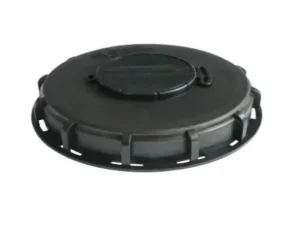
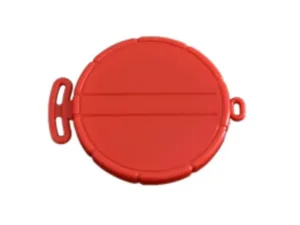
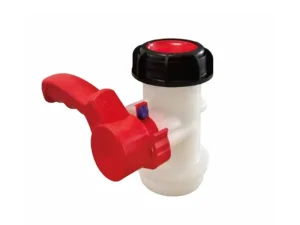
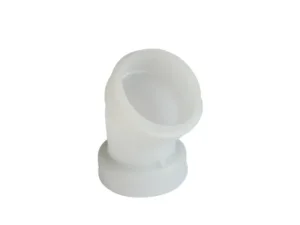
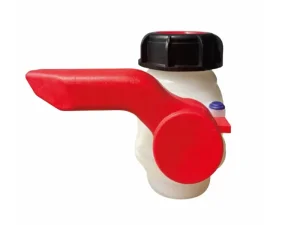
Explore additional precision-manufactured IBC valves, protective lids, and heavy-duty container accessories.
Frequently Asked Questions (B2B Buyer Guidance)
Addressing common engineering, operational, and commercial questions from enterprise supply chain teams.