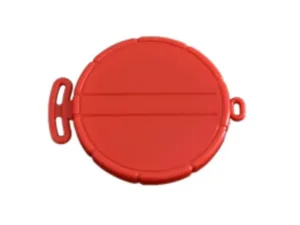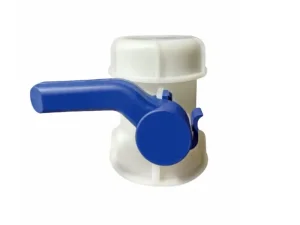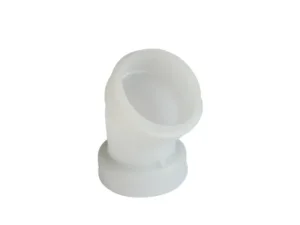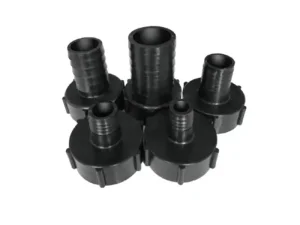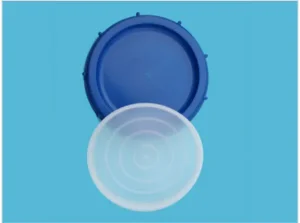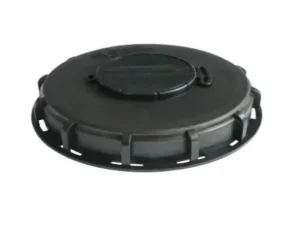
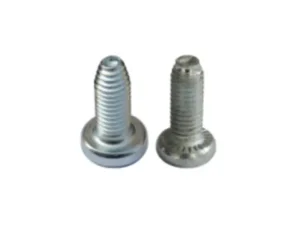
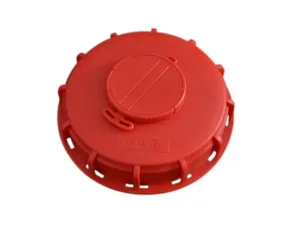
Featured IBC Containers & Components
Direct factory supply of high-integrity valves, caps, lids, and structural hardware engineered for extreme chemical containment.
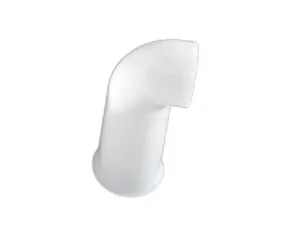
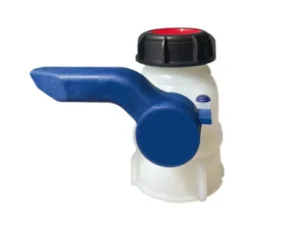
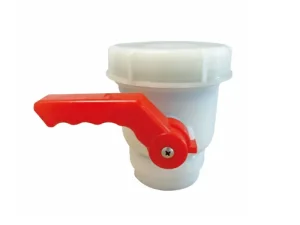
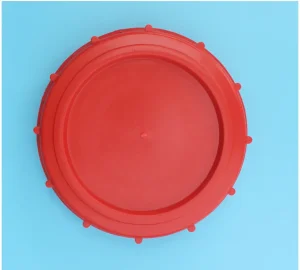
Industrial Reality & Global Regulatory Imperatives
Why chemical-resistant labeling for Intermediate Bulk Containers (IBCs) is no longer a trivial packaging line item, but a crucial legal, safety, and operational cornerstone.
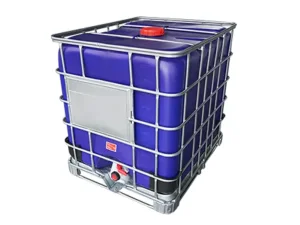
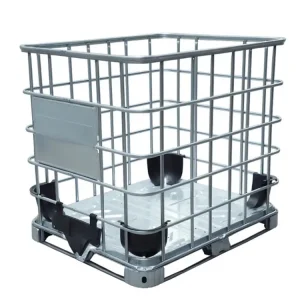
In the global chemical supply chain, Intermediate Bulk Containers (IBCs)—typically 1000-liter composite totes encased in galvanized steel cages—are the workhorses of hazardous material logistics. Every year, hundreds of millions of metric tons of aggressive acids, aromatic solvents, caustic alkalis, reactive agchem formulations, and high-purity industrial liquids are transported across continents via maritime shipping, rail freight, and long-haul trucking. The regulatory integrity and operational safety of this vast logistical network depend entirely on a paper-thin medium: the Chemical Resistant IBC Label.
Under the Global Harmonized System of Classification and Labelling of Chemicals (GHS Rev 10), European REACH regulations (EC 1907/2006), U.S. OSHA Hazard Communication Standard (29 CFR 1910.1200), and the International Maritime Dangerous Goods (IMDG) Code, an unreadable, delaminated, or chemically degraded label on an IBC tote constitutes an immediate regulatory breach. A single unidentifiable container can result in port customs impoundment, multi-thousand-dollar fines, environmental compliance audits, and catastrophic industrial accidents caused by accidental mis-mixing during chemical transfer.
The Real Financial Cost of Label Failure
Industry research indicates that over 14% of international chemical freight delays at major container hubs stem from non-compliant or damaged hazard markings. Replacing damaged labels in transit costs up to 20 times more than applying factory-certified, chemical-resistant substrates during initial container filling.
Partnering with specialized wholesale chemical resistant IBC label suppliers & factory networks allows chemical manufacturers, IBC reconditioners, toll blenders, and packaging distributors to secure material engineered specifically to withstand aggressive surface outgassing, high-pressure washdowns, intense UV irradiation, and prolonged ocean immersion without loss of adhesion or legibility.
Material Engineering & Adhesive Architecture
A multi-layered material breakdown designed to solve the twin challenges of low surface energy (LSE) blow-molded HDPE and harsh chemical exposure.
1. High-Performance Face Stocks
Polyvinyl Chloride (PVC), Biaxially Oriented Polypropylene (BOPP), top-coated Polyester (PET), and Polyimide films tailored for severe solvent resistance and tear-proof structural stability under mechanical shear.
2. Cross-Linked Solvent Acrylics
Extra-heavy coating weight (up to 45 gsm) of modified high-tack acrylic adhesive engineered to key into low surface energy (LSE) blow-molded High-Density Polyethylene (HDPE) bottles without flagging.
3. Chemical-Shield Overlaminates
Fluoropolymer (PVDF) or matte/gloss PET protective overlaminates applied over print imagery to form an impenetrable barrier against concentrated sulfuric acid, Xylene, Toluene, Acetone, and MEK spillage.
ASTM D543 Chemical Resistance Matrix
Empirical test performance of custom factory label constructions subjected to continuous chemical immersion for 72 hours at 23°C.
| Chemical Agent | Chemical Family | Standard Vinyl Label | Factory Polyimide + PET Overlaminate | Adhesion Retained (%) |
|---|---|---|---|---|
| Concentrated Sulfuric Acid (98%) | Inorganic Acid | Delaminated / Charred | No Effect | 99.4% |
| Sodium Hydroxide (50%) | Caustic Base | Swollen / Discolored | No Effect | 100.0% |
| Xylene / Toluene Blend | Aromatic Hydrocarbon | Print Dissolved | No Effect | 98.2% |
| Methyl Ethyl Ketone (MEK) | Ketone Solvent | Complete Adhesive Failure | No Effect | 97.8% |
| Hydrofluoric Acid (48%) | Halogen Acid | Substrate Eaten | No Effect | 98.9% |
Standard Compliance & Testing Protocols
How factory-grade chemical labels pass the most stringent international maritime and industrial survival benchmark tests.
BS 5609 Marine Test Specification: The Gold Standard
For chemical manufacturers exporting hazardous products by sea, compliance with BS 5609 (British Standard for Marine Immersion) is mandatory under IMDG rules. Our wholesale manufacturing process strictly segregates tests into two vital phases:
- BS 5609 Section 2 Compliance (Adhesive & Base Substrate): Tests the pressure-sensitive adhesive and base film after 3 months of continuous saltwater immersion in marine environments. The label must show zero detachment, zero edge curling, and maintain dimensional stability on low-density and high-density polyethylenes.
- BS 5609 Section 3 Compliance (Print Keying & Rub Resistance): Evaluates print durability, legibility, and color retention when subjected to severe marine sand abrasion and accelerated UV weathering. Printing must be produced using specialized thermal transfer resin ribbons or UV inkjet systems calibrated for chemical-grade pigments.
Xenon Arc UV Weathering
Accelerated weathering under ASTM G155 reproducing 2,000 hours of continuous high-intensity sunlight, humidity, and thermal cycling without visual chalking or print fading.
Taber Abrasion Resistance
CS-10 grinding wheels under 1kg load for 1,000 cycles ensure bar code scanability and GHS pictogram legibility remain 100% compliant during heavy handling.
HDPE Outgassing Ventilation
Specially engineered micro-embossed adhesives create microscopic channels that release trapped volatile gas bubbles without degrading primary adhesive contact.
Global Industry Application Scenarios
How specialized label solutions adapt to distinct regional supply chain stresses and environmental extremes.
North American Petrochemicals
Scenario: Texas & Gulf Coast chemical corridors transporting volatile solvents and fracking fluids.
Requirement: Extremely high resistance to aromatic hydrocarbons and continuous thermal stress (+45°C ambient warehouse storage).
UL 969 Recognized
European Green Chemistry & REACH
Scenario: Highly regulated EU transport requiring full REACH Annex XVII and CLP compliance.
Requirement: Halogen-free, eco-friendly face stocks compatible with automated wash-off systems for IBC tote reconditioning cycles.
REACH / RoHS Compliant
Asia-Pacific Agrochemical Export
Scenario: Bulk pesticide and herbicide shipments from manufacturing centers across China and Southeast Asia.
Requirement: Superior resistance to surfactant emulsifiers, high humidity, and long ocean transit routes across equatorial zones.
IMDG Code Ready
Technology Roadmap: Next-Generation Smart IBC Identification
The convergence of physical chemical resistance and digital intelligence in modern enterprise asset management.
The industrial labeling landscape is undergoing a digital revolution. Modern chemical logistics managers require more than static warning text; they demand real-time visibility into product provenance, temperature exposure, pressure variances, and automated inventory tracking across complex global supply chains.
1. Hybrid RFID / NFC Chemical Resistant Tags
Factory integration of ultra-high frequency (UHF) RFID inlays embedded directly between the chemical-proof overlaminate and the heavy-duty acrylic adhesive layer. Encapsulated against corrosive liquid ingress, these tags enable automated gate scanning, non-line-of-sight inventory audits, and immediate digital verification of MSDS data via standard smartphone NFC interfaces.
2. Self-Healing Polymer Coatings
Advanced polyurethane top-coats containing micro-encapsulated liquid resins that rupture upon scratch or scuff impact, automatically filling surface abrasions and protecting underlying GHS pictograms from chemical erosion.
3. Thermochromic & Leak-Detecting Indicators
Functional inks formulated to undergo irreversible color changes upon contact with specific chemical vapors (such as Ammonia, Acid fumes, or Chlorine) or when thermal thresholds are breached during shipment of temperature-sensitive catalysts.
OEM / ODM Wholesale Manufacturing Specifications
Direct-from-factory engineering capabilities tailored for bulk purchasers, container manufacturers, and private-label converters.
| Specification Parameter | Factory Technical Capability | Custom Options Available |
|---|---|---|
| Substrate Material | Polypropylene (BOPP), Vinyl (PVC), PET, Polyimide, Synthetic Paper | Custom film thickness (50 to 200 microns) |
| Adhesive Type | High-tack modified solvent acrylic, rubber-based, peelable wash-off | Custom coat weight (25 to 50 gsm), low-temperature application (-20°C) |
| Printing Technology | UV Flexographic, 8-Color Rotary Screen, Digital UV Inkjet | Variable data printing, 2D QR codes, Serialization, Micro-text |
| Surface Finishing | Gloss/Matte PET Overlaminate, PVDF Shield, Chemical Varnish | Tactile hazard warning triangles (EN ISO 11683 compliance) |
| Format & Packaging | Rolls (76mm / 3 inch cores), Fan-folded sheets, Die-cut individual singles | Custom roll orientation, automated applicator compatibility |
| Minimum Order Quantity (MOQ) | Standard models: 1,000 pcs; Custom formulations: 5,000 pcs | Rapid prototyping batches available within 72 hours |
Frequently Asked Questions (Industrial Q&A)
Expert insights addressing common engineering, procurement, and compliance challenges in IBC identification.
Why do standard pressure-sensitive labels peel off blow-molded HDPE IBC tanks?
What is the difference between BS 5609 Section 2 and Section 3 certification?
Can thermal transfer printed labels resist aggressive solvents like Xylene and Acetone?
How do environmental temperature fluctuations affect IBC label longevity?
Are wash-off chemical labels available for IBC tote reconditioning and recycling?
What thermal transfer ribbons are recommended for printing GHS hazard pictograms in-house?
How does surface preparation impact adhesive performance on reconditioned IBCs?
What lead times and OEM customization services does your factory offer for wholesale buyers?
Complete IBC Tank Replacement Accessories
Explore our full range of heavy-duty industrial fittings, custom covers, light-proof containers, and high-flow discharge valves.