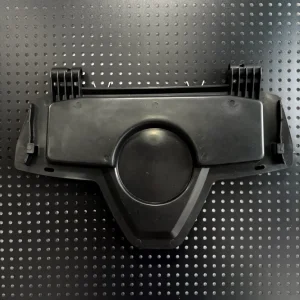
Industrial IBC Components & Packaging Assemblies
Explore our precision-engineered Intermediate Bulk Container (IBC) solutions, ranging from heavy-duty UN-rated liquid totes to specialized chemical valves, lids, and custom identification plates.
Architectural Foundations & Material Science of Printed IBC Nameplates
In global dangerous goods logistics, an Intermediate Bulk Container (IBC) nameplate is not merely a branding tag—it is a critical safety component, a compliance mandate under UN 31HA1 standards, and an operational nexus for tracking industrial media. Chinese OEM manufacturers have evolved to deliver world-class metallic and polymer marking solutions engineered for extreme operational environments.
Substrate Selection & Metallurgy
Leading Chinese factories utilize 304 and 316L grade stainless steel alongside anodized aluminum alloys (5052-H32). 316L variants provide superior pitting resistance in marine environments (PREN ≥ 25), while anodized aluminum provides optimal ink-receptive porous oxide layers (15–25 μm thickness) for high-vibrational industrial applications.
Screen Printing & Chemical Etching
Modern China factories deploy hybrid production lines combining semi-automated silk-screen printing with thermosetting epoxy inks and photochemical acid etching. Etched characters (0.1mm depth) filled with UV-cured acrylic polymers ensure that vital safety graphics remain readable even if surface paint coats erode under chemical exposure.
Thermal & Atmospheric Endurance
IBC nameplates must endure continuous ambient swings from -40°C in Arctic transport routes to +80°C during hot-filling process operations. Surface-treated aluminum and laser-etched stainless steel plates demonstrate zero micro-cracking or ink delamination during ASTM B117 salt spray tests exceeding 1,000 continuous hours.
Key Engineering Insight: The ASTM D3359 Cross-Hatch Adhesion Benchmark
Premier Chinese nameplate manufacturers enforce strict 5B rating adhesion protocols (ASTM D3359). By executing lattice pattern cuts into screen-printed metallic surfaces and applying pressure-sensitive tape, engineers ensure zero lattice square detachment, validating ink-substrate bond strength under heavy physical scrubbing and high-pressure steam washing.
Macro Industry Solutions & Multi-Sector Applications
Different industrial sectors require tailored container marking configurations. Top-tier Chinese manufacturers configure printed IBC nameplates to align with distinct regulatory, hygienic, and environmental demands.
Petrochemical & Hazardous Chemical Logistics
For Class 3 flammable liquids, Class 6 toxic substances, and Class 8 corrosive media, nameplates must present permanently legible UN packaging codes (e.g., UN 31HA1/Y/01 24/CN/DASHENG), maximum allowable gross mass, and test pressures.
- GHS Hazard Pictogram integration via chemical-resistant fluorocarbon inks
- Stainless steel plates fitted with heavy-gauge tubular frame grounding brackets
- Zero-spark material compositions for ATEX explosive zone compatibility
Food Processing & Pharmaceutical Ingredients
Food-grade liquid totes require non-porous, smooth, easily cleanable identification plates. Printed inks must comply with FDA 21 CFR 175.300 and EU Regulation No 10/2011 concerning food-contact materials.
- Non-toxic, heavy-metal-free ink formulations verified by RoHS/REACH testing
- Smooth electropolished 304 SS plates eliminating crevices for bacterial harborages
- Resistance to CIP (Clean-in-Place) caustic wash cycles at 85°C
China Factory 4.0: Supply Chain Resilience & Efficiency
China’s industrial hubs—such as the manufacturing base in Linyi City, Shandong—have transformed standard metal stamping workshops into digitalized Industry 4.0 production environments. This ecosystem delivers unmatched lead-time stability and high-volume cost advantages.
Automated Screen & Laser Lines
By implementing high-speed CCD camera-guided screen printers alongside continuous fiber laser markers, Chinese factories achieve sub-millimeter print-to-edge registration. High-volume runs maintain zero color-drift across thousands of units.
Upstream Supply Integration
Proximity to major steel mills and aluminum extrusion plants in Shandong enables direct raw material sourcing, hedging against commodity price volatility and guaranteeing consistent sheet thickness tolerances (±0.02mm).
AI Optical Inspection (AOI)
Automated vision systems inspect every produced plate for ink pinholes, scratch defects, line weight irregularities, and barcode scannability (ISO/IEC 15415 standards), rejecting non-compliant items before final packaging.
Technical Roadmap & Future Technology Outlook (2025–2030)
The industrial packaging sector is shifting from static serial marking toward dynamic, smart, and eco-sustainable identification systems. Leading Chinese manufacturers are investing heavily in R&D to pioneer these breakthroughs.
Hybrid Metal-RFID & NFC Nameplates
Traditional metal nameplates block radio frequencies. The next technical evolution incorporates recessed polymer windows into stainless steel plates, housing anti-metal UHF RFID chips (860–960 MHz) and NFC tags. This enables automated gate scanning, real-time location tracking (RTLS), and instant maintenance logging via mobile devices without sacrificing structural ruggedness.
Zero-VOC Ink & Direct Fiber Laser Color Marking
Environmental regulations are driving the elimination of solvent-based inks. Future-proof factories are shifting to 100% solid UV-LED curable inks and MOPA fiber laser technology capable of creating localized oxidation color markings directly on stainless steel. This completely removes liquid chemical inks from the production footprint.
Global Procurement Framework & Compliance Standards
Overseas buyers and OEM packaging line managers must establish rigorous verification standards when sourcing printed IBC nameplates from China to ensure full regulatory compatibility and seamless container integration.
1. UN 31HA1 Regulatory Verification
Ensure the factory offers pre-formatted UN layout templates compliant with ADR/RID/IMDG regulations for composite IBCs storing liquid dangerous goods.
2. Dimensional Compatibility
Verify standard mounting hole dimensions (e.g., 420mm x 380mm or customized spacing) to fit standard tubular frame welded plate holders on composite IBC cages.
3. Custom OEM Branding & QR Codes
Confirm factory capability for high-resolution dynamic vector printing, enabling custom corporate logos, serial number ranges, and 2D DataMatrix codes.
4. Export Shipping Packaging
Require protective peel-off PE films on printed plate faces, inter-leaf paper insulation, and vacuum-sealed moisture-proof export wooden cases.
Specification Comparison: Nameplate Materials & Print Methods
Use this engineering reference matrix to select the ideal nameplate substrate and marking technology based on operational exposure and target budget.
| Material Substrate | Printing / Marking Process | Chemical & Solvent Resistance | Max Temp Tolerance | Expected Service Life | Best Industry Application |
|---|---|---|---|---|---|
| 316L Stainless Steel | Acid Etched + Epoxy Filled | Exceptional (Acid/Alkali) | +450°C | 15+ Years | Extreme Corrosive Chemicals, Offshore Oil |
| 304 Stainless Steel | Screen Printed Epoxy Ink | High (Solvent Resistant) | +200°C | 8–12 Years | Standard Chemical Logistics, Food Grade |
| Anodized Aluminum (5052) | Sub-Surface Screen Inbibition | Moderate-High (UV Stable) | +150°C | 5–8 Years | General Industrial Liquids, Standard Fleet Totes |
| Polycarbonate (UV-Stabilized) | Reverse Thermal Transfer / Digital | Moderate (Waterproof) | +80°C | 3–5 Years | Non-Hazardous Water Treatment, Agriculture |
Frequently Asked Questions (FAQ)
Direct technical answers to common queries regarding printed IBC nameplate manufacturing, customization options, minimum order quantities, and compliance standards.
What information must be legally printed on an UN-certified IBC nameplate?
How do Chinese manufacturers guarantee screen-printed ink durability against aggressive solvents?
Can I order custom nameplates with pre-engraved dynamic sequence numbers and QR codes?
What is the typical tooling lead-time for a non-standard metal nameplate shape or hole layout?
What is the difference between screen printing on aluminum vs anodized aluminum?
How do I choose between 304 and 316L stainless steel for IBC nameplates?
Complementary IBC Structural Fittings & Accessories
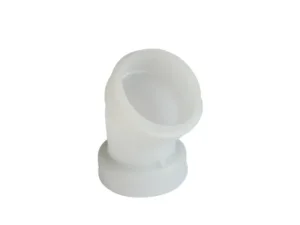
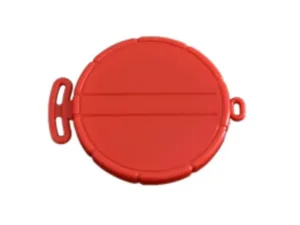
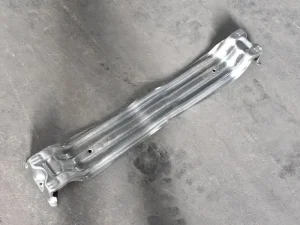
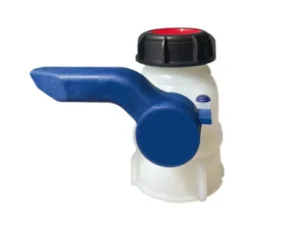
Discover our broad selection of precision replacement parts, including crossbeam supports, guide pipes, specialty valves, and anti-sloshing components designed for 1000L totes.