
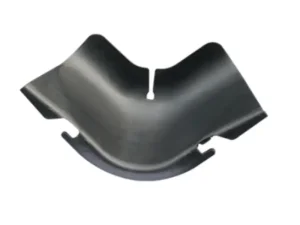
PRECISION COMPONENTS
Featured IBC & Container Closure Systems
Explore our OEM-grade precision-molded IBC container lids, structural corner protection, and high-flow outlet valves built to international dangerous goods transit specifications.
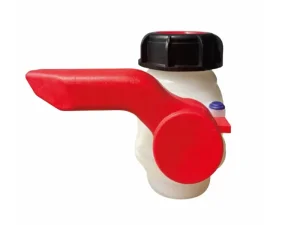
China Heavy Duty Stainless Steel IBC DN50 Welded Ball Valve
Request Engineering Specs
Heavy Duty Stainless Steel IBC DN50 Welded Ball Valve for Tank Containers
Request Engineering Specs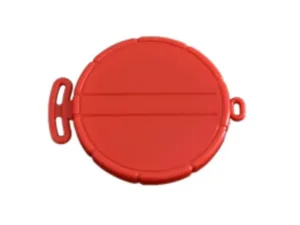
China Stainless Steel Brushed Finish IBC Cover Lid Cap 150mm 225mm
Request Engineering Specs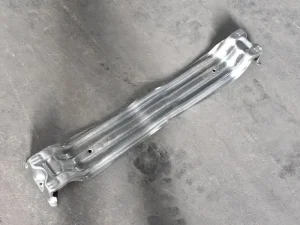
China Galvanized Steel Crossbeam Transom Support Bar for IBC Tank Frame
Request Engineering Specs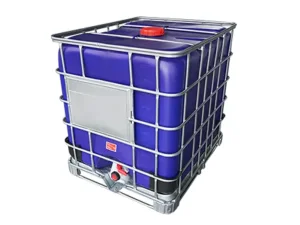
Light-Resistant IBC Tank for Light-Sensitive Liquids 90% UV Blocking HDPE
Request Engineering Specs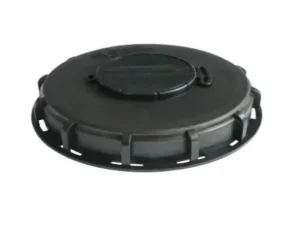
China Heavy-Duty IBC Tank Lid - Durable Protection for IBC Containers
Request Engineering Specs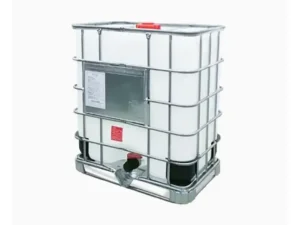
China 500L Vertical IBC Tank from China Suppliers Liquid Storage Factory
Request Engineering Specs
GLOBAL INDUSTRY INSIGHTS
1. Macro Dynamics of Industrial Plastic Closure Systems
In the rapidly evolving landscape of global logistics, chemical distribution, and bulk food transportation, the integrity of industrial packaging relies heavily on a single critical interface: the rigid container lid and closure mechanism. Search volume and global procurement data confirm that procurement officers, chemical plant managers, and packaging distributors are actively sourcing specialized solutions under the intent cluster of "China Plastic Bucket Lids Supplier & Suppliers". However, modern intent extends far beyond standard purchasing—buyers demand extreme engineering reliability, regulatory certification compliance, material traceability, and optimized unit economics.
Zero-Defect Leak Proofing
Industrial liquids—ranging from high-purity agricultural surfactants to corrosive industrial alkalis—require multi-stage sealing geometry, chemical-resistant gaskets (EPDM/NBR/FKM), and mechanical tear-strip tamper resistance.
Dangerous Goods (UN Standard)
International maritime (IMDG) and air (IATA) regulations strictly dictate hydraulic internal pressure standards. Lids must withstand hydrostatic pressure testing without micro-fissure expansion or structural stress failure.
Decarbonization & Circularity
Global enterprise ESG directives demand maximum recycled content integration (PCR/PIR polymers) without compromising hoop strength, impact resistance, or environmental stress crack resistance (ESCR).
Information Gain Highlight: China's packaging cluster in Shandong—specifically centered around advanced injection molding hubs like Linyi—provides direct supply chain synchronization. By combining raw resin compounding (HDPE/PP), custom mold design, automated high-tonnage injection molding, and integrated gasket dispensing under one roof, Tier-1 Chinese suppliers eliminate inter-factory transfer latencies and reduce total landed cost for international buyers by up to 28%.
TECHNICAL SPECIFICATIONS
2. Material Science & Engineering Taxonomy of Plastic Bucket Lids
Selecting the appropriate lid closure system requires an in-depth understanding of polymer physics, chemical compatibility, and mechanical engagement profiles. A generic bucket lid will inevitably fail under stacking pressures or aggressive solvent exposure. Leading Chinese suppliers deploy specialized formulation blends optimized for high Melt Flow Index (MFI) and superior Environmental Stress Crack Resistance (ESCR).
Polymer Material Selection Matrix
| Polymer Type | Tensile Strength (MPa) | ESCR Rating (Hours @ 50°C) | Temperature Operating Window | Primary Industrial Applications |
|---|---|---|---|---|
| Virgin HDPE (High-Density Polyethylene) | 28 - 35 | > 1,000 hrs (ASTM D1693) | -40°C to +80°C | Industrial chemicals, bulk lubricants, UN dangerous goods pails, outdoor liquid storage. |
| PP Copolymer (Polypropylene) | 32 - 40 | > 500 hrs | -10°C to +110°C (Hot-Fill Capable) | Food contact coatings, hot-fill sauces, adhesives, high-clarity snap-on food pails. |
| PCR/HDPE Blend (30%-50% Post-Consumer) | 24 - 30 | > 750 hrs | -20°C to +70°C | Non-hazardous construction chemicals, powders, solid waste, eco-line pails. |
| Specialty UV-Stabilized HDPE | 29 - 36 | > 1,200 hrs | -40°C to +85°C (UV Block > 90%) | Light-sensitive photo-initiators, agrochemical active ingredients, marine exposure storage. |
Thread & Sealing Engagement Architecture
The interface between the bucket lip/spout and the plastic lid determines vacuum preservation and dynamic pressure retention during maritime vibration:
S245×6 & Buttress Thread Profiles
Engineered with a heavy-duty, asymmetric tooth profile. The flat load-bearing thread face transfers radial torque into direct axial compression against the sealing gasket, preventing thread stripping under impact.
Tear-Strip Tamper Evident Ribs
Incorporate continuous circumferential tear bands with precision-engineered notch depth. Once locked onto the bucket rim bead, the lid cannot be removed without completely severing the tear strip, providing visual security.
Breathable Venting Membranes
Utilize ePTFE (expanded polytetrafluoroethylene) hydrophobic and oleophobic membranes. These allow off-gassing media (e.g., hydrogen peroxide, bleach, organic fertilizers) to equalize pressure without permitting liquid escape.
TOOLING & PRODUCTION
3. High-Precision Injection Molding & QA Protocols
Achieving absolute dimensional stability across multi-million unit production batches requires world-class tooling facilities. Advanced Chinese factories deploy multi-cavity hot runner injection molds built with hardened H13 or S136 stainless steel mold cores, operated on high-tonnage servo-electric molding machines.
STEP 01
Mold Flow Analysis (CAE)
Simulating melt front propagation, weld line formation, and volumetric shrinkage to eliminate sink marks and internal void stresses before steel cutting.
STEP 02
CNC Tooling (0.005mm)
High-speed CNC machining centers and mirror EDM ensure gasket retention grooves match strict dimensional tolerances for dynamic seal fit.
STEP 03
Automated Gasket In-Pouring
Robotic 2-component polyurethane foam (FIPFG) or solid EPDM seal insertion ensures uniform gasket thickness and zero manual placement errors.
STEP 04
Rigorous Quality Testing
Every batch undergoes drop testing from 1.8 meters at -18°C, hydrostatic pressure testing up to 200 kPa, and top-load compression testing.
SOLUTIONS ARCHITECTURE
4. Cross-System Integration: Bucket Lids, Drums & IBC Tote Synergy
Modern chemical logistics rarely operates in isolation. Container closures are part of an integrated bulk fluid management ecosystem. Whether procuring standard 5-gallon pail lids, S245x6 inner cap closures, or complete 1000L IBC Tote assemblies, structural synergy ensures supply chain safety.
Chemical & Agrochemical
Aggressive solvents, liquid pesticides, and concentrated acids require fluorinated HDPE bucket lids or stainless steel brushed IBC caps equipped with chemical-inert PTFE membranes to avoid panelling and container implosion.
Food & Pharmaceutical
FDA-compliant (21 CFR 177.1520) and EU Regulation 10/2011 certified virgin PP/HDPE resins guarantee zero heavy metal contamination, zero phthalate leaching, and organoleptic neutrality for bulk edible oils, syrups, and active ingredients.
Heavy Industrial Coatings
High-viscosity paints, resins, and architectural coatings utilize wide-mouth lids with integrated pour spouts (pull-up spouts) and high-load stacking rims, enabling 3-high container stacking in global ocean freight containers.
STRATEGIC PARTNERSHIP
5. OEM/ODM Workflow & Global Technology Roadmap
Navigating global procurement requires a manufacturing partner with flexible engineering capabilities and comprehensive international compliance support. Leading Chinese suppliers provide a streamlined, 6-phase custom tooling and delivery framework:
| Project Phase | Technical Action Plan | Deliverables & Milestones | Typical Timeline |
|---|---|---|---|
| 1. Technical Briefing | Chemical spectrum analysis, container rim 3D scanning, thread profile matching. | DFM (Design for Manufacturing) report & material recommendation. | 1 - 3 Days |
| 2. CAD & CAE Prototyping | Parametric 3D modeling, rib structure stress distribution, mold flow optimization. | Approved 3D STEP drawings & functional 3D printed prototype. | 3 - 5 Days |
| 3. Precision Tooling | Steel mold fabrication (H13/S136), CNC EDM cavity cutting, cooling line drilling. | T1 sample mold trial & dimension verification report. | 15 - 25 Days |
| 4. Certification Testing | UN drop testing, stacking load testing, hydrostatic seal verification, migration testing. | Full laboratory test certificate & UN marking compliance documentation. | 5 - 7 Days |
| 5. Automated Mass Production | High-tonnage injection molding, automated gasket pouring, robotic visual inspection. | Zero-defect mass production batch & batch inspection certificate (COA). | 7 - 14 Days |
| 6. Logistics & After-Sales | Palletized shrink-wrapping, export customs clearance, global freight synchronization. | On-time delivery & dedicated technical after-sales support. | Ongoing |
Future Outlook: Next-Generation Smart Closures
The future of industrial closures lies in digitizing the physical lid interface. Innovation roadmaps in Chinese manufacturing facilities are focusing on:
RFID & NFC Tracking Integration
In-mold labeling (IML) technology that embeds passive RFID/NFC chips directly inside the HDPE lid matrix during injection molding, enabling real-time batch tracking and anti-counterfeiting verification without external stickers.
Bio-Based Polymers & Monomaterial Recyclability
Transitioning from multi-material assemblies to 100% monomaterial closures (matching lid, band, and gasket materials) to allow direct recycling without manual disassembly, meeting strict EU packaging directives.
Smart Pressure-Sensing Vents
Integrating color-changing micro-valves that visually alert logistics operators if an internal container has exceeded safe pressure thresholds due to thermal exposure during ocean transit.
EXTENDED PRODUCT RANGE
Complete Container Closures & Accessories Catalog
Direct factory supply of specialty thread closures, integrated butterfly valves, universal adapters, and opaque light-proof containers.
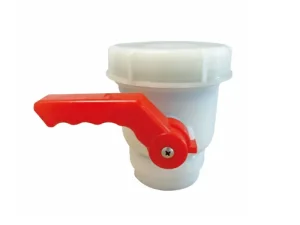
Wholesale IBC DN80 Welded Ball Valve for Liquid Storage Tanks Stainless Steel
Request Engineering Specs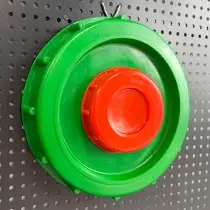
China S245×6 Plastic Lid With Inner Cap Manufacturers Factory
Request Engineering Specs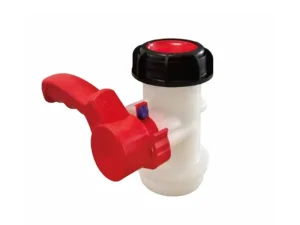
China IBC DN50 Welded Butterfly Valve Sanitary Design for Chemical & Food
Request Engineering Specs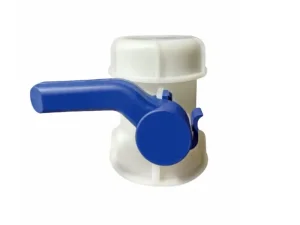
Wholesale IBC DN80 Integrated Butterfly Valve Manufacturer Suppliers
Request Engineering Specs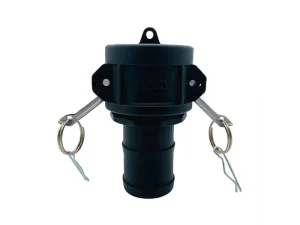
Wholesale Universal IBC Tank Adapter DN50 DN80 Connector Fluid Transfer
Request Engineering Specs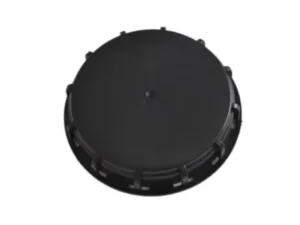
Wholesale IBC Black Sealing Cover / Lid / Cap Manufacturer
Request Engineering Specs
China Protective Plastic Angle Corner Guards for IBC Tanks Factory
Request Engineering Specs
Wholesale Blue Light Proof IBC Tank UV Resistant Opaque Manufacturer
Request Engineering Specs
TECHNICAL FAQ
6. Technical Procurement FAQ: China Plastic Bucket Lids & Closures
Exhaustive engineering and commercial query resolutions for procurement managers, packaging engineers, and global chemical distributors.
How do I verify the thread compatibility between a China-manufactured bucket lid and my existing pails or IBC totes?
Thread compatibility is governed by international standard profiles. Standard industrial bucket lids in China typically use metric coarse threads or buttress thread profiles (such as S245×6 for 150mm/225mm IBC lid ports or standard 5-gallon pails with S-thread pitch). To verify compatibility: (1) measure the outer thread major diameter with a digital caliper, (2) determine the pitch distance (distance from crest to crest in millimeters), and (3) confirm whether your container lip requires a continuous thread or a snap-latch engagement. Our engineering team provides detailed 2D/3D CAD overlay files before production to ensure 100% thread engagement without binding or leakage.
What is Environmental Stress Crack Resistance (ESCR), and why is it vital for plastic bucket lids?
Environmental Stress Crack Resistance (ESCR) measures a polymer lid’s susceptibility to micro-cracking when subjected to mechanical stress (such as stacking weight or high thread torque) in the presence of stress-cracking agents like surfactants, wetting agents, oils, and industrial detergents. Cheap plastic bucket lids made from low-grade regrind material exhibit low ESCR and will fail prematurely during ocean shipment. Our heavy-duty bucket lids and IBC closures are manufactured using virgin HDPE resins with an ESCR rating exceeding 1,000 hours under ASTM D1693 testing standards (in 10% Igepal CO-630 solution at 50°C), preventing sudden environmental structural failures.
What is the difference between a breathable (vented) plastic lid and a solid sealing lid?
A solid sealing lid relies on a continuous compression gasket (EPDM, NBR, FKM, or poured PU foam) to create a completely hermetic barrier, ideal for non-gassing liquids, stable chemicals, and long-term storage where zero atmospheric exchange is allowed. Conversely, a breathable (vented) lid incorporates a microporous hydrophobic/oleophobic ePTFE membrane vent valve. This valve allows gas molecules to pass through to equalize internal pressure build-up (caused by chemical off-gassing, temperature fluctuations, or rapid pumping) while completely repelling liquid molecules, preventing tote expansion, paneling, or container bursting.
Can you supply food-grade certified bucket lids compliant with FDA and EU standards?
Yes. For food and beverage applications (such as bulk syrups, edible oils, dairy ingredients, and sauces), we use 100% prime virgin Polypropylene (PP) or High-Density Polyethylene (HDPE) resins that comply directly with FDA 21 CFR 177.1520 and EU Regulation No. 10/2011. Production takes place in controlled sanitary molding facilities using food-grade mold release agents, ensuring zero heavy metal content, zero plasticizer migration, and organoleptic neutrality. Material Safety Data Sheets (MSDS) and Certificates of Analysis (COA) are supplied with every shipment.
What OEM customization options are available for industrial bucket lids?
Our OEM/ODM services cover complete visual, functional, and material customization: (1) Color Matching: Custom Masterbatch color matching according to RAL or Pantone codes with anti-UV stabilization options; (2) Branding & Labeling: High-precision In-Mold Labeling (IML), silk-screen printing, or laser engraving on the lid surface; (3) Fitments & Ports: Custom drilling or molding for 2-inch bungs, pull-up spouts, vent valves, or fluid intake quick-connectors; (4) Tamper Evident Bands: Custom tearing band notches and anti-counterfeit security seals.
What are the typical lead times for custom tooling and bulk container lid exports from China?
For standard stocked products (such as S245x6 lids, black sealing covers, or standard DN50/DN80 valves), dispatch can be arranged within 3 to 5 business days. For custom OEM mold tooling: CAD design verification takes 1 to 3 days, mold fabrication and T1 sample production require 15 to 25 days, and full mass production follows within 7 to 10 days after sample approval. Freight can be coordinated via FCL (Full Container Load), LCL (Less than Container Load), or express air shipping, complete with full export documentation and UN-certified dangerous goods packaging compliance.