Primary Packaging & Containment Accessories
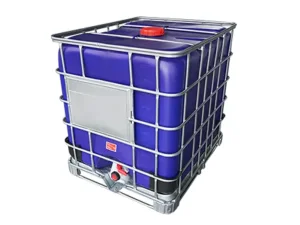
Directly engineered matching components for industrial pails, drum closures, and intermediate bulk containers (IBCs).
Macro Sourcing Dynamics for Plastic Bucket Lid Gaskets
Evaluating the technical imperative of high-performance elastomeric seals in international bulk liquid packaging and supply chain integrity.
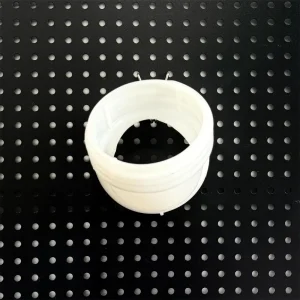
In global industrial packaging networks, the integrity of a 5-gallon pail, 20-liter plastic bucket, or 1000-liter Intermediate Bulk Container (IBC) relies entirely on a microscopic interface: the bucket lid gasket. When navigating the vast manufacturing ecosystem to select a qualified China plastic bucket lid gasket supplier & suppliers, enterprise procurement officers and packaging engineers must look beyond mere dimensional fitting. Modern chemical logistics, food ingredient transit, and hazardous material transportation demand zero-defect sealing technology capable of resisting severe mechanical stress, extreme thermal fluctuations, and chemical degradation.
China's industrial polymer ecosystem has evolved dramatically from low-cost mass extrusion to high-precision elastomeric engineering. Tier-1 Chinese suppliers now integrate automated liquid silicone rubber (LSR) injection, continuous vulcanization co-extrusion, and advanced Thermoplastic Elastomer (TPE) formulations that meet strict European Union (EU) and United States Food and Drug Administration (FDA) compliance frameworks. Sourcing from experienced manufacturers allows global enterprises to achieve an optimal balance between technical reliability, volume elasticity, and unit cost efficiency.
Technical Polymer Roadmap & Elastomeric Selection
Comparative analysis of raw material polymers utilized by leading Chinese bucket lid gasket manufacturers.
Selecting the appropriate elastomer formulation is the fundamental step in engineering a failure-proof lid sealing system. A premier China plastic bucket lid gasket supplier utilizes specialized polymers engineered for specific chemical compatibility matrices, shore hardness levels, and elasticity retention properties.
Elastomer Performance & Comparison Matrix
| Polymer Type | Shore Hardness | Temp Range (°C) | Chemical Resistance | Compression Set | Primary Industrial Application |
|---|---|---|---|---|---|
| EPDM (Ethylene Propylene) | 50A - 75A | -40 to +125 | Excellent for Acids, Alkalis, Water | Very Low (< 20%) | Industrial Chemicals, Outdoor Storage, Agrochemicals |
| NBR (Nitrile Rubber) | 60A - 80A | -30 to +100 | Outstanding for Oils, Fuels, Solvents | Moderate (< 25%) | Petrochemicals, Lubricants, Solvents, Hydraulic Fluids |
| TPE / TPR (Thermoplastic) | 40A - 85A | -40 to +90 | Good for Mild Chemicals, Aqueous | Low-Moderate (< 30%) | Food & Beverage, Consumer Goods, Recyclable Pails |
| FKM (Fluoroelastomer / Viton) | 70A - 90A | -20 to +200 | Exceptional (Aromatic Hydrocarbons) | Extremely Low (< 15%) | Aggressive Solvents, Concentrated Acids, High Heat |
| Silicone (VMQ) | 30A - 70A | -60 to +230 | High Purity, Ozone & UV Resistant | Low (< 18%) | Pharmaceuticals, High-Sterility Foods, Cosmetics |
Compression Set Recovery
The ability of a gasket to regain its original profile after prolonged compression under a tightened bucket lid. High compression set leads to permanent deformation and subsequent seal failure during long-term warehouse stacking.
Permeability & VOC Barriers
Advanced Chinese suppliers utilize micro-fluorination techniques and high-barrier polymers to prevent Volatile Organic Compounds (VOCs) from diffusing through the seal, complying with stringent environmental air quality standards.
Durometer Optimization
Matching Shore A durometer to lid closure torque. Soft gaskets (50A) accommodate rough plastic flash on pails, while hard gaskets (75A) resist extrusion under extreme hydraulic head pressures.
Sealing Failure Mode Analysis & Engineering Solutions
How top-tier Chinese manufacturers employ Finite Element Analysis (FEA) to eliminate root-cause leak paths.
Understanding seal failure modes is critical when evaluating a prospective China plastic bucket lid gasket supplier. In high-volume industrial filling operations, minor inconsistencies in gasket geometry or material homogeneity manifest as major logistical disasters. Engineering-led suppliers conduct rigorous failure mode and effects analysis (FMEA) to fortify gasket designs against operational hazards.
Common Gasket Failure Modes in Bulk Packaging
- Stress Relaxation (Thermal Creep): Under elevated ambient temperatures during ocean freight, polymer chains undergo permanent movement. Without specialized thermal stabilizers, low-grade rubber gaskets lose seal force over 60-90 days of transit.
- Liquid Migration & Wicking: Capillary action can draw low-viscosity oils or surfactants along the boundary layer between the bucket rim lip and the gasket surface. Precision-molded sealing beads (double-lip or triple-lip profile) interrupt these micro-channels.
- Plasticizer Leaching & Embrittlement: Poorly formulated PVC or low-cost rubbers leach plasticizers into organic solvents, causing the gasket to shrink, harden, and crack under stress.
- Over-Torque Extrusion: Automatic capping machinery applying high downward force can squeeze poorly retained gaskets out of the lid's annular groove. Engineered gaskets incorporate locking ribs or dovetail cross-sections to anchor securely inside the lid recess.
Global Corporate Sourcing & Macro Industry Solutions
Customized procurement strategies for multinational chemical producers, food packagers, and distributor channels.
Chemical & Petrochemical Sector
Demands UN Packaging Performance Group I/II/III certification compliance. Gaskets must resist aggressive aromatic compounds, aggressive solvents, and hazardous material outgassing without chemical degradation.
Food & Beverage Industry
Requires strict FDA 21 CFR 177.2600 and EU 10/2011 regulatory compliance. Gaskets are produced in cleanroom environments with zero taste or odor transfer for dairy, flavorings, and syrups.
Coatings, Paints & Resins
Requires low-solubility gaskets resistant to volatile solvents like toluene, xylene, and MEK. Formulations prevent swelling which could physically jam automated bucket denesting equipment.
Global Regulatory Frameworks & Quality Verification
Navigating global certification requirements when partnering with Chinese gasket factories.
Sourcing from an offshore China plastic bucket lid gasket supplier requires verified compliance with regional and international packaging directives. Reputable Chinese suppliers maintain dedicated testing facilities to issue certificate of analysis (CoA) documentation for every production lot.
Key Regulatory Directives & Standards
- FDA 21 CFR 177.2600: Directives governing rubber articles intended for repeated use in food contact surfaces, ensuring extraction limits for fatty and aqueous foods are strictly met.
- EU Regulation (EC) No 1935/2004 & (EU) No 10/2011: European standards regulating plastic materials and articles coming into contact with foodstuff, requiring overall migration limit (OML) verification.
- REACH & RoHS Compliance: Absence of SVHC (Substances of Very High Concern), heavy metals, phthalates, and restricted flame retardants within elastomeric compounds.
- UN Dangerous Goods Regulations (ADR/RID/IMDG): Requirements for drop testing, hydrostatic pressure testing, and leak-proofness testing under UN Code marking criteria for hazard Class 3, 6, 8, and 9 goods.
Sustainable Materials & Technological Horizons
The transition toward recyclable TPEs, bio-based elastomers, and automated continuous production.
The global packaging sector is undergoing a major shift toward circular economy principles. Traditional thermoset rubber gaskets (like vulcanized EPDM) present recycling challenges because they cannot be melted down alongside the High-Density Polyethylene (HDPE) bucket shell. Forward-thinking Chinese gasket manufacturers are pioneering advanced Thermoplastic Elastomers (TPEs) that are fully co-recyclable with HDPE or Polypropylene (PP) pails.
Fully Co-Recyclable Packaging Systems
By engineering TPE gaskets with melt-flow indexes compatible with standard HDPE recycling streams, brands can recycle the entire pail and lid assembly without manual gasket removal, lowering labor costs and carbon footprints.
In-Mold Gasket Injection (2K Molding)
Replacing manual gasket insertion with automated 2-component (2K) robotized injection molding. The TPE seal is chemically bonded directly into the plastic lid during molding, eliminating missing gasket errors entirely.
Frequently Asked Questions (FAQ)
In-depth engineering answers for procurement specialists and quality assurance teams.
Industrial IBC & Bulk Storage Components
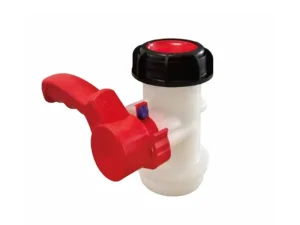
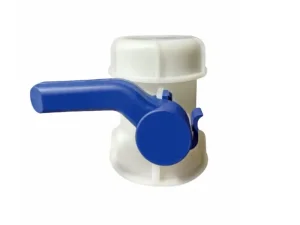
Explore matching valves, support structures, and precision fittings engineered for heavy-duty industrial storage systems.