
Featured Industrial Containers & Component Systems
The Paradigm Shift in Global Industrial Packaging & Plastic Basket Manufacturing
How advanced polymers, closed-loop supply chains, and precision Chinese injection molding are transforming global returnable transport packaging (RTP).
Modern global logistics networks are undergoing a structural transformation. Driven by stringent sustainability mandates, automated material handling, and total cost of ownership (TCO) optimization, multinational corporations are systematically transitioning away from single-use corrugated boxes and timber crates toward high-performance, injection-molded plastic baskets, perforated crates, and stackable industrial totes. As premier China Plastic Basket Manufacturers & Factories, modern OEM production facilities are no longer simple plastic processors; they are integrated engineering hubs delivering high-density polyethylene (HDPE) and polypropylene (PP) solutions built for severe industrial stress.
1.1 Macro Trends Driving Plastic Basket Sourcing in China
The global demand for industrial plastic crates and baskets is expanding rapidly across agricultural harvesting, automotive sub-assembly logistics, cold-chain distribution, and automated retail fulfillment. Key macroeconomic drivers include:
- Circular Economy Mandates: Global environmental regulations (including the EU Packaging and Packaging Waste Regulation - PPWR) compel enterprises to adopt 100% recyclable, multi-trip container systems.
- Automation & Robotics Compatibility: Modern Automated Guided Vehicles (AGVs), Automated Storage and Retrieval Systems (ASRS), and robotic picking arms require dimensionally rigid plastic crates with zero warpage, precise corner radii, and reinforced stacking lips.
- Sanitary & Cleanroom Compliance: Unlike porous wooden crates, smooth, non-absorbent HDPE plastic baskets resist fungal growth, chemical degradation, and bacterial accumulation—making them critical for FDA-compliant food processing and pharmaceutical cleanrooms.
Global Procurement Standards for Industrial Plastic Baskets
Evaluating structural engineering, polymer additives, and mechanical performance parameters for large-scale B2B procurement.
Polymers & Chemical Resistance
High-Molecular Weight HDPE provides unmatched low-temperature impact strength down to -40°C, essential for blast freezing. Polypropylene (PP) offers superior flexural rigidity and minimal creep under heavy static loading up to 80°C.
Load Capacity & Stacking Ribs
Engineered interlocking stacking rims combined with diagonal ribbing matrices allow up to 1+5 vertical crate stacking (handling static loads exceeding 1,500 kg), ensuring floor-space optimization in high-density storage facilities.
UV-8 & ESD Additive Matrix
For outdoor agricultural usage, HALS UV-8 stabilizers protect against yellowing and brittleness. For electronics and automotive logistics, carbon-black conductive additives deliver ESD surface resistivity of 10^4 to 10^9 ohms.
Comparative Matrix: Material Selection for Industrial Baskets
| Performance Characteristic | High-Density Polyethylene (HDPE) | Polypropylene (PP Copolymer) | Post-Consumer Recycled (PCR HDPE) |
|---|---|---|---|
| Operating Temperature | -40°C to +70°C (Superior Cold Chain) | -10°C to +90°C (High Heat Resistance) | -20°C to +60°C (General Industrial) |
| Impact Resistance (Izod Notched) | High (Flexes under heavy drop impact) | Medium-High (Rigid, low flex) | Medium (Good for standard crates) |
| Static Stack Load Capacity | Up to 1,200 kg | Up to 1,800 kg (Minimal Creep) | Up to 1,000 kg |
| Food Contact Certification | 100% FDA / EU 10/2011 Compliant | 100% FDA / EU 10/2011 Compliant | Non-food / Industrial Outer Totes |
| Sustainability & Carbon Index | Virgin Resin (Longest Lifespan) | Virgin Resin (High Durability) | 70-90% Reduced Carbon Footprint |
China Factory 4.0: Modern Injection Molding & Tooling Mastery
Inside China's advanced plastic basket factories—combining multi-cavity hot-runner mold design with automated robotic cell integration.
Sourcing from premier Chinese plastic basket manufacturers provides unparalleled strategic supply chain advantages. Industrial hubs in Shandong, Zhejiang, and Guangdong have evolved into highly integrated ecosystems featuring raw material synthesis, precision CNC mold tooling, high-tonnage injection processing, and stringent quality assurance.
3.1 Precision Tooling & Mold Flow Analysis
The lifespan of a heavy-duty plastic crate is directly dictated by its mold design. Leading OEM factories utilize 3D Moldflow® simulation software prior to steel cutting to identify potential weld lines, air traps, and uneven shrink rates. Key technological pillars include:
- Hardened Mold Steels: Premium P20, 718H, and H13 core and cavity steels treated with nitriding ensure tool life exceeding 1,000,000 injection cycles.
- Hot Runner Valve Gate Systems: Multi-point sequential hot runner systems eliminate sprues, minimize material waste, and guarantee consistent plastic melt density throughout large-volume basket walls.
- Gas-Assisted Injection Molding: Integrated gas channels create hollow internal structural ribs, vastly increasing stiffness-to-weight ratios while reducing cycle times by up to 25%.
3.2 Automated Quality Assurance Protocols
To eliminate structural defects in mass production, Tier-1 Chinese factories implement automated inline inspection routines:
- Dynamic Drop Testing: Loaded crates are dropped from heights of 1.5 to 2.0 meters onto solid steel plates at extreme temperatures (-20°C and +40°C).
- Compressive Load Creep Testing: Hydraulic presses apply continuous static loads over 72 hours to measure deflection rates and creep recovery.
- Ultrasonic Wall Thickness Mapping: Automated laser sensors verify wall uniformities across rib intersections to prevent weak thermal stress points.
Localized Industrial Application Scenarios
From farm-to-table agricultural cold chains to automotive sub-assembly lines—how customized plastic baskets solve operational bottlenecks.
Agriculture & Cold-Chain Harvest
Vented mesh agricultural baskets provide maximum airflow during field picking, hydro-cooling, and cold storage transport. Smooth interior surfaces eliminate bruising of delicate berries, citrus, and vegetables, drastically reducing post-harvest crop spoilage.
Automotive KLT & Component Logistics
Standardized VDA-compliant Small Load Carrier (KLT) plastic crates integrate anti-static (ESD) protection for sensitive ECU modules, sensor assemblies, and precision engine components circulating between tier suppliers and OEM assembly plants.
E-Commerce & Automated Fulfillment
Foldable/collapsible plastic crates feature nestable ratios of up to 4:1, allowing empty return trucks to transport four times as many containers. Built-in RFID tag pockets enable real-time tracking across high-speed ASRS conveyer lines.
Frequently Asked Questions (FAQ) for Global Buyers
Direct technical answers regarding OEM custom tooling, lead times, MOQ requirements, and international shipping optimization.
What are the primary differences between virgin HDPE and PP material for plastic baskets?
How do Chinese plastic basket factories handle custom color matching and logo branding?
What is the typical lead time for custom injection mold fabrication and mass production?
How do collapsible/foldable plastic crates compare to solid stackable baskets in shipping efficiency?
What international quality certifications should global enterprise buyers request?
Can RFID chips or barcode tracking systems be pre-integrated into plastic baskets during manufacturing?
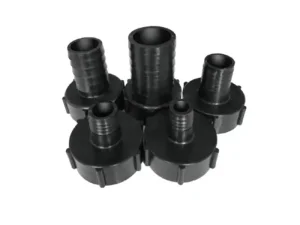
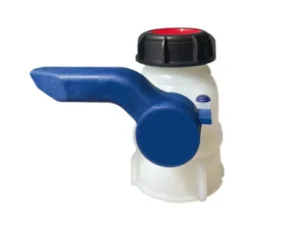
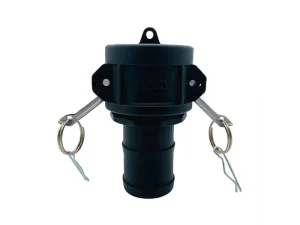
High-Performance Industrial Containers & Spare Components

Conclusion: Strategic Value of OEM Manufacturing Partnerships in China
Optimizing enterprise container supply chains requires balancing material innovation, precision mold engineering, and reliable manufacturing execution. Partnering with dedicated China Plastic Basket Manufacturers & Factories ensures direct access to advanced polymer chemistry, Industry 4.0 automation, and scalable production capacities engineered to lower operating costs while upholding global safety standards.