Precision Injection Molded Components & Fluid Handling Solutions
Direct factory supply of certified industrial IBC totes, precision valves, closures, and structural accessories engineered for high-stress environments.
1. The Evolution of Custom Plastic Injection Molding Sourcing in China
Understanding the transition from low-cost plastic manufacturing to high-precision engineering, automated molding ecosystems, and strategic supply chain integrations.
Global industrial procurement has underwent a paradigm shift over the past decade. OEMs, Tier-1 automotive suppliers, pharmaceutical liquid handling companies, and industrial packaging syndicates no longer evaluate China Injection Molding Plastic Parts Suppliers & Factories solely on unit piece price. Instead, procurement directors and engineering executives prioritize overall technical capability, Design for Manufacturability (DFM) rigors, material traceability, and automated quality assurance metrics.
China's plastic processing sector accounts for over 30% of global synthetic resin transformation, featuring integrated industrial clusters in Shandong, Zhejiang, and Guangdong provinces. Modern manufacturing hubs combine ultra-precision CNC tooling facilities, multi-cavity injection molding machines ranging from 50 to 3,200 metric tons of clamping force, and integrated cleanroom assembly lines under strict compliance environments.
Search Intent & Engineering Reality: Information Gain Highlight
Unlike generic buyers guides, professional evaluation of high-density polyethylene (HDPE), polypropylene (PP), nylon (PA66), and fluoropolymer components requires deep examination of resin melt flow index (MFI), thermal shrinkage anisotropy, cycle-time optimization, and cavity pressure sensors. Selecting the wrong tooling partner directly induces environmental stress cracking, thread deformation on liquid closures, or premature valve mechanical breakdown under pressure loading.
2. Deciphering Global Procurement Intent for Injection Molded Parts
Analysis of cross-border enterprise sourcing criteria across North America, Europe, Asia-Pacific, and emerging manufacturing corridors.
Industrial Packaging & Bulk Storage
Demands high structural integrity for 1000L IBC totes, heavy-duty caps, anti-sloshing baffles, and valve assemblies. Key criteria include UN dangerous goods certification, drop-impact stress testing, and long-term chemical resistance to acids, alkalis, and solvents.
Automotive Under-the-Hood & Fluids
Requires high-temperature polyamides (PA6/PA66 with 30% glass fiber inclusion), polyoxymethylene (POM) gears, and tight-tolerance fluid connectors certified under IATF 16949 quality frameworks with rigorous PPAP Level 3 documentation.
Medical & Life Sciences Packaging
Mandates ISO 13485 manufacturing environments, Class 8 cleanrooms, zero heavy-metal additive resins, biological reactivity testing (USP Class VI), and leak-tight closures for hazardous liquid medical waste.
When enterprise procurement teams search for "China Injection Molding Plastic Parts Suppliers & Factories", their implicit intent revolves around risk mitigation. Sourcing managers evaluate supplier financial stability, automated robotic part pick-and-place capabilities, mold longevity guarantees (e.g., 500,000 to 1,000,000 shots for hardened S136 or H13 steel molds), and transparent cost breakdown models (resin cost + machine rate + secondary processing + margin).
3. Precision Tooling Roadmap: Mold Design, Material Science & Simulation
From CAD topology optimization and Moldflow simulation to high-precision multi-cavity injection molding setups.
3.1 Computer-Aided Engineering (CAE) & Moldflow Analysis
Premier Chinese injection molding factories utilize finite element analysis (FEA) and advance Moldflow simulation packages to predict polymer behavior before a single block of steel is machined. Engineers evaluate:
- Fill Pattern & Weld Line Location: Ensuring structural weld lines do not coincide with load-bearing threads or valve sealing faces.
- Volumetric Shrinkage & Warpage Prediction: Offsetting differential shrinkage caused by localized thickness variations in large components like IBC tank lids or angle guards.
- Cooling Circuit Optimization: Utilizing 3D printed conformal cooling channels to reduce cycle times by up to 30% while maintaining uniform thermal dissipation across complex geometries.
3.2 Advanced Polymer Material Matrix
Understanding material selection is critical to ensuring chemical compatibility, mechanical strength, and UV longevity during global transit:
| Resin Type | Key Mechanical Properties | Typical Industrial Application | Chemical Resistance |
|---|---|---|---|
| HDPE (High-Density Polyethylene) | High impact strength, excellent environmental stress crack resistance (ESCR). | 1000L IBC Tank Bottles, Breathable Lids, Corner Guards. | Exceptional resistance to acids, alkalis, and polar solvents. |
| PP (Polypropylene - Copolymer) | High flexural modulus, low density, superior fatigue resistance. | Threaded Caps, Heavy-Duty Handles, IBC Fittings. | Good resistance to fats, organic solvents, and detergents. |
| PA66 + 30% GF (Polyamide Glass Filled) | Ultra-high tensile strength, elevated heat deflection temperature (HDT). | Camlock Valves, Load-Bearing Structural Brackets. | Resistant to fuels, hydraulic fluids, and oils. |
| POM (Polyoxymethylene / Acetal) | High stiffness, ultra-low coefficient of friction, dimensional stability. | Precision Valve Spindles, Internal Gearing, Fasteners. | Excellent resistance to neutral chemicals and hydrocarbons. |
| EPDM / Fluororubber (FKM) | Elastomeric compression set resistance, dynamic sealing integrity. | O-Rings, Valve Gaskets, Airtight Container Seals. | High resistance to extreme temperatures and aggressive liquids. |
4. Macro Industry Solutions: Bulk Packaging & Fluid Handling Engineering
Integrated solutions combining blow molding, custom injection molded fittings, and structural steel reinforcement.
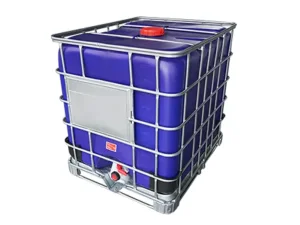
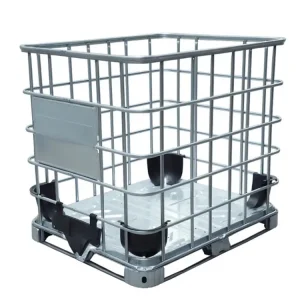
Modern intermediate bulk containers (IBCs) and specialized industrial liquid drums represent a complex assembly of multi-material engineering. A typical 1000-liter IBC unit requires seamless interoperability between blow-molded inner bladders, hot-dip galvanized steel cages, welded aluminum or plastic pallet bases, and numerous critical plastic injection-molded components.
Pressure-Equalizing Closure Systems
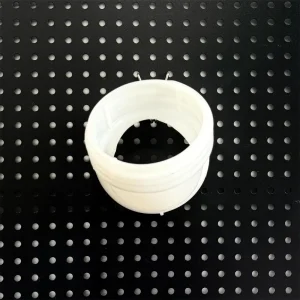
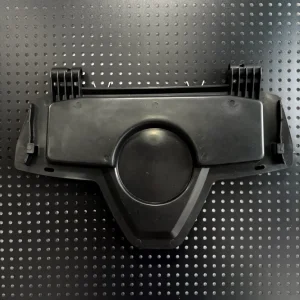
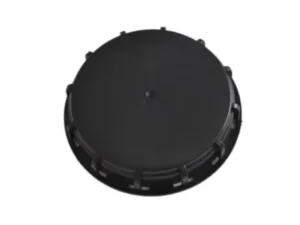
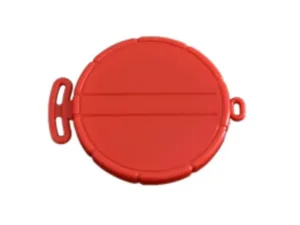
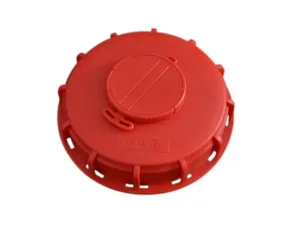
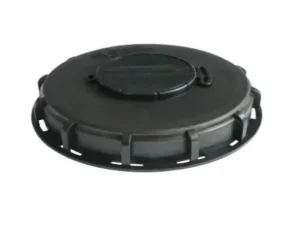
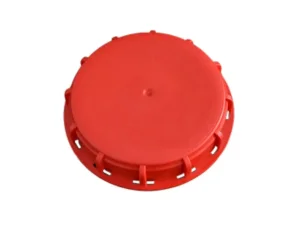
Injection molded 150mm and 225mm threaded covers featuring integrated hydrophobic PTFE membrane vents. These allow automatic venting during temperature spikes or off-gassing chemicals while blocking liquid egress during dynamic transport.
Precision Valve Assemblies
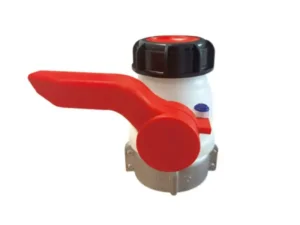
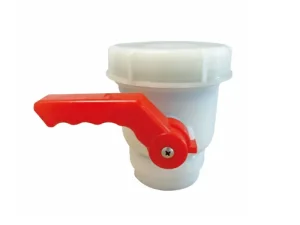
DN50 and DN80 butterfly valves molded with glass-reinforced polypropylene bodies, POM core shafts, and precision-machined threads. Ultrasonic welding or direct spin-welding guarantees leak-free integration with the container neck.
Structural Impact & Corner Protection
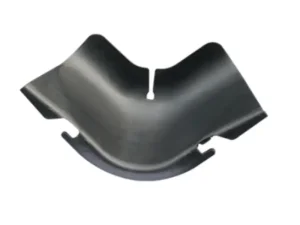
Injection molded heavy-duty angle corner guards produced from high-impact recycled or virgin polyolefins. Designed to absorb severe impacts from forklift tines and distribute stacking loads up to 4-high dynamic stacking configurations.
5. Global Manufacturing Comparative Matrix
A data-driven evaluation comparing leading Chinese injection molding suppliers against European and North American contract molders.
| Evaluation Parameter | China Top-Tier Injection Molders | North American Molders | Western European Suppliers |
|---|---|---|---|
| Tooling Cost (NAK80 / S136 Steel) | Benchmark ($) [Base] | +180% to +300% Higher | +220% to +350% Higher |
| Tooling Fabrication Lead Time | 21 – 35 Days (Fast Track) | 60 – 90 Days | 60 – 75 Days |
| Production Unit Cost Scaling | Highly competitive due to integrated raw resin supply chains and automated robotics. | Higher overhead costs; competitive only on low-volume local runs. | High energy and labor costs; optimized primarily for high-margin specialty items. |
| Prototyping & Iteration Speed | 3 – 5 Days via SLA/CNC + rapid tooling. | 14 – 21 Days | 14 – 20 Days |
| Secondary Processing & Assembly | In-house pad printing, laser marking, ultrasonic welding, sub-assembly packaging. | Often outsourced to third parties, increasing logistical friction. | High sub-assembly labor surcharges. |
6. Rigorous Quality Inspection Protocols & Global Compliance
How top-tier Chinese plastic manufacturers ensure zero-defect delivery for critical industrial applications.
Coordinate Measuring Machine (CMM)
Sub-micron dimensional verification of critical seal grooves, valve stem tolerances, and screw thread pitch profiles against native 3D CAD files.
Hydrostatic Pressure & Vacuum Testing
100% inline air-decay testing and destructive hydrostatic pressure burst testing for all molded liquid valves and breathable covers.
Spectrophotometer Color Matching
X-Rite spectrophotometer evaluation ensuring strict Delta-E (<1.0) color consistency across batch production runs of branded caps and components.
Leading manufacturers adhere strictly to international quality management frameworks including ISO 9001:2015 for general industrial products, IATF 16949 for automotive plastic components, and FDA 21 CFR 177.1520 for food-contact polyolefins. Furthermore, hazardous chemical packaging products hold official UN Certification (United Nations Recommendations on the Transport of Dangerous Goods) issued by accredited international testing bodies.
7. Next-Generation Technological Roadmap & Circular Economy
Embracing post-consumer recycled resins (PCR), AI-driven closed-loop injection molding, and carbon neutralization.
The global plastics sector faces accelerating regulatory demands for decarbonization and circular sustainability. Forward-thinking Chinese plastic parts factories are investing heavily in technologies that decouple performance from virgin petrochemical dependency:
- High-Percentage PCR Resin Processing: Advanced multi-component co-injection molding allows up to 50% post-consumer recycled (PCR) resin cores sandwiched between thin virgin polymer skin layers without compromising structural strength or chemical contact compliance.
- AI Closed-Loop Pressure Control: Smart sensors installed inside mold cavities communicate in real time with machine hydraulic servomotors, automatically adjusting injection pressure and pack time to compensate for micro-variations in resin lot viscosity.
- All-Electric Injection Presses: Replacing traditional hydraulic machines with all-electric molding systems cuts power consumption by up to 50%, eliminates hydraulic oil contamination hazards, and delivers shot-to-shot repeatability under 0.01 grams.
8. Frequently Asked Questions (FAQ)
Direct technical responses to common questions raised by international procurement managers and structural engineers.
Additional Industrial Plastic Fittings & Replacement Components
Explore our complete catalog of OEM plastic replacement parts, quick-connect valves, and heavy-duty protective accessories.