Global Industrial Landscape: The Strategic Evolution of IBC Valve Assemblies
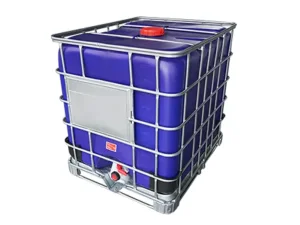
As international trade regulations tighten around hazardous liquid logistics, the global Intermediate Bulk Container (IBC) valve assembly market has shifted from simple mechanical closures to ultra-precise, fluid-dynamic safety systems. Industrial buyers across North America, Europe, and the Asia-Pacific region are revamping their procurement criteria to prioritize zero-emission containment, chemical resistance, and long-cycle structural integrity.
Zero-Leakage Compliance
Global mandates such as UN/DOT dangerous goods transport certifications require discharge valves to withstand severe pressure spikes, temperature fluctuations (-20°C to +70°C), and continuous dynamic vibration during sea and rail transport.
Closed-Loop Reconditioning
With the surge in ESG initiatives, IBC totes are expected to undergo 10 to 20 reuse cycles. Valve assemblies must allow easy cleaning, rapid seal replacement (such as spring inserts and swap-out gaskets), and modular component re-certification.
Procurement Bottlenecks
Procurement managers frequently face problems with thread misalignment (S60x6 vs. S100x8 vs. Camlock), Environmental Stress Cracking (ESC) in low-grade polymers, and chemical degradation of elastomeric seals. Modern sourcing demands verified material provenance.
China Factory 4.0: Modernizing Supply Chains & Manufacturing Efficiency
China’s IBC container manufacturing sector has evolved from labor-intensive molding to automated, high-precision Industry 4.0 facilities. Led by industrial clusters in Shandong (such as Linyi City), Chinese manufacturers integrate raw polymer refining, CAD/CAM mold tooling, high-pressure injection molding, automated ultrasonic welding, and 100% pneumatic pressure testing into a single continuous workflow.
In-House Precision Tooling
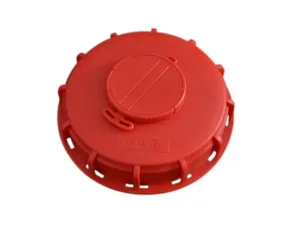
Controlling the toolmaker’s bench allows rapid prototyping of custom valve threads, specialized butterfly valve handles, and multi-scale top lid caps (150mm/225mm). Mold flow simulation eliminates internal void creation and micro-porosity.
Rigorous QA & Pressure Testing
Every DN50 and DN80 valve assembly leaving top-tier Chinese factories undergoes dual-stage testing: air-decay vacuum testing for low-pressure seal integrity and hydrostatic proof testing up to PN16 standards to verify burst resistance.
Supply Chain Resilience
Direct access to raw materials (HDPE, PP, 304/316L Stainless Steel, Aluminum alloys) combined with localized logistics hubs ensures stable, 3-day lead times for standard stock items and consistent scale for global OEM buyers.
Deep Technical Breakdown: IBC Valve Assembly Engineering Specifications
Selecting the correct IBC valve configuration requires matching fluid viscosity, chemical aggressiveness, and operating environments against specific polymer blends and mechanical actuation mechanics.
| Valve Type / Component | Nominal Diameter | Material Engineering | Sealing Gasket Options | Primary Industrial Intent |
|---|---|---|---|---|
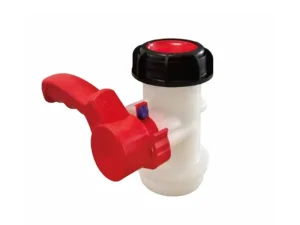
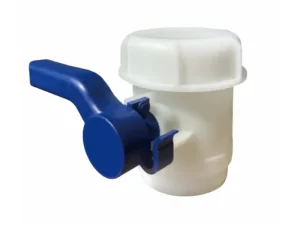
| Welded Butterfly Valve | DN50 (2") / DN80 (3") | HDPE Body, PE/PP Flap, SS Pin | EPDM, NBR, FKM (Viton) | Standard industrial chemicals, water-based solutions, high flow discharge. |
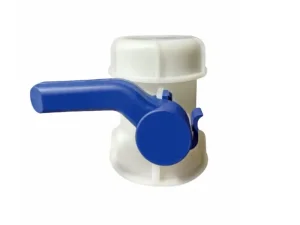
| Integrated Butterfly Valve | DN50 / DN80 | Blow-molded PE coupling, Aluminum Nut | EPDM, High-density PTFE | Direct screw connection to inner bottle outlets; high torque resistance. |
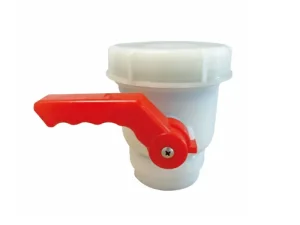
| Welded Ball Valve | DN50 / DN80 | High-Grade Polypropylene / SS316L | PTFE (Teflon) Seat, FKM O-Rings | Viscous liquids, resins, paints, aggressive organic solvents, high pressure. |
| Vented Top Lid Assembly | 150mm / 225mm | UV-Stabilized HDPE, Breathable Membrane | Food-Grade Silicone, EPDM | Gassing liquids, thermal expansion management, rapid vacuum-free emptying. |
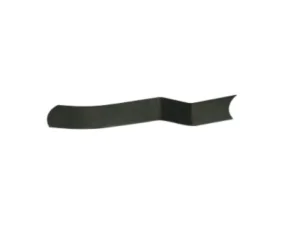
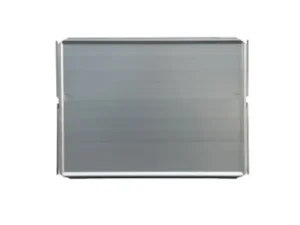
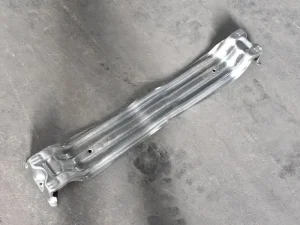
| Stainless Steel Nameplate | Customized Dimensions | AISI 304 / 316 Brushed Stainless Steel | N/A (Rivet / Cage Mount) | UN dangerous goods tracking, batch coding, corporate identity branding. |
Butterfly Valves vs. Ball Valves
Butterfly Valves (DN50/DN80): Feature a rotating disc mechanism that offers minimal resistance, light weight, and cost efficiency. They are ideal for general liquid transfer. The welded design attaches directly to the blown container neck, eliminating potential leak paths at the tank-valve interface.
Ball Valves: Utilize a bored sphere sealed between dual PTFE seats. Ball valves provide a completely unobstructed bore when open, handling high-viscosity media (like glues, thick resins, and food slurries) without clogging or valve stem binding.
Elastomer & Gasket Chemical Compatibility
EPDM: Superior resistance to polar solvents, water, steam, and dilute acids. Unsuitable for petroleum hydrocarbon fluids.
FKM / Viton: Outstanding resistance to high temperatures, mineral oils, synthetic hydraulic fluids, and concentrated aromatic hydrocarbons.
PTFE (Teflon): The industry benchmark for near-universal chemical inertness, making it indispensable for aggressive hazardous chemicals.
Targeted Application Scenarios & Global Procurement Needs
Different global supply chain environments place unique physical and regulatory stresses on IBC components. Chinese manufacturers tailor valve assembly designs to match these specific real-world operational challenges.
Agrochemicals & Fertilizers
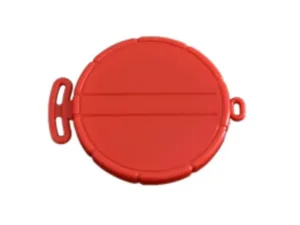
Requires high resistance to stress cracking caused by surfactant-rich pesticide formulations. Vented red breathable caps prevent package bulging during trans-equatorial maritime transit.
Food & Beverage Processing
Demands FDA 21 CFR 177.1520 compliant virgin PE resins, hygienic sanitary butterfly valves, stainless steel brushed lid covers, and easy-clean designs for syrup, edible oil, and liquid food ingredient transfer.
Industrial Paints & Coatings
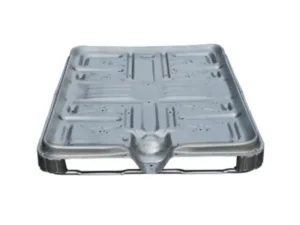
Needs DN80 high-flow ball valves with full-bore openings to prevent clogging from viscous polymer resins, pigments, and adhesives, combined with heavy-duty aluminum pallet bases.
Hazardous Chemical Transport
UN-certified IBC containers equipped with stainless steel custom engraved identification nameplates, dual anti-static grounding connections, and leak-proof gasket locking pins.
Sourcing Matrix: Total Cost of Ownership (TCO) & Manufacturer Evaluation
Procurement evaluation extends beyond initial unit price. Poorly engineered valve assemblies lead to leakage claims, cargo contamination, and environmental cleanup costs. The comparison table below highlights why direct manufacturer integration in China delivers strategic total cost efficiency.
| Evaluation Parameter | Tier-3 Low-Cost Workshop | Legacy Western Suppliers | China 4.0 Integrated OEM (e.g., Dasheng) |
|---|---|---|---|
| Resin Integrity | Recycled / Mixed Polyolefins | Virgin PE100 HDPE | 100% Virgin HDPE + Premium Carbon/UV Additives |
| Valve Sealing Tolerance | $\pm 0.15\text{ mm}$ (High leakage risk) | $\pm 0.01\text{ mm}$ | $\pm 0.005\text{ mm}$ (CNC & Automated Injection) |
| Hydrostatic Pressure Rating | PN6 – PN8 (Uncertified) | PN10 – PN16 | PN10 / PN16 (100% Air-Decay Tested) |
| Customization Flexibility | Standard parts only | High tooling costs, rigid lead times | Full OEM/ODM: Threads, Colors, Engraving, Molds |
| Total Cost Advantage | Low initial, High failure liability | High initial purchase cost | Optimal TCO: Factory Direct Scaling & Proven Lifecycle |
Frequently Asked Questions: Technical Sourcing Guidelines
Detailed insights for procurement officers, chemical plant engineers, and packaging distributors.
What are the key structural differences between welded and integrated thread IBC butterfly valves?
How do I determine whether my application requires a DN50 or a DN80 discharge valve assembly?
Why is breathable lid selection vital when shipping gassing or heat-sensitive chemical liquids?
What international compliance certifications should buyers require for China-manufactured IBC parts?
What is the typical dispatch turnaround for standard vs. custom-engineered IBC valve components?