High-Performance IBC Tanks, Valves & Marking Solutions
Factory-direct industrial fittings engineered for chemical totes, hazardous material containment, and precision liquid handling.
The Evolution of IBC Stainless Steel Marking Systems
How chemical logistics regulations, hazardous material tracking, and global supply chain automation are driving demand for high-end stainless steel nameplates manufactured in China.
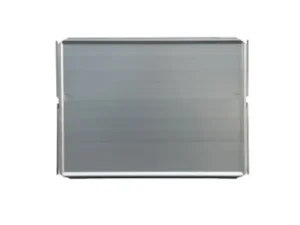
Intermediate Bulk Containers (IBCs) are the backbone of global bulk liquid transportation, handling millions of metric tons of hazardous chemicals, food-grade concentrates, pharmaceutical ingredients, and petrochemical refined products annually. Within this multi-billion dollar logistics ecosystem, the humble IBC Stainless Steel Nameplate acts as the legally binding passport of the container. It contains critical operational parameters including UN design certification codes, serial numbers, test pressures, maximum gross mass, tare weight, date of manufacture, and material specification tags (such as AISI 304 or AISI 316L).
In recent years, the global procurement market for IBC components has undergone a seismic shift. Environmental regulatory bodies—including the United States Department of Transportation (DOT), the European Agreement concerning the International Carriage of Dangerous Goods by Road (ADR), and the International Maritime Organization (IMO)—have significantly tightened container compliance inspection standards. Soft-printed labels, plastic tags, and low-grade aluminum plates frequently fail under harsh chemical washes, UV exposure, and ocean salt spray. Consequently, industrial buyers are standardizing on heavy-gauge stainless steel nameplates precision-manufactured by specialized Chinese factories that deliver long-term structural integrity and absolute legibility.
Corrosion & Chemical Resistance
Manufactured using premium austenitic stainless steels (304, 316, 316L), resisting nitric acid, caustic washings, organic solvents, and extreme marine conditions without surface oxidation or pitting.
Deep Laser & Chemical Engraving
Equipped with ultra-deep fiber laser ablation or acid etching (depths from 0.1mm to 0.3mm), ensuring text, 2D DataMatrix codes, and company logos remain fully legible even after repeated repainting or heavy abrasion.
Smart Logistics & Hybrid RFID/QR
Modern China manufacturers integrate surface-etched QR codes, DataMatrix ECC200 symbols, and optional RFID/NFC mounting brackets directly into the stainless steel plate design for automated depot scanning.
SS304 vs. SS316L Chemical Compatibility & Manufacturing Specs
Selecting the correct metallurgical grade and engraving process determines whether your IBC tote fleet maintains full UN regulatory compliance over a 15-year lifecycle.
When procuring custom stainless steel nameplates from Chinese suppliers, procurement directors must evaluate the chemical environment in which the IBC tote operates. Standard stainless steel (AISI 304) provides excellent atmospheric corrosion protection and is suitable for non-corrosive industrial liquids, vegetable oils, and standard food products. However, for offshore chemical totes, agrochemical packaging, and corrosive acidic solutions, low-carbon marine grade stainless steel (AISI 316L) is mandatory due to its Molybdenum (Mo) addition, which dramatically reduces intergranular corrosion and chloride pitting.
| Parameter / Specification | AISI 304 Grade | AISI 316L Grade (Recommended) | AISI 316Ti / Specialty Alloys |
|---|---|---|---|
| Chemical Composition | 18% Cr / 8% Ni | 16-18% Cr / 10-14% Ni / 2-3% Mo | Titanium stabilized 316 matrix |
| Pitting Resistance Equivalent (PREN) | ~19.0 | ~23.0 - 25.0 | >25.0 |
| Corrosion Environment Suitability | Mild industrial, food grade, freshwater | Severe chemical, marine salt spray, acids | High-temperature concentrated acid tanks |
| Etching Technology Compatibility | Fiber Laser, Chemical Acid, Stamping | Deep Fiber Laser Ablation, Electropolishing | Heavy-Duty Laser Engraving |
| Standard Plate Thickness Range | 0.5 mm - 1.5 mm | 0.8 mm - 2.0 mm | 1.0 mm - 3.0 mm |
| Salt Spray Resistance (ASTM B117) | 500+ Hours without red rust | 1500+ Hours without red rust | 3000+ Hours zero degradation |
UN Packaging Codes & International Marking Standards
Ensure your stainless steel nameplates conform to mandatory regulatory mandates defined by UN 31A/Y, IMDG Code 6.5.2, ISO 16106, and US DOT Title 49 CFR.
For dangerous goods shipping, international law demands that the identification plate installed on a composite or stainless steel IBC tote must be permanently attached, corrosion-proof, and positioned in a readily accessible location for safety inspectors. A compliant UN marking layout engineered by top-tier OEM Chinese manufacturers includes precise structural data blocks:
Mandatory Data Elements Required on UN 31A Metal Nameplates:
- The United Nations Packaging Symbol: Official UN logo indicating design type approval.
- Design Code: UN 31A for rigid plastics/composite IBCs for liquids, or UN 31HA1 for steel outer frame totes.
- Manufacturer’s State & Name: Country code (e.g., CN for China) and approved factory identification code.
- Approval Certificate & Batch Number: Unique certification reference issued by accredited testing bodies (e.g., CCS, TÜV, Bureau Veritas).
- Month and Year of Manufacture: Permanent stamped or laser-engraved date code.
- Test Pressure & Working Pressure: Hydrostatic test pressure in kPa (e.g., 100 kPa or 200 kPa) and maximum allowable working pressure.
- Capacity & Weights: Nominal capacity in Liters (e.g., 1000L / 500L), Tare Mass in kg, and Maximum Permissible Gross Mass in kg.
- Body Material Grade: Explicit notation of shell steel grade (e.g., 1.4404 / 316L).
IMDG Code Chapter 6.5.2
Strict compliance with maritime transport regulations. Minimum lettering height of 3mm for text and symbols ensures quick reading during port inspections and shipboard safety checks.
Tamper-Proof Fastening
Plates are pre-punched with precision mounting holes designed for heavy-duty stainless steel blind rivets, spot-welding tabs, or security wire seals to prevent unauthorized removal.
Why Source Stainless Steel Nameplates from China?
Inside China's state-of-the-art metal plate factories: High-speed fiber laser cutting, automated chemical milling, precise deburring, and high-volume custom production flexibility.
China has established itself as the global hub for industrial IBC tote manufacturing and auxiliary hardware supply. Chinese factories leverage end-to-end industrial supply chain integration—from raw stainless steel coil slitting in Shandong and Jiangsu steel centers to automated CNC finishing plants. This concentration enables unmatched manufacturing agility, cost efficiency, and rapid prototype turnarounds.
Step-by-Step Production Workflow at Chinese Nameplate Factories:
- 1. Raw Material Verification (PMI Testing): Positive Material Identification via XRF analyzers guarantees coil alloy composition matches certified 304 or 316L chemical limits prior to blanking.
- 2. High-Precision Fiber Laser Blanking: CNC laser cutters shape the outer plate profile and punch mounting holes with dimensional tolerances within ±0.05 mm, preventing misalignment on automated IBC cage assembly lines.
- 3. Deep Chemical Etching / Fiber Laser Marking: High-powered MOPA fiber lasers engrave sharp, deep vector graphics, black high-contrast barcodes, and custom brand typography directly into the steel surface.
- 4. Surface Polishing & Edge Deburring: Vibratory deburring and electropolishing eliminate sharp metallic edges, protecting operator gloves during tote handling and ensuring a smooth, hygienic finish.
- 5. Automated Quality Control & Inspection: Optical measurement systems inspect 100% of finished plates for dimensional accuracy, etching depth, surface micro-scratching, and barcode scannability.
Custom Tooling & OEM Branding
Complete OEM flexibility. Chinese factories support custom shapes, color-filled laser markings, embossed logos, and multi-language technical warnings tailored to your exact corporate identity.
Scalable Fleet Order Fulfillment
Whether ordering 500 units for a custom chemical tote batch or 50,000 units for an OEM container assembly plant, Chinese suppliers maintain massive capacity with standard 3 to 7-day dispatch timelines.
Optimizing Total Cost of Ownership (TCO) in IBC Marking Procurement
Balancing initial unit costs against long-term maintenance, regulatory rejection risks, and container reconditioning durability.
Procurement managers often make the mistake of selecting IBC nameplates solely based on initial unit price per piece. However, a low-cost, substandard nameplate that corrodes or loses legibility during transport can result in container detention at international customs ports, costly UN certification re-testing, or complete tote rejection by chemical clients.
By partnering with established Chinese IBC component manufacturers, global procurement teams achieve optimal TCO through:
- Direct Factory Pricing: Eliminating intermediary trading margins to secure wholesale pricing on high-grade SS304/SS316L sheet metal.
- Standardized Mounting Dimensions: Universal rivet hole centers (e.g., 4-hole or 6-hole grid patterns matching standard Schutz, Mauser, or Greif cages) reduce installation labor costs on container assembly lines.
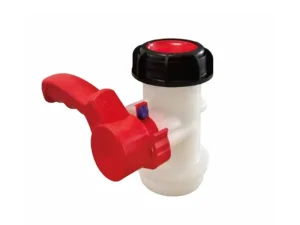
- Kitting Options: Ordering nameplates pre-bundled with compatible SS316 mounting rivets, high-temperature Gaskets, DN50 Butterfly Valves, and Tank Lids in consolidated sea freight containers.
The Technology Roadmap: Smart IBC Nameplates (2026–2030)
Next-generation developments combining physical metal durability with digital IoT tracking, circular economy recycling metrics, and anti-counterfeiting micro-structures.
Hybrid ATEX-Certified RFID Tags
Integration of metal-mount UHF RFID chips into recessed stainless steel plate pockets, enabling automated gate-scanning at explosive chemical storage depots (ATEX Zone 1/2 compliance).
Circular Passport & Reconditioning Logs
Laser-etched high-density 2D DataMatrix codes linked to cloud digital passports. Reconditioners can scan and instantly update test dates, bottle washing logs, and valve replacement history.
Micro-Engraved Security Features
Sub-micron laser text hidden within the identification plate border protects chemical manufacturers against counterfeit container claims and unauthorized tote substitution.
Frequently Asked Questions for IBC Nameplate Procurement
Detailed technical answers from China’s leading industrial container marking engineers.
Custom Nameplates, Seals, Valves & Replacement Hardware
Explore our full catalog of high-durability stainless steel components and bulk liquid container solutions.