
Featured IBC Tote Components & Hardware Solutions
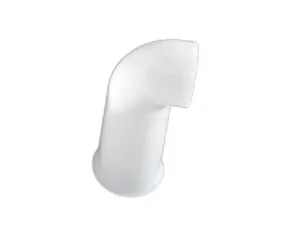
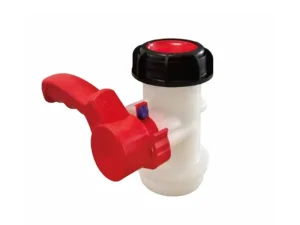
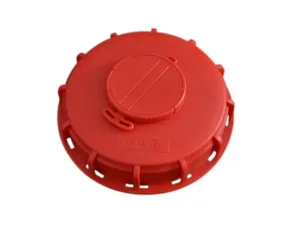
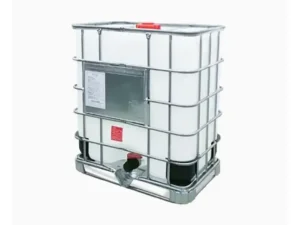
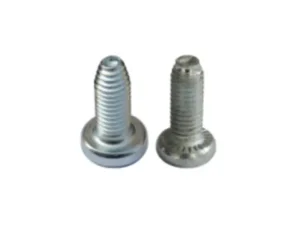
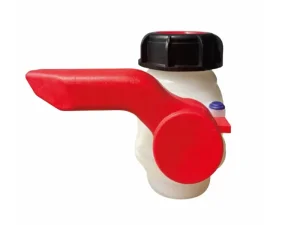
Engineered for seamless integration with standard 1000L Intermediate Bulk Containers, ensuring leak-free performance and operational longevity.
Global IBC Packaging Landscape & The Critical Role of Specification Labeling
Understanding how standardized, high-durability specification labels drive regulatory compliance, trackability, and safety across global chemical supply chains.
Global Supply Chain Scale
Over 25 million Intermediate Bulk Containers (IBCs) circulate globally across petrochemical, agrochemical, pharmaceutical, and food processing industries. Every single container requires clear, indestructible identification to specify container tare weight, maximum allowed gross mass, test pressures, manufacturing dates, and material compatibility.
GHS & UN Transport Regulations
International Maritime Dangerous Goods (IMDG) Code, ADR (European Road Transport), and US DOT mandate that specification labels on IBC totes carrying dangerous goods maintain legibility even after three months of ocean immersion (BS5609 marine standard). A missing or degraded label can lead to container impoundment and heavy regulatory penalties.
Multi-Trip Reconditioning Needs
Modern circular packaging models rely on tote reconditioners who strip, wash, and test IBC bottles and steel cages. Specification labels must feature specialized high-tack adhesives that withstand caustic chemical washes while allowing intentional industrial marking updates during periodic leakproof testing cycles.
Anatomy of a Heavy-Duty IBC Specification Label
High-Density Polyethylene (HDPE) tote surfaces present low surface energy (LSE). Standard paper or low-grade vinyl labels fail rapidly. Chinese manufacturers utilize advanced polymer engineering to achieve permanent adhesion.
| Label Component Layer | Material Engineering Options | Performance Specification | Key Industrial Application |
|---|---|---|---|
| Face Stock (Substrate) | Biaxially Oriented Polypropylene (BOPP), Heavy Vinyl, Polyimide, Matte White PET | Tensile strength > 120 N/mm², tear-proof, moisture-impermeable, zero shrinkage | Outdoor chemical storage, marine shipping containers, hazardous goods totes |
| Adhesive Matrix | Modified High-Tack Solvent Acrylic, Rubber-Based Hot Melt, Cold-Chain Acrylic | Initial tack > 18 N/25mm, shear adhesion > 72 hours, bonds directly to low-energy HDPE | Galvanized steel cage plate, high-density polyethylene (HDPE) inner bottle wall |
| Protective Topcoat | UV-Cured Matte Overlaminate, Chemical Anti-Scratch Varnish, Thermal Transfer Receptor | Resistant to sulfuric acid, sodium hydroxide, xylene, diesel, and salt spray exposure | Refinery bulk fluid transfer, agricultural chemical dispensing platforms |
| Release Liner | 90g/m² Glassine Paper, PET Film Liner, Siliconized Kraft Paper | Consistent release force (0.15–0.30 N/25mm), optimized for automated roll application | High-speed automated manufacturing lines and manual OEM application |
| Digital & RFID Layer | UHF RFID Inlay (860–960 MHz), NFC Chips, High-Contrast 2D DataMatrix Codes | Read range up to 10 meters on metal/liquid surfaces with anti-metal insulation shielding | Automated warehouse inventory management, IoT smart asset tracking fleets |
Adhesion Science on Low Surface Energy (LSE) Plastics
Blown-molded HDPE containers typically possess a surface energy around 30 to 32 dynes/cm. Standard adhesives cannot form interfacial molecular bonds. Leading Chinese OEM label suppliers incorporate wet-out micro-emulsion acrylics that flow into HDPE surface micro-cavities, establishing permanent mechanical keying.
Thermal & Climatic Extremes Endurance
IBC totes transition between freezing Nordic shipping routes and sun-baked desert logistics hubs. Specification labels must maintain dimensional stability from -40°C during arctic transport up to 150°C during hot-fill industrial manufacturing processes without edge lifting or adhesive ooze.
BS5609 Section 2 & 3 Compliance Certification
BS5609 is the ultimate benchmark for marine label integrity. Section 2 tests the adhesive and base substrate after 90 days of saltwater immersion. Section 3 tests the print durability and abrasion resistance under artificial weathering and sand spray exposure.
China Manufacturing Efficiency & OEM Sourcing Advantages
How integrated raw material hubs, state-of-the-art rotary flexographic printing, and rigorous quality control deliver unmatched value for global buyers.
Advanced Rotary Press Fleet
10-color UV flexographic and digital hybrid printing presses capable of producing over 150,000 precision specification labels per day with inline optical inspection systems.
Full Upstream Integration
Direct sourcing of specialized chemical resin films and acrylic adhesives from domestic chemical industrial clusters in Shandong and East China lowers unit material costs by 30-40%.
Rapid Prototyping Agility
Custom die-cut tooling creation and sample proofing within 48 to 72 hours. Accelerated lead times for large-scale container manufacturing and reconditioning projects.
Rigorous Quality Assurance
In-house laboratory testing featuring Xenon-Arc weathering chambers, 180° peel testing machines, and chemical immersion baths ensuring strict compliance before dispatch.
Industry Application Scenarios & Tailored Label Configurations
Different chemical and logistics environments demand unique material combinations. Explore how custom specification labels perform across distinct operating conditions.
Petrochemical & Solvents
Exposed to toluene, acetone, fuel additives, and high VOC fumes during filling and transit.
- Face Stock: 100-micron Matte Synthetic Polyolefin
- Adhesive: Solvent-Resistant Acrylic (SR-500)
- Lamination: Fluoropolymer Anti-Solvent Film
- Compliance: UN Packaging Group I / GHS HazCom
Food & Beverage Ingredients
Used for liquid fructose, edible oils, flavors, and pharmaceutical intermediates demanding non-toxic materials.
- Face Stock: Direct-Contact Food Safe Polypropylene
- Adhesive: FDA 175.105 Compliant Emulsion Acrylic
- Printing Ink: Low-Migration UV Ink Formulation
- Features: Steam sterilization resistance up to 121°C
Tote Reconditioning & Wash Plants
Subjected to high-pressure hot water jets, alkaline washing soaps, and mechanical scrubbing.
- Face Stock: Heavy-Duty Polyethylene / Aluminum Foil Sandwich
- Adhesive: Removable / Re-peelable High-Tack Rubber Matrix
- Functionality: Clean stripping without adhesive ghosting
- Re-use Cycle: Multi-trip serial tracking barcode plate
Development Trends in Industrial IBC Identification
Emerging technologies in smart logistics, sustainability, and automated traceability are redefining specification label manufacturing.
RFID & NFC On-Metal Integration
Combining printed specification markings with anti-metal UHF RFID tags allows real-time asset tracking in automated chemical logistics warehouses without manual barcode scanning.
Single-Material Recyclability
Developing pure Polyethylene (PE) face stock and mono-material adhesives that recycle cleanly alongside the HDPE bottle during tote recycling, supporting circular economy targets.
Printed Leak & Temp Sensing
Incorporating chromogenic ink indicators that visually shift color if internal fluid breaches specified temperature limits or if chemical leakage reaches the container exterior.
Dynamic Digital Serialization
Variable data printing enabling unique serial IDs, QR code links to dynamic Safety Data Sheets (SDS), and anti-counterfeiting verification for high-value chemical products.
5-Step Procurement Guide for Global Sourcing Managers
Ensure regulatory compliance, material performance, and cost transparency when evaluating Chinese IBC specification label suppliers.
1. Verify Substrate & Surface Energy Match
Request technical data sheets (TDS) verifying peel adhesion values on untreated HDPE (at least 15 N/25mm). Ensure the face stock thickness matches your container’s physical handling requirements.
2. Audit BS5609 Marine Test Reports
Require certified third-party laboratory reports for BS5609 Section 2 (adhesive durability after 90 days immersion) and Section 3 (print keying and legibility) if shipping dangerous goods by ocean freight.
3. Evaluate Chemical Resistance Rub Tests
Specify MEK (Methyl Ethyl Ketone) or IPA (Isopropanol) solvent rub resistance tests (50+ double rubs minimum) to guarantee printed text won't dissolve during industrial chemical spills.
4. Review Die-Cut Tooling & Tolerance
Confirm dimensional tolerances within ±0.2mm for automated label dispensing lines to prevent jamming or label misplacement during high-speed container assembly.
5. Assess Supply Chain Lead Time & MOQs
Establish clear agreements on minimum order quantities (MOQ), buffer stock holding programs, and expedited air freight sample production timelines.
6. OEM Customization & Branding Capabilities
Verify that the manufacturer supports dual-language printing, high-resolution logo reproducing, and integrated barcode / QR serialization for corporate identity compliance.
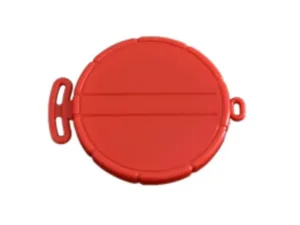
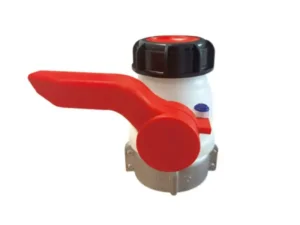
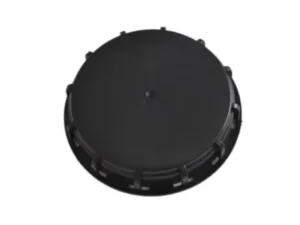
More Essential IBC Valves, Lids & Replacement Fittings
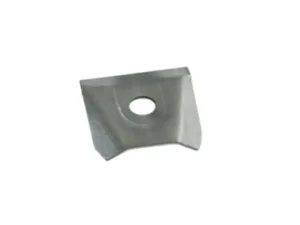
Explore our full line of precision-engineered replacement parts manufactured for maximum durability and international standard compatibility.
Frequently Asked Questions
Detailed answers to essential technical and commercial questions regarding China IBC specification label manufacturing and customization.
What is the standard lifetime of a heavy-duty IBC specification label in outdoor conditions?
Our industrial-grade IBC specification labels engineered with BOPP/PET substrates and UV-cured laminates feature an outdoor operational lifespan of 3 to 5 years under direct sunlight and extreme climatic fluctuations without fading, cracking, or peeling off the HDPE container surface.
How do Chinese manufacturers solve label adhesion issues on blow-molded HDPE containers?
Because HDPE is a low surface energy (LSE) plastic, standard adhesives peel easily. Chinese manufacturers utilize modified high-tack solvent acrylic adhesives with low initial viscosity that flow into the micro-textured surface of the HDPE wall, building a permanent 180° peel bond exceeding 18 N/25mm after 24 hours of curing.
Are your IBC specification labels certified to BS5609 Section 2 and Section 3 standards?
Yes. For maritime chemical logistics and dangerous goods transport, we provide labels independently tested to meet BS5609 Section 2 (marine adhesive performance after 90 days seawater immersion) and Section 3 (print durability and sand abrasion resistance), fully satisfying IMDG Code shipping requirements.
Can specification labels be customized with dynamic company logos, RFID tags, and QR codes?
Absolutely. We offer complete OEM/ODM production services. We can integrate variable QR code serialization for dynamic GHS SDS data access, high-contrast 2D DataMatrix barcodes for automated scanners, and encapsulated anti-metal RFID inlays (UHF 860–960 MHz) for real-time smart warehouse management.
What is the typical production turn-around time and MOQ for custom IBC specification labels?
Standard sample proofing and physical prototype creation take 48 to 72 hours. Bulk production lead time for orders between 50,000 and 200,000 labels is generally 7 to 10 working days. Flexible MOQs start as low as 1,000 units for specialized custom dimensions or RFID projects.
How do I choose between a permanent specification label and a removable reconditioner label?
Permanent labels utilize aggressive solvent acrylic adhesives designed to stay attached to the steel frame plate or HDPE bottle for the entire life of the container. Removable reconditioner labels utilize specially formulated peelable rubber-acrylic hybrids that hold firmly during transit but strip cleanly off without leaving residue when washed in caustic industrial tote cleaning stations.