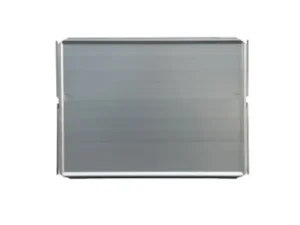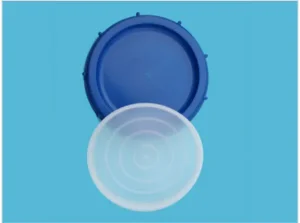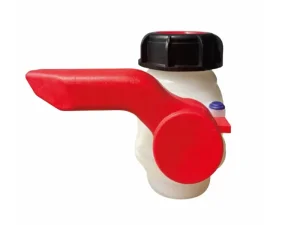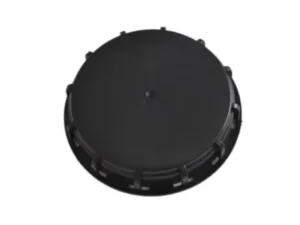
Primary IBC Storage & Sealing Components
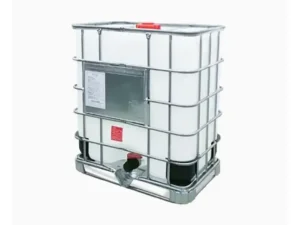
Precision-engineered IBC containers, heavy-duty valves, gasket seals, and breathable lids ready for global export.
Executive Summary: The Evolution of Industrial IBC Plastic Seals
In the modern global logistics chain, Intermediate Bulk Containers (IBC totes) serve as the primary vascular system for hazardous chemicals, food-grade raw materials, pharmaceuticals, and agricultural commodities. The integrity of an entire 1000-liter bulk container depends entirely on a microscopic contact point: the engineered plastic seal and gasket system.
As **China IBC Plastic Seal Manufacturers & Suppliers** transition into high-precision polymer chemistry and Industry 4.0 automation, the global market is witnessing a fundamental shift from generic rubber seals to hyper-engineered fluoropolymer (PTFE), EPDM, and specialty polymer sealing mechanisms. Chemical leakages during multimodal intermodal transport cost the chemical logistics sector over $450 million annually in cargo loss, environmental cleanup fines, and regulatory penalties. Consequently, global enterprise procurement teams are standardizing their vendor qualification audits around polymer purity, creep resistance, and tamper-evident security.
Core Industry Directive: A high-performance IBC plastic seal is no longer treated as a simple consumable; it is a critical safety component governed by international hazardous shipping regulations including UN/DOT, ADR/RID, and IMDG codes. Chinese manufacturing hubs now offer 0.005mm dimensional precision matching European standards at optimized total cost of ownership (TCO).
Polymer Material Matrix & Sealing Dynamics
Selecting the appropriate polymer blend is vital to prevent seal swelling, embrittlement, stress cracking, and permeation failure in hazardous chemical shipping.
PTFE (Polytetrafluoroethylene)
Chemically inert across pH 0-14. Resistant to aggressive solvents, concentrated acids, and high temperatures up to 260°C. Ideal for high-purity chemical transport.
EPDM (Ethylene Propylene)
Outstanding resistance to steam, water, ozone, and polar solvents (ketones, alcohols). Excellent dynamic elasticity and low compression set under load.
FKM / Viton® Fluoropolymers
The global standard for petroleum derivatives, aromatic hydrocarbons, and harsh organic solvents. Operates stably under continuous mechanical stress.
| Sealing Material | Durometer (Shore A) | Operating Temp Range | Chemical Compatibility Focus | Creep Resistance |
|---|---|---|---|---|
| PTFE Composite Washer | 55 - 65 Shore D | -200°C to +260°C | Universal Acids, Bases, Solvents | High (Glass-filled variants) |
| EPDM Heavy Duty Gasket | 65 - 75 Shore A | -40°C to +150°C | Alcohols, Dilute Acids, Steam | Excellent Elastic Recovery |
| FKM / Fluorocarbon Seal | 70 - 85 Shore A | -20°C to +200°C | Hydrocarbons, Oils, Fuels | Superior Thermal Stability |
| Food-Grade Silicone (LSR) | 50 - 60 Shore A | -60°C to +230°C | Foodstuffs, Syrups, Pharmaceuticals | Moderate / FDA Compliant |
Global Sourcing Trends & Supply Chain Demand Analysis
The global intermediate bulk container market is projected to reach $13.5 billion by 2030, driven by the expansion of specialty chemical trade and decentralized manufacturing across Asia-Pacific, North America, and Europe. This continuous growth directly impacts procurement demands for high-performance plastic seals, replacement valves, and security closures.
1. ESG Compliance & Circular Economy
Global logistics directives now mandate reusable and recyclable components. Industrial tote refurbishers demand durable plastic seals capable of enduring multiple wash-down cycles with caustics without losing structural elasticity.
2. Anti-Counterfeiting & Tamper Security
Supply chain integrity requires robust tamper-evident security tags and serialized seal caps. Manufacturers are integrating RFID micro-transponders directly into plastic IBC cap molds to ensure real-time tracking.
3. Zero-Defect Leak Proofing
Automated filling systems at chemical plants demand precision-molded screw caps with ultra-tight thread tolerances. Minor variations in seal profile lead to automated line stoppages and expensive operational downtime.
China Factory 4.0: Supply Chain Resilience & Precision Tooling
How modern Chinese IBC component suppliers combine end-to-end industrial clusters with digital tooling to deliver world-class reliability.
0.005mm High-Precision Tooling
In-house CAD/CAM mold design and Moldflow® thermal simulation ensure uniform cooling and eliminate sink marks or flash lines on sealing threads.
Fully Automated Injection Lines
Robotic arm extraction and vision-guided optical sorting automatically discard parts with microscopic dimensional variances, ensuring zero-defect batch delivery.
Shandong Logistics Ecosystem
Located in established industrial zones like Linyi, factories leverage raw resin supply proximity and direct access to Qingdao Port for rapid ~3-day dispatch of stock orders.
Application Scenarios & Engineering Case Practices
Matching closure engineering to exact operational environments across global heavy industries.
1. Bulk Hazardous Chemical Logistics (UN Class 3, 6.1, 8)
In trans-oceanic shipping of corrosive chemicals like glacial acetic acid or caustic soda solutions, standard rubber gaskets suffer rapidly from vapor degradation. Chinese manufacturers specify dual-layer PTFE-jacketed EPDM seals. The PTFE layer provides absolute chemical inertness to prevent media attack, while the elastomeric EPDM core maintains constant radial force against pressure variations.
2. Food & Beverage Raw Material Transport (FDA / EU 10/2011)
For liquid fructose, edible oils, and concentrated fruit juices, seal purity is paramount to prevent organoleptic contamination. Manufacturers utilize Liquid Silicone Rubber (LSR) injection molding under ISO Class 7 cleanroom conditions. Seals feature smooth, crevice-free geometries preventing bacterial growth and supporting CIP (Clean-In-Place) procedures.
3. Agrochemical Formulations & Pesticide Distribution
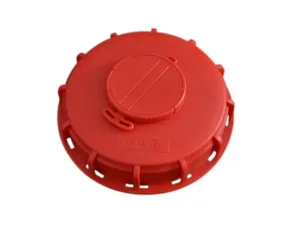
Pesticide concentrates often release volatile gases during transport across hot climate zones. Breathable IBC red caps with integrated hydrophobic ePTFE micro-porous membranes allow pressure equalization while preventing liquid passage, stopping tote distortion or sidewall buckling.
Procurement Protocol: Evaluating an IBC Plastic Seal Manufacturer
Use this technical checklist during vendor audits to ensure strict product reliability and factory capability.
| Audit Dimension | Critical Testing Standard | Acceptance Criteria for Overseas Buyers |
|---|---|---|
| Dimension Consistency | ISO 2768-mK / Optical Profile Projector | Thread pitch variance < ±0.05mm; Gasket seat flatness within 0.02mm. |
| Hydrostatic Pressure | UN Standard Hydrostatic Test (200 kPa for 10 min) | Zero fluid migration or micro-seepage under elevated tank pressures. |
| Stress Crack Resistance | ASTM D1693 (ESCR Test in 10% Igepal) | No crack initiation after 1,000 hours of exposure at 50°C. |
| Material Traceability | FTIR Spectroscopy & Spectrometry Analysis | Raw material batch certificates matching virgin resin specs (No unlisted regrind). |
Frequently Asked Questions by Industrial Sourcing Managers
Technical answers resolving common engineering, compliance, and procurement queries regarding Chinese IBC plastic seals.
What is the typical lifespan of a PTFE gasket in high-corrosive chemical transport?
A high-purity PTFE or glass-filled PTFE gasket retains its chemical resistance indefinitely under static storage. However, in dynamic reuse scenarios (multimodal intermodal shipping), replacement is recommended after 3 to 5 full trip cycles or after any CIP sanitization exceeding 120°C to guarantee zero-leakage performance under UN dangerous goods standards.
How do Chinese IBC plastic seal manufacturers ensure compatibility with European and US tote threads?
Leading Chinese manufacturers cut molds based strictly on global standard specifications, including S60x6 (2 inch) coarse threads, S100x8 heavy-duty threads, and 150mm/225mm top lid screw configurations. CNC tooling guarantees 100% inter-changeability with major international tote brands including Schutz, Mauser, Werit, and Greif.
What is the difference between a breathable vented IBC cap and a standard sealing cover?
A standard sealing cover creates an absolute hermetic lock, suitable for non-gassing liquids under ambient conditions. A breathable cover incorporates an ePTFE micro-porous membrane system that allows gases to escape or enter during thermal expansion or rapid discharge, maintaining equilibrium without letting liquid spill or external contaminants enter.
Can Chinese suppliers manufacture custom-engraved plastic seals and identification nameplates?
Yes. Factories offer full OEM/ODM customization including laser-etched stainless steel nameplates, custom-molded logo caps, specialized color coding for hazard identification, and integrated serial numbers or QR codes for digital logistics management.
What lead time should overseas buyers expect for bulk OEM orders?
Standard component stock (such as DN50/DN80 butterfly valves, standard EPDM seals, and 150mm caps) is prepared for dispatch within ~3 days. Custom color molding or brand-new mold tooling projects typically require 15 to 25 calendar days from prototype sign-off to final container loading.
How do I prevent "cold flow" or seal deformation in high-temperature chemical shipments?
Cold flow occurs when virgin fluoropolymer seals deform under continuous torque pressure at elevated temperatures. To eliminate this risk, specify elastomer-energized PTFE gaskets or glass-filled PTFE blends designed specifically by technical suppliers for thermal stability up to 180°C.
Precision Valves, Gaskets & Protective Hardware
Explore factory-direct replacement fittings, high-flow guide pipes, and specialized IBC closures.