
Primary Bottom Valve & Container Assemblies
Factory-direct OEM/ODM liquid transfer components engineered for extreme chemical compatibility, pressure containment, and zero leakage.
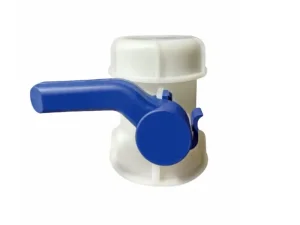
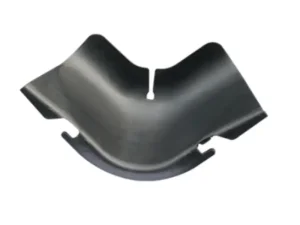
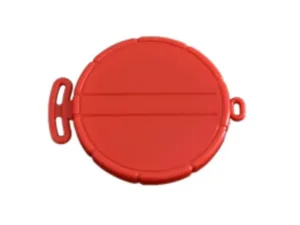
Executive Summary: The Global IBC Bottom Valve Industrial Ecosystem
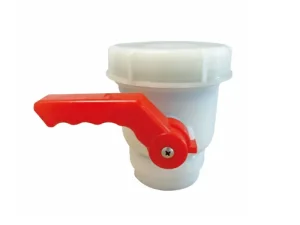
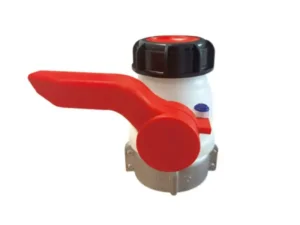
Intermediate Bulk Containers (IBCs)—specifically 1000-liter composite totes—form the backbone of modern global liquid logistics, handling over 2.4 billion tons of hazardous chemicals, food ingredients, petrochemicals, and agricultural solutions annually. At the core of every functional IBC lies its critical control component: the IBC bottom discharge valve. Designed to handle precise flow rates, resist internal pressures up to 2.5 bar, and endure harsh mechanical shocks during intermodal transport, the bottom valve represents both the primary point of fluid control and the highest-risk failure vector if improperly engineered.
As chemical supply chains shift toward heightened environmental containment and circular economy models (tote reconditioning), global demand for high-reliability IBC bottom valves produced by experienced China IBC bottom valve manufacturers and suppliers has surged. Chinese manufacturing hubs, anchored by state-of-the-art injection molding facilities, advanced tooling technology, and complete metallurgical integration, currently deliver over 65% of the world's replacement and OEM IBC valve components. Modern sourcing strategies require procurement directors and packaging engineers to look beyond initial unit cost, evaluating supplier capability on polymer formulation integrity, stress-crack resistance, dynamic sealing geometry, and UN dangerous goods certification.
Technical Engineering Architecture: IBC Bottom Valve Mechanics
IBC bottom valves operate under unique mechanical and thermal conditions. Positioned at the lowest gravity drain point of a 1000L flexible HDPE inner container or rigid stainless steel vessel, the valve must support static fluid pressure, withstand side-impact forces during forklift transport, and maintain vacuum/pressure seal integrity across operating temperatures ranging from -20°C to +65°C.
| Valve Architecture Type | Primary Material Matrix | Seal Gasket Compound | Nominal Diameter (DN) | Ideal Application Profile |
|---|---|---|---|---|
| Integrated Butterfly Valve (DN50/DN80) | High-Density Polyethylene (HDPE) / PP Co-polymer | EPDM / Santoprene / PTFE Coated | DN50 (2") / DN80 (3") | General industrial chemicals, water-based solutions, agricultural fertilizers. Excellent low-profile design. |
| Welded Ball Valve (Full Port) | Forged Stainless Steel (SS304 / SS316L) | Virgin PTFE / Viton (FKM) | DN50 (2") | Aggressive solvents, high-viscosity resins, food-grade syrups, cleanroom pharmaceutical intermediates. |
| Quick-Connect Camlock Valve | Reinforced Polypropylene / SS316 | NBR / Fluoroelastomer | DN50 (2") Standard S60x6 | Rapid loading/unloading operations, multi-product distribution loops, automated filling lines. |
| Cylinder Flange Bottom Valve | Glass-Filled Polypropylene (GF-PP) | High-Purity Silicon / EPDM | DN50 | Heavy-duty reusable linear totes requiring frequent steam-in-place (SIP) or chemical sanitization. |
Engineering Gain Insight: The choice between DN50 (50mm nominal diameter) and DN80 (80mm nominal diameter) valves directly impacts discharge kinematics. A DN80 valve increases volumetric flow efficiency by approximately 125% compared to DN50, drastically reducing container drain time for viscous fluids (e.g., polymers, paints, molasses) from 18 minutes down to under 7 minutes under standard gravity drop conditions.
Information Gain: Material Degradation & Seal Compatibility Mechanics
Failure modes in IBC bottom valves are rarely mechanical stem breakages; in 92% of documented field leak incidents, failure stems from micro-swelling, environmental stress cracking (ESCR), or chemical degradation of the internal elastomer seal and valve seat disc. Leading Chinese manufacturers utilize precision co-injection molding and custom polymer blending to combat these degradation phenomena.
Polymer Stress Cracking (ESCR)
Standard HDPE valve bodies subjected to surfactants, wetting agents, or polar organic solvents undergo localized chain scission under mechanical torque. Advanced Chinese suppliers utilize high-molecular-weight HDPE (HMW-HDPE) with bimodal resin architecture, raising ESCR endurance beyond 1,000 hours under ASTM D1693 testing standards.
Elastomer Swell & Permeation
When exposed to aromatic hydrocarbons (e.g., Xylene, Toluene), standard EPDM gaskets absorb solvent molecules, causing volumetric swelling exceeding 15%. This increases operating handle torque until the valve binds. Utilizing encapsulated PTFE or custom Viton (FKM) fluoropolymer matrices prevents swell ratios above 1.2%.
Zero-Residual Discharge Geometry
Traditional valve inlets feature internal shoulder ledges that trap up to 450ml of liquid during gravity draining. Next-generation bottom valves incorporate a 15-degree funnel-contoured flange weld area, ensuring zero-residue complete drainage, critical for expensive agrochemicals and high-purity food additives.
Macro Industry Trends: Smart Valves & Circular Sustainability
The global IBC packaging sector is undergoing a dual transformation powered by digital tracking technology and aggressive carbon-neutrality directives. China's top tier IBC bottom valve suppliers are actively shaping these trends through R&D investment in smart telemetry and eco-conscious manufacturing.
IoT & Telemetry Smart Valves
Integration of wireless RFID tags, NFC tamper-proof sensors, and micro-pressure transducers directly into the valve handle and dust cap assembly. Operators can verify valve status (Open/Closed), track batch history, and detect un-authorized discharge events in real-time across global cold chains.
Circular Economy & Recondition-Ready Design
Global regulations (such as EU Packaging and Packaging Waste Regulation - PPWR) mandate tote reusability. Modern bottom valves feature modular replaceable seals and standard tri-clamp or buttress thread disconnects, enabling tote reconditioners to refurbish valves 3x faster without replacing the entire inner liner.
Bio-Based & Recycled Polymeric Resins
Pioneering manufacturers are introducing Post-Consumer Recycled (PCR) HDPE into structural non-contact valve handles and outer protective housing rings, cutting carbon footprint per valve unit by up to 34% while maintaining virgin polymer contact zones for food safety compliance.
Localized Application Scenarios & Global Regulatory Matrix
IBC bottom valves must satisfy distinct regional regulatory frameworks and chemical processing environments across North America, Europe, Asia-Pacific, and Latin America.
Industrial Specialty Chemicals & Solvents
Operating Environment: High ambient volatility, aggressive pH ranges (pH 1 to 14), exposure to hazardous Class 3, 6, and 8 dangerous goods during transport.
- Required Spec: Integrated DN50 Stainless Steel 316 Ball Valve or HMW-HDPE Butterfly Valve with PTFE seal membrane.
- Regulatory Standard: UN 31HA1 certification (ADR/RID, IMDG Code, DOT 49 CFR), BAM tested for shock and drop impact resilience up to 1.9 meters.
- Safety Lock mechanism: Secondary safety latch handles to prevent accidental discharge from thermal expansion or transit vibration.
Sanitary Food, Beverage & Pharmaceuticals
Operating Environment: Strict hygiene, non-contaminating contact surfaces, resistance to automated Clean-in-Place (CIP) chemical wash cycles.
- Required Spec: Sanitary Tri-Clamp DN50 Stainless Steel Butterfly Valve with platinum-cured silicone or FDA-grade EPDM seals.
- Regulatory Standard: FDA 21 CFR 177.2600, EU Regulation No 10/2011, EC 1935/2004 compliance, BSE/TSE free certification.
- Sanitary Design: Mirror-polished internal stem surfaces (Ra < 0.4 µm) preventing bacterial buildup and residual cross-contamination.
Strategic Sourcing Roadmap: Factory Audit & Quality Testing Protocols
When selecting a reliable China IBC bottom valve manufacturer and supplier, procurement teams must implement a rigorous quality verification methodology. Evaluating high-volume automated production capabilities, mold precision, and leak-testing procedures ensures continuous supply chain performance.
1. Precision Tooling & Injection Setup
Verify manufacturer in-house mold tooling capabilities. Premium factories operate CNC machining centers capable of 0.005mm tolerances, multi-cavity hot runner injection machines (Engel, KraussMaffei), and automated robotic pickup arms to prevent thread deformation upon ejection.
2. 100% Automated Leak Testing
Leading suppliers implement automated dual-station pneumatic leak testing on 100% of finished valve assemblies. Valves are pressurized to 0.3 bar underwater or tested using high-sensitivity helium mass spectrometers to guarantee zero micro-porosity defects before shipping.
3. Mechanical Actuation Life Cycling
Request factory batch test reports for valve handle actuation cycle limits. Industrial grade valves must pass at least 3,000 full open-close cycles under maximum fluid pressure without seal degradation or handle shaft play exceeding 0.5 degrees.
Technology Roadmap: Next-Gen IBC Bottom Valve Innovations (2025–2035)
As global chemical transportation standards tighten, Chinese engineering hubs are pioneering next-generation valve designs designed to mitigate operational risk and lower total cost of ownership (TCO).
Plasma Fluorinated Surfaces
In-line cold plasma fluorination treatment applied to HDPE valve bodies, creating a thin barrier layer that reduces solvent vapor permeation by up to 95% without modifying resin melt flow index.
Double-Block Leak Containment
Dual-stage butterfly valve architectures incorporating an emergency secondary internal seal plug that automatically triggers closure upon detecting downstream handle damage or impact shearing.
Smart-Sense Passive NFC Valves
Battery-free sensor chips integrated directly into the valve stem body, transmitting fluid temperature, pH levels, and valve cycle counts to handheld warehouse scanners automatically.
Fully Bio-Decomposable Housing
High-strength bio-composite valve structures designed to fully degrade in industrial composting facilities alongside disposable container liners, eliminating plastic landfill burden.
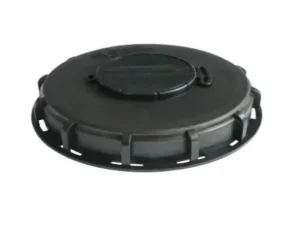
Complementary IBC Hardware, Lids & Replacement Components
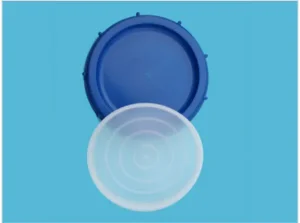
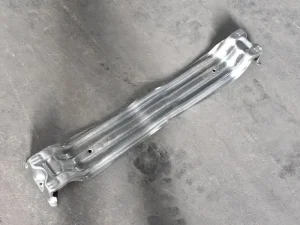
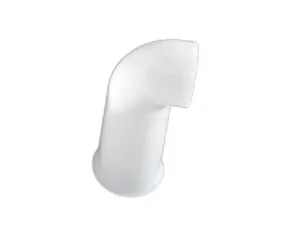
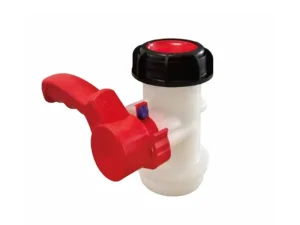
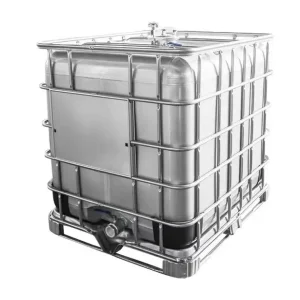
Complete your container assembly with heavy-duty caps, steel frames, custom nameplates, and precision valve accessories.
Decision Support FAQ: Technical & Sourcing Inquiries
Expert guidance on thread standards, chemical compatibility, MOQ, custom branding, and shipping compliance.