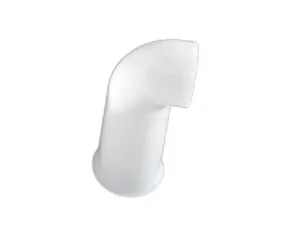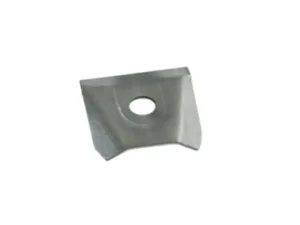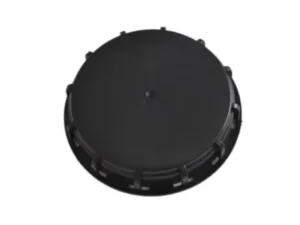
Featured Industrial & Household Container Solutions
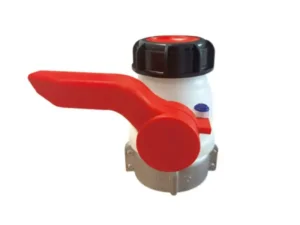
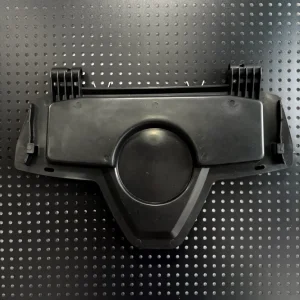
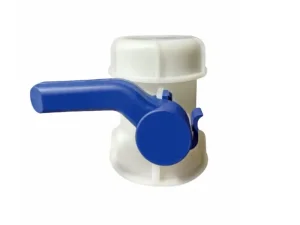
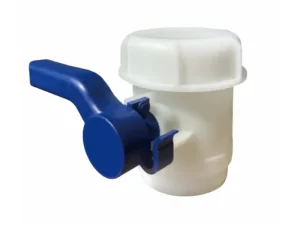
Direct factory supply of precision-molded components, IBC closures, and specialized container accessories designed for global industrial reliability.
Industry Analysis: The Evolution of Household & Industrial Plastic Bucket Lids
Understanding polymer science, precision mold flow dynamics, and the macro-economic forces governing rigid plastic packaging manufacturing in China.
The global rigid plastic packaging sector is undergoing a profound structural transition driven by demands for supply chain resilience, stringent leak-proof guarantees, and environmental sustainability. At the intersection of household storage, food packaging, coatings, and industrial chemical logistics lies an understated yet critical component: the precision-engineered plastic bucket lid. A bucket lid is no longer merely a physical cap; it is a thermal-dynamically calibrated pressure seal, a tamper-evident security mechanism, and a structural reinforcement node for stackable logistics.
China has solidified its position as the global epicenter for plastic injection molding and mold design. Chinese manufacturers lead in combining high-cavitation automated tooling with specialized polymer compounding—utilizing Polypropylene (PP) and High-Density Polyethylene (HDPE)—to produce bucket lids that satisfy rigid international standards such as FDA food contact regulations, REACH chemical safety compliance, and UN dangerous goods packaging certifications. This whitepaper provides a comprehensive technical and commercial evaluation of China’s plastic bucket lid manufacturing ecosystem, serving enterprise buyers, brand owners, and OEM distributors worldwide.
Global Market Demand & Multi-Sector Applications
Examining how high-performance bucket closures protect integrity across disparate global vertical markets.
Household & Consumer Packaging
Household pails demand ergonomic tear-strip opening features combined with high aesthetic appeal. Lids designed for laundry detergents, home cleaning pastes, and pet food storage require repetitive snap-lock integrity and air-tight gaskets to eliminate odor transference and atmospheric moisture degradation.
Food & Beverage Processing
In bulk food distribution (sauces, dairy products, edible oils, honey), pails and lids must comply strictly with FDA, EU 10/2011, and ISO 22000 standards. Molded from 100% virgin polypropylene or food-grade HDPE, these closures integrate liquid silicone gaskets or hot-melt TPE rings to ensure zero oxygen permeability and prevent bacterial ingress.
Paints, Coatings & Building Materials
Paints and construction adhesives contain volatile organic compounds (VOCs) and dense pigments. Bucket lids in this space feature engineered perimeter ribs to handle extreme vertical load stresses during pallet stacking, alongside chemical-resistant rubber gaskets that prevent skinning and evaporation during long-term storage.
Agrochemicals & Hazardous Liquids
Industrial pails carrying fertilizers, pesticides, or specialized lubricants require UN-certified container systems. Lids feature integrated gas-venting membranes (such as expanded PTFE plugs) to balance internal vapor pressure changes caused by ambient temperature swings, eliminating container bloating or paneling.
Reconditioned & Circular Packaging Loops
With global mandates shifting toward circular economies, industrial container reconditioners replace damaged container tops with standardized, heavy-duty replacement lids. Precision fitting across standardized lip profiles ensures seamless integration into existing tote and drum supply chains.
E-Commerce Bulk Logistics
As direct-to-consumer and B2B online sales expand, pails must survive rigorous courier drop tests. Modern lid designs incorporate reinforced rim walls and double-lock tamper-evident strips that prevent popping open under dynamic impact conditions during courier transport.
China Factory 4.0: Supply Chain Resilience & Manufacturing Efficiency
How advanced automation, digital twin mold design, and regional industrial clustering deliver unparalleled quality and cost advantages.
1. Precision Tooling & High-Cavitation Mold Engineering
The core structural integrity of a plastic bucket lid depends entirely on the precision of the injection mold tool. Premier manufacturing centers in Shandong (such as Linyi Industrial Parks) and Zhejiang utilize high-speed CNC machining centers, mirror EDM (Electrical Discharge Machining), and mold flow simulation software to design tooling up to 0.005 mm machining tolerances. Computer-optimized hot runner systems guarantee balanced resin flow into multi-cavity molds (e.g., 4-cavity or 8-cavity lid tooling), minimizing weld line vulnerabilities, preventing flash formation, and achieving ultra-consistent lid weights across multi-million unit production runs.
2. Polymer Science & Material Formulations
Selecting the optimal polymer resin is a delicate balancing act between impact strength, flexural modulus, and environmental stress crack resistance (ESCR). Leading Chinese manufacturers employ automated gravimetric blenders to formulate precise resin matrices:
- Impact-Modified Polypropylene (Co-PP): Chosen for household and paint bucket lids requiring high stiffness, scratch resistance, and structural stability at temperatures up to 90°C. Co-polymerization with ethylene enhances low-temperature drop-impact performance.
- High-Density Polyethylene (HDPE): Preferred for chemical and cold-storage applications down to -40°C. HDPE provides exceptional chemical inertness against solvents, acids, and aggressive alkalis.
- Post-Consumer Recycled (PCR) Hybrids: Advanced co-injection molding allows a core layer of PCR plastic to be sandwiched between virgin resin skin layers, enabling eco-friendly packaging that meets corporate ESG targets without sacrificing mechanical strength.
3. End-to-End Quality Control & Testing Standards
To guarantee zero defect rates for export shipments, Tier-1 Chinese manufacturing facilities implement automated optical inspection (AOI) vision systems alongside rigorous physical testing protocols:
| Testing Protocol | Test Parameters & Methodology | Industry Acceptance Standard | Quality Objective |
|---|---|---|---|
| Hydro-Pressure Leakage Test | Inversion and internal water pressurization up to 30 kPa for 15 minutes. | Zero fluid seepage across gasket boundary. | Protects against leakages during ocean transit. |
| Low-Temperature Drop Impact | Free-fall impact from 1.8 meters onto concrete after conditioning at -18°C for 24h. | No cracking, tearing, or detachment of tear-strip. | Guarantees winter supply chain durability. |
| Vertical Load Stacking Test | Top loading pressure equal to 3 fully loaded 20L pails applied for 28 days at 40°C. | Deflection < 2.5%, zero lid distortion. | Ensures safe warehouse stacking height. |
| Tamper-Evident Removal Torque | Rotational force measurement during tear-strip removal and lid unseating. | Controlled tear force (15–25 Nm). | Combines security with user accessibility. |
Future Innovations & Structural Trends in Bucket Lid Manufacturing
Emerging technology standards transforming simple container caps into smart, eco-friendly fluid management components.
In-Mold Labeling (IML) Integration
Modern bucket lids are increasingly featuring IML technology, where a polypropylene label is fused directly into the lid body during injection molding. This produces 100% recyclable, scratch-resistant, high-definition graphics that never peel, flutter, or degrade in humid storage environments.
Co-Injected TPE Gaskets (No Gluing)
Traditional manually inserted foam gaskets are being replaced by automated 2K (two-component) co-injection molding. Soft Thermoplastic Elastomer (TPE) is bonded chemically to the rigid PP lid channel, eliminating gasket dislodgement, reducing manual assembly labor, and guaranteeing air-tight seals.
Lightweighting via Finite Element Analysis (FEA)
By leveraging computer-aided FEA stress modeling, engineers re-distribute wall thicknesses—adding radial reinforcing ribs only where structural stress concentration peaks. This reduces lid weight by 8% to 15% without compromising top-load stacking performance, yielding huge freight cost savings.
B2B Procurement Blueprint: Evaluating China Lid Manufacturers
A strategic audit checklist for international purchasing managers to vet factory reliability, quality assurance, and total cost of ownership.
When sourcing household and industrial plastic bucket lids from China, enterprise buyers must look beyond the initial FOB unit price. A low-cost lid that fails under stacking stress or leaks during sea transit can jeopardize high-value product lines. Consider the following core auditing criteria:
1. Tooling Ownership & Custom OEM/ODM Capabilities
Ensure the supplier maintains an in-house mold toolroom with master toolmakers. Factory ownership of CNC and EDM equipment guarantees rapid repair of wear-and-tear tooling, mold modifications, and custom branding logo insertions without relying on external machine shops. Ask whether the factory offers rapid 3D-printed SLA prototype samples prior to cutting steel tooling.
2. Resin Traceability & Batch Consistency
Verify that the vendor enforces lot-by-lot melt flow index (MFI) and density testing on incoming raw material shipments. High-quality manufacturers provide Material Safety Data Sheets (MSDS) and Certificates of Analysis (CoA) from major resin producers (e.g., Sinopec, Sabic, PetroChina), ensuring no unverified industrial scrap resin is mixed into food-contact or heavy-duty packaging components.
3. Export Packaging & Logistics Density Optimization
Plastic lids are high-volume, low-density goods. Efficient suppliers utilize automated nesting procedures and custom heavy-duty corrugated cartons or bulk gaylord boxes wrapped in moisture-barrier film. High nesting density increases container loading counts by up to 20%, drastically reducing freight charges per thousand units shipped.
Frequently Asked Questions (Technical & Commercial FAQ)
Direct answers from our senior engineering team on bucket lid specifications, mold customization, material compliance, and global logistics.
Complete Fluid Handling & Container Components Catalog
Explore our extended catalog of industrial valves, tank fittings, sealing gaskets, and specialized container accessories.