1. The Macro Industrial Landscape of High-Quality Plastic Bucket Lids
Decoding Market Growth Drivers, UN Hazardous Material Regulations, and Supply Chain Realignment Across North America, Europe, and Asia-Pacific
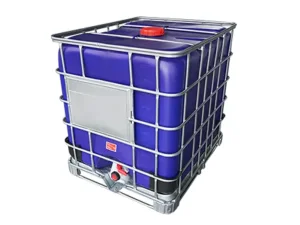
The global rigid industrial packaging market is experiencing a profound paradigm shift. As chemical processing, coatings manufacturing, agricultural formulation, and bulk food processing expand across emerging and developed economies, the humble plastic bucket lid (pail closure) has evolved from a basic single-use disposable cap into a highly sophisticated, engineered safety device. Industrial pails ranging from 5-liter paint buckets to 20-liter hazardous chemical drums and 1000-liter Intermediate Bulk Containers (IBCs) rely entirely on the structural integrity, seal performance, and chemical inertness of their plastic lid systems to maintain package integrity throughout violent ocean transits, multi-tiered warehouse stacking, and extreme atmospheric pressure shifts.
According to recent industrial packaging market intelligence, the global market for high-density polyethylene (HDPE) and polypropylene (PP) industrial closures is projected to top $6.8 Billion by 2030, driven primarily by tight international hazardous material shipping regulations (such as UN Standard 1H2/Y1.5/100) and an aggressive global push toward zero-leakage supply chains. In this high-stakes industrial ecosystem, sourcing managers and packaging engineers are increasingly turning to top-tier China plastic bucket lid manufacturers who possess integrated mold design, precision tooling, and advanced polymer blending capabilities.
Key Takeaway for Sourcing Directors: A plastic lid is not merely a cover; it is a pressurized dynamic barrier. Failure in stress crack resistance or gasket memory can result in catastrophic product loss, environmental fines, and compromised brand equity during transit.
Modern global logistics require plastic bucket lids to withstand multi-axis dynamic loads. When a 20-liter pail filled with high-viscosity epoxy or solvent-based agricultural chemicals is stacked four-high in a shipping container experiencing ocean swell vibrations, the lid's rim geometry and locking teeth must absorb tremendous vertical compression forces while preserving gasket compression. Manufacturers in China, particularly high-precision industrial clusters in Shandong and Jiangsu, have stepped into global leadership by combining economies of scale with sub-micron mold precision, supplying over 40% of the world's commercial and industrial pail closures.
UN-Certified Compliance
Engineered to meet stringent UN ratings for dangerous goods transportation, enduring drop tests from 1.8 meters at -18°C without crack propagation or seal rupture.
Multi-Material Integration
Seamlessly fusing virgin Polypropylene, High-Density Polyethylene, EPDM/Silicone gaskets, and breathable PTFE membranes for volatile gas management.
Zero-Defect Automated QC
Utilizing high-speed vision inspection systems and automated pressure-decay leak detection directly on the injection molding cell line.
2. Polymer Engineering & Tooling Precision: The Anatomy of a High-Quality Lid
An In-Depth Investigation into Melt Flow Indexes, Environmental Stress Crack Resistance (ESCR), Gasket Memory, and Mold Tolerances
Achieving absolute sealing reliability in plastic bucket lids demands a rigorous balancing act between polymer physics and precision mechanical engineering. Cheaply manufactured lids frequently fail due to environmental stress cracking—a phenomenon where chemical agents (such as surfactants, oils, or industrial solvents) accelerate micro-fracturing along localized stress points in the molded plastic. To combat this, premier Chinese manufacturers select prime virgin high-density polyethylene resins with bimodal molecular weight distributions.
Polymer Specification Matrix: HDPE vs. PP in Lid Manufacturing
Selecting the optimal resin blend depends on the specific operational environment of the container. Below is the technical performance comparison framework utilized by senior packaging engineers:
| Engineering Property | HDPE (High-Density Polyethylene) | PP (Polypropylene Impact Copolymer) | Optimal Application Context |
|---|---|---|---|
| Melt Flow Index (MFI) | 2.0 – 7.0 g/10min (190°C/2.16kg) | 12.0 – 25.0 g/10min (230°C/2.16kg) | HDPE provides superior ESCR; PP allows fast multi-cavity injection. |
| Flexural Modulus | 1,000 – 1,300 MPa | 1,400 – 1,750 MPa | PP delivers higher top-load stacking stiffness in ambient temperatures. |
| Sub-Zero Impact Strength | High (-40°C Ductile Retention) | Moderate (-10°C Brittle Transition) | HDPE is imperative for cold-chain shipping and freeze-thaw cycles. |
| Environmental Stress Crack Resistance (ESCR) | > 1,000 Hours (ASTM D1693 Condition B) | 200 – 500 Hours | HDPE is mandatory for aggressive industrial chemicals and surfactants. |
| Thermal Deflection Temp (0.45 MPa) | 75°C – 85°C | 100°C – 115°C | PP is preferred for hot-fill liquid processing applications (e.g., inks/syrups). |
Precision Injection Tooling & Mold Maintenance (0.005 mm Standard)
The performance of a lid is decided inside the steel core and cavity of the injection mold. High-speed multi-cavity hot-runner molds engineered in China incorporate conformal cooling channels crafted via 3D metal printing. This guarantees uniform thermal dissipation across the perimeter tear-strip and center diaphragm, eliminating warpage and shrinkage variations. A dimensional deviation of even 0.05 mm in the inner retention rim can result in seal blowout under internal gas pressure or failure of the tamper-evident tear mechanism during end-user opening.
3. Technology Roadmap & Sustainable Manufacturing Vision
How Leading Chinese Bucket Lid Manufacturers are Integrating Post-Consumer Recycled (PCR) Polymers, Smart Traceability, and Zero-Carbon Production Lines
The global push toward a circular plastic economy has fundamentally changed manufacturing standards. Tier-1 bucket lid producers in China are actively pioneering four major technology vectors:
- Advanced PCR Incorporation without Property Loss: Utilizing multi-layer co-injection molding where recycled post-consumer plastic is encapsulated between virgin outer layers, meeting both ESG sustainability mandates and strict food-contact safety standard FDA 21 CFR.
- Integrated Smart QR & RFID Closures: Embedding passive RFID tags and high-speed laser-engraved serialized QR codes into the lid structure during molding, providing anti-counterfeiting verification and real-time container tracking for global chemical fleets.
- Vented Hydrophobic Membrane Integration: Incorporating ePTFE breathable membranes directly into lid spouts, allowing gas outgassing (e.g., hydrogen peroxide, peracetic acid formulations) while completely blocking liquid penetration even when inverted.
- Lightweighting via Structural Rib Optimization: Employing Finite Element Analysis (FEA) to redesign rib reinforcement networks, shaving 12% to 18% off total polymer weight while increasing vertical top-load resistance by up to 25%.
4. Localized Application Scenarios & Industrial Solutions
Customized Closure Systems Tailored to Specific Operational Challenges Across Global End-User Industries
Specialty Chemical & Solvent Packaging
Equipped with fluorinated barrier surfaces and FKM/Viton gaskets. Prevents solvent permeation, swelling, and chemical degradation in aggressive liquid environments.
Food Grade Bulk Ingredients & Syrups
Manufactured in ISO Class 8 cleanroom injection facilities. Features tamper-evident tear bands, pouring spouts, and 100% virgin FDA-compliant raw resins.
Architectural Coatings, Paints & Inks
Engineered with double-ring airtight snap seals that eliminate air ingress, preventing surface skinning of water-based and oil-based paints during extended retail shelf storage.
5. Manufacturer Evaluation Framework & Inspection Protocol
How Global Sourcing Audit Teams Verify Factory Capability, ISO Certifications, and Quality Control Systems
When conducting factory audits of plastic bucket lid manufacturers in China, international procurement agencies must go beyond surface-level unit pricing. A robust E-E-A-T (Experience, Expertise, Authoritativeness, and Trustworthiness) evaluation protocol requires deep empirical verification across five vital manufacturing pillars:
1. Resin Traceability & FTIR
Verification of incoming raw polymer batches using Fourier Transform Infrared (FTIR) spectroscopy to guarantee zero unauthorized filler or low-grade regrind contamination.
2. Dynamic Hydrostatic Pressure
Submerging closed pails pressurized up to 100 kPa for 30 minutes to verify that the lid's gasket maintains zero liquid or bubble escape under extreme internal pressures.
3. Low-Temperature Impact
Pre-conditioning finished bucket lids at -18°C for 24 hours prior to dropping a 5kg steel dart directly onto the seal rim to ensure zero shatter propagation.
Frequently Asked Questions (FAQ) for Global Buyers
Clear Technical & Logistics Answers for Procurement Managers Sourcing Industrial Bucket Lids from China
How do I choose between a Polypropylene (PP) and HDPE bucket lid for my product?
Choose HDPE lids if your container will store hazardous chemicals, surfactant-heavy detergents, agricultural liquids, or experience cold-chain shipping (-20°C to 40°C), due to HDPE's vastly superior Environmental Stress Crack Resistance (ESCR) and impact ductility. Choose PP impact copolymer lids if your fill process involves hot-fill liquid temperatures (up to 95°C) or requires higher structural stiffness for high-tier ambient warehouse stacking.
What gaskets provide the best leak protection for solvent or oil-based products?
For general water-based paints, food products, and mild acids, EPDM gaskets provide exceptional compression recovery. For petroleum products, aliphatic hydrocarbons, and organic oils, an NBR (Nitrile) or FKM (Viton) gasket is required to prevent swelling, compression set loss, and ultimate seal degradation.
Can Chinese plastic bucket lid manufacturers support OEM tooling and brand customization?
Yes. Top-tier manufacturers feature in-house tooling workshops equipped with 5-axis CNC machining, EDM wire erosion, and CMM dimensional verification. Custom tooling lead times typically range from 25 to 35 days from initial CAD approval, supporting custom embossed brand logos, unique tear-strip geometries, in-mold labeling (IML), and custom Pantone color matching.
What are the standard UN certification requirements for industrial bucket lids?
UN rating compliance (such as UN 1H2/Y1.5/100) requires the lid and pail assembly to undergo rigorous third-party testing: drop tests from 1.2m to 1.8m at -18°C, hydrostatic pressure testing at 100 kPa for 30 minutes, and stacking tests under heavy load at 40°C for 28 days without leakage or structural deformation.
How do vented bucket lids work for off-gassing liquids?
Vented lids feature an integrated ePTFE micro-porous membrane cap or mechanical umbrella valve. This allows volatile gases (such as hydrogen peroxide, bleach, or organic fertilizers) to vent safely when internal pressure rises, preventing container swelling or explosion while completely blocking liquid penetration from inside or water ingress from outside.