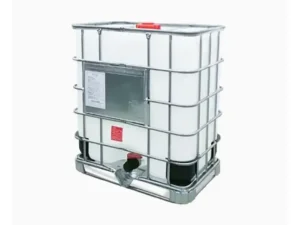
Featured Food-Grade IBC Tanks & Components
1. Global Food Grade IBC Market Dynamics & China's Supply Ecosystem
Analyzing the shift toward rigid intermediate bulk containers in multinational food processing, agricultural yield export, and ultra-pure chemical distribution.
Executive Summary: Market CAGR & The China Manufacturing Advantage
The global market for Food Grade Intermediate Bulk Containers (IBCs) is expanding at a CAGR of 6.8%, driven by strict international biosecurity mandates, the scaling of global edible oil/liquid fructose supply chains, and ESG-driven transitions from single-use packaging to reusable, recyclable tote infrastructures. China has emerged as the global epicenter for precision IBC manufacturing—leveraging automated extrusion blow molding, high-purity virgin polymer synthesis, and complete in-house tooling to deliver certified sanitary packaging at optimal Total Cost of Ownership (TCO).
Comparative Economic Matrix: Food-Grade Packaging Formats
Procurement directors must evaluate logistics efficiency, cleaning costs, product retention, and carbon tax implications when selecting bulk liquid containers.
| Packaging Metric | Food Grade 1000L IBC Totes | 200L Steel Drums (5x Unit) | Flexitanks in 20ft Container | Stainless Steel Tote (316L) |
|---|---|---|---|---|
| Usable Storage Capacity | 1,000 Liters | 1,000 Liters total (200L x 5) | 24,000 Liters | 1,000 Liters |
| Filling & Discharge Speed | High (Bottom DN50/DN80 Valve) | Slow (Top Bung Manual Pumping) | High (Bulk Pump Station) | High (Sanitary Valve) |
| Product Residue After Drainage | < 0.1% (Tapered Sump Design) | 1.5% – 2.8% (Flat Bottoms) | 0.8% – 1.2% (Pocketing) | < 0.05% (Polished Sump) |
| Cleanroom Sterilization Cost | Low (Disposable Liner / Reusable Bottle) | High (Destructive Reconditioning) | N/A (Single Use Only) | Very High (CIP/SIP Capital Intensive) |
| Initial Capital Expenditure (CapEx) | Moderate / Optimized | Low initial, high logistics cost | Low single-trip, high recurring cost | Extremely High (400% - 600% higher) |
| ESG & Carbon Footprint Score | Excellent (100% Recyclable/Reusable) | Moderate (High energy reprocessing) | Poor (Plastics landfill/incineration) | Excellent (30+ Year Lifecycle) |
2. Technical Architecture of Food-Grade Polymer Engineering
Ensuring absolute zero contamination, zero taste-transfer, and structural longevity under severe international shipping conditions.
Virgin Polymer Purity & ESCR
China's top tier manufacturers utilize 100% high-density polyethylene (HDPE) with ultra-high molecular weight distribution. This guarantees superior Environmental Stress Crack Resistance (ESCR) against aggressive food additives, volatile oils, acidic juices, and surfactant cleaning agents.
Regulatory Certification Matrix
True food-grade IBCs undergo rigorous extraction testing to satisfy global standards: FDA 21 CFR 177.1520 (USA), EU Regulation (EC) No 1935/2004, Commission Regulation (EU) No 10/2011, alongside Kosher and Halal sanitary chain-of-custody verification.
Barrier Layer & Fluorination
For flavorings, liquid essential oils, and aromas sensitive to oxidation or permeation, advanced co-extrusion technology applies an inner EVOH (Ethylene Vinyl Alcohol) barrier or post-mold fluorination (Level 5) to drastically reduce Oxygen Transmission Rates (OTR).
In-Depth: Cleanroom Molding & Sterilization Protocols
Leading Chinese suppliers operate Class 100,000 (ISO Class 8) cleanrooms for the extrusion blow molding of food-grade inner liners and injection molding of sanitary valves. Automated robotic trimming prevents particle generation inside the container bottle. Prior to dispatch, bottles undergo high-intensity UV-C irradiation or gamma-ray sterilization options, delivering zero bio-burden ready for immediate aseptic filling lines.
3. Technology Roadmap (2026–2030): AI & Smart IBC Engineering
The convergence of industrial IoT, digital twin telemetry, and ultra-precise polymer mold technology in modern Chinese IBC production.
Embedded micro-sensors inside pallet bases providing real-time tracking of liquid temperature, volume levels, pressure fluctuations, and tilt/vibration alerts during sea transport.
Commercialization of 3-layer co-extrusion: outer layer made of 50% Post-Consumer Recycled (PCR) resin, center structural layer, and 100% virgin food-contact inner layer.
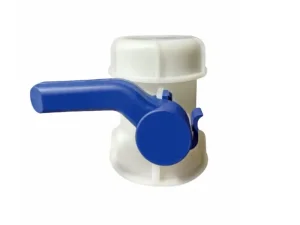
Development of full-bore sanitary butterfly and ball valves featuring zero dead-space pockets, allowing seamless Clean-in-Place (CIP) and Sterilize-in-Place (SIP) without disassembly.
Machine-learning controlled wall thickness distribution (Parison Control) achieving 0.005mm precision, optimizing structural strength while paring container tare weight by 12%.
4. Industry-Specific Macro Solutions & Localized Applications
How specialized food-grade IBC configurations solve critical challenges in major food processing sectors globally.
Edible Oils & Concentrated Fats
Challenge: Oxidation and thermal expansion during tropical shipping (Palm oil, Olive oil, Sunflower oil).
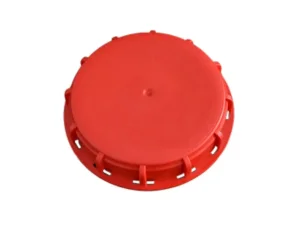
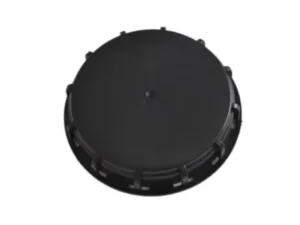
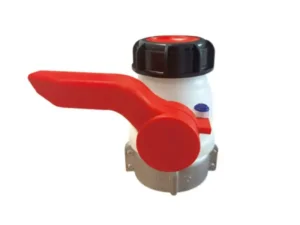
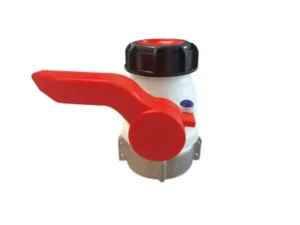
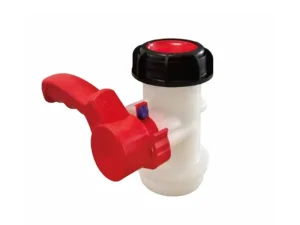
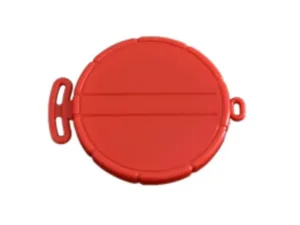
Solution: Heavy-duty UV-stabilized bottle, integrated pressure relief breather cap (red/black lid options), and high-flow DN50/DN80 butterfly valve.
High-Viscosity Ingredients
Challenge: Slow discharge and wall cling for liquid glucose, honey, molasses, and chocolate syrups.
Solution: Conical bottom bottle geometry, smooth polished inner walls, combined with external heating jacket compatibility for rapid thermal viscosity reduction.
Dairy & Beverage Concentrates
Challenge: Bacterial growth from ambient oxygen contact during continuous dosing cycles.
Solution: Aseptic top-dip tube discharge systems paired with nitrogen purging valves, preserving product sterility throughout multi-stage bottling operations.
Alcoholic Spirits & Flavorings
Challenge: High vapor pressure and chemical degradation caused by high-proof ethanol or volatile terpenes.
Solution: Fluorinated HDPE inner bottles, PTFE seals, stainless steel ground wire attachment points for static dissipation (UN certified for hazardous liquid transfer).
5. Strategic Buyer's Quality Audit & Inspection Matrix
Engineering criteria to evaluate Chinese IBC manufacturers and prevent factory quality slip during bulk procurement.
1. Hydrostatic & Drop Test Standards
Verify that your supplier performs 100% pneumatic leak testing on the assembly line (minimum 30 kPa for 10 seconds). For UN food-grade compliance, request documentation for 1.9-meter drop tests at -18°C and 100 kPa hydraulic pressure tests maintained for 10 minutes.
2. Steel Cage Integrity & Galvanization
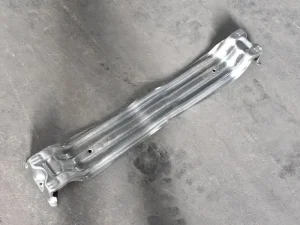
The outer cage must feature high-frequency welded tubular steel with a zinc coating thickness of at least 15-20 µm to withstand humid marine environments without rust. Check that crossbeam transom support bars utilize high-strength galvanized steel.
3. Pallet Base Ergonomics & Stacking
Select the pallet configuration matching your warehouse: Galvanized steel frames for automated racking, heavy-duty HDPE plastic pallets for humid environments, or ultra-lightweight aluminum bases for tare-weight optimization during air/sea freight.
Pro-Tip: Factory Audit Checkpoints for Food Packaging Procurement
When evaluating a Chinese IBC supplier's quote, insist on verifying: (A) Material certificate proving 0% recycled material in the food contact inner bottle; (B) Injection mold precision (top factories achieve 0.005mm thread tolerance preventing micro-leaks under vibration); (C) Traceability via engraved stainless steel nameplates detailing production batch number, raw resin melt flow index (MFI), and operator ID.
6. Frequently Asked Questions (FAQ) for Global Buyers
Detailed technical answers addressing compliance, customization, valve selection, and international logistics.