
High-Precision Container Identification & Fitting Systems
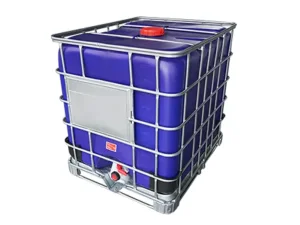
Direct factory components manufactured under strict quality standards for 1000L, 500L, and custom Intermediate Bulk Containers.
The Engineering & Regulatory Role of Engraved IBC Nameplates
Why indelible metal identification systems are the foundational backbone of dangerous goods transport compliance, automated supply chains, and circular container economies.
Mandatory Legal Compliance & Operational Traceability
In global chemical logistics, an Intermediate Bulk Container (IBC) is far more than a simple plastic bottle housed within a steel framework. It is an officially certified pressure vessel governed by international regulations, including the United Nations Recommendations on the Transport of Dangerous Goods (UN Model Regulations), the IMDG Code for maritime transit, and the ADR/RID agreements for European road and rail freight.
According to UN specification 31HA1 (composite IBCs for liquids), every container must display an indelible, corrosion-resistant, and tamper-evident metal identification plate. This plate permanently records essential regulatory metrics: UN design type code, maximum allowable payload, tare mass, test pressure (kPa), bottle manufacturing date, and re-test schedules. Printed labels, thermal stickers, or shallow laser marks frequently fail when exposed to aggressive solvent spills, marine salt spray, or high-pressure alkaline washing during container reconditioning.
Cost Efficiency & Asset Value Retention
For global chemical distributors and IBC fleet operators (such as Goodpack, Hoover CS, and Brambles), lost or unreadable data plates convert a high-value $250+ reusable tote into scrap metal. A missing identification tag invalidates the container's UN certification, prohibiting it from carrying Class 3 flammable liquids, Class 6 toxic substances, or Class 8 corrosive media.
- Zero Regulatory Fines: Prevents port hold-ups and customs fines caused by illegible markings.
- Optimized Reconditioning Loops: Allows automated optical character recognition (OCR) during washing.
- Enhanced Fleet Life: Durable 316L plates survive 50+ chemical cleaning cycles.
Metallurgical Precision & Engraving Technologies
A technical examination of how leading Chinese production facilities manufacture marine-grade, chemical-proof metal plates for industrial containers.
1. Photochemical Acid Etching
Photochemical machining (PCM) uses photoresist masks and controlled ferric chloride spraying to etch ultra-precise grooves into stainless steel sheets. This chemical process generates zero thermal stress, micro-burrs, or material distortion, ensuring that the finished plate lies 100% flush against the IBC steel grid.
Ideal for: High-volume fixed text plates, standard UN logos, static manufacturer details, and intricate multi-color company branding.
2. MOPA Fiber Laser Engraving
For dynamic variable data—such as sequential serial numbers, real-time production timestamps, dynamic tare weights, and 2D DataMatrix QR codes—Chinese factories deploy 50W–100W MOPA fiber lasers. The laser alters the surface microstructure of the stainless steel to achieve deep, high-contrast, black annealing marks.
Key Advantage: Creates scanable barcodes with an ISO/IEC 15415 grade of "A" (4.0), enabling reliable camera reading at speeds up to 2m/s on conveyor lines.
3. Mechanical Embossing & Stamping
In ultra-rugged mining or industrial applications where extreme physical impacts occur, progressive mechanical dies physically raise or indent characters into 0.8mm to 1.5mm steel plates. Even if paint, chemical crusts, or severe rust cover the plate, the physical relief profile remains fully readable.
Durability Standard: Withstands heavy mechanical abrasion, sandblasting, and scraping without data loss.
| Material Specification | Corrosion Resistance | Chemical Compatibility | Recommended Industrial Environment | Relative Cost Index |
|---|---|---|---|---|
| AISI 304 Stainless Steel | High (Up to 500h Salt Spray) | Weak Acids, Alkalis, Food Solvents, Oils | General Chemical Logistics, Food & Beverage, Agriculture | Standard Baseline (1.0x) |
| AISI 316L Stainless Steel | Superior (> 1,000h Salt Spray) | Concentrated Hydrochloric Acid, Chlorides, Marine Salt | Offshore Oil & Gas, Hazardous Marine Transport (IMDG) | Premium (+35%) |
| Anodized Aluminum (5052-H32) | Moderate (Atmospheric Weathering) | Neutral Liquids, Non-Corrosive Powders | Lightweight Pallet Integration, Domestic Dry Bulk | Economical (-20%) |
| Passivated Brass (C36000) | Moderate (Spark-Proof Property) | Petroleum Fuels, Non-Acid Hydrocarbons | Explosive Atmosphere (ATEX Zone 0/1 Containers) | Specialized (+40%) |
Why Sourcing Engraved Nameplates Direct from China Matters
Evaluating cost-efficiency, vertical supply integration, and OEM/ODM capabilities across Shandong and Jiangsu industrial clusters.
Supply Chain Vertical Integration
China produces over 65% of the world's commercial IBC containers and accessories. Industrial manufacturing clusters in Linyi (Shandong), Ningbo (Zhejiang), and Suzhou (Jiangsu) bring raw stainless steel rolling mills, precision chemical etching plants, laser marking workshops, and CNC stamping facilities into close proximity.
This geographic concentration yields immense strategic benefits for global procurement directors:
- Unbeatable Economies of Scale: Raw material procurement costs for AISI 304/316L coil stock are 15-25% lower than in Western Europe or North America.
- Rapid Customization Workflows: Prototype tooling and physical sample delivery within 72 hours of CAD vector drawing approval.
- Unified Quality Assurance: Full compliance with ISO 9001:2015, REACH, RoHS 3, and material traceability via EN 10204 3.1 Mill Test Certificates.
- Integrated Accessory Matching: Nameplates engineered with precise mounting hole configurations to fit standard steel grid cages (e.g., Schütz, Mauser, Greif, and Werit tote designs).
Global Procurement Criteria Checklist
When enterprise buyers submit Requests for Quotation (RFQs) to Chinese IBC nameplate manufacturers, evaluating technical capability beyond simple unit price is essential to avoiding field failures.
End-to-End Application Scenarios Across Global Value Chains
How customized metal nameplates interface with diverse chemical, food, pharmaceutical, and reconditioning supply networks.
1. Hazardous Chemicals
Demands UN 31HA1 certification plates etched in AISI 316L. Must resist aggressive acids, caustic soda, organic solvents, and high humidity in transoceanic container shipping.
2. Food & Beverage Ingredients
Requires FDA-compliant, electropolished stainless steel nameplates with zero crevices or pits to prevent bacterial growth during high-temperature steam CIP (Clean-in-Place) procedures.
3. Offshore Energy & Marine
Heavy-duty 1.5mm thick SS316L plates attached to stainless steel framed offshore totes (DNV 2.7-1 certified). Engineered to survive harsh marine atmospheric spray and saltwater immersion.
4. Reconditioning & Pooling
Nameplates designed with modular "over-strike" panels or replaceable sub-plate inserts. Allows reconditioners to record periodic test dates (every 2.5 and 5 years) cleanly without replacing the primary plate.
Smart Nameplates & Industry 4.0 Smart Packaging
Bridging physical container infrastructure with digital cloud telemetry via hybrid optical, RFID, and NFC identification markers.
Laser DataMatrix ECC200 Integration
High-density 2D barcodes laser-etched directly onto stainless steel plates allow automated warehouse scanners to read container data instantly, even when covered by dust or atmospheric grime.
Sub-Surface ATEX RFID Tag Slots
Advanced Chinese factories produce dual-mode nameplates featuring a milled recessed cavity on the back of the steel plate that securely houses an ATEX-certified UHF RFID or NFC transponder chip.
ESG Carbon Footprint Mapping
Engraved plates tracking life-cycle trip counts allow chemical corporations to provide verifiable ESG reporting by documenting carbon offset savings through container reuse loops.
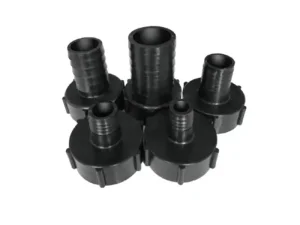
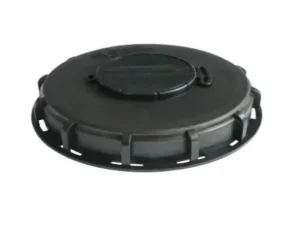
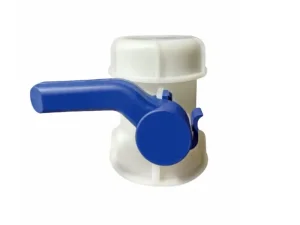
High-Performance IBC Fittings & Structural Components
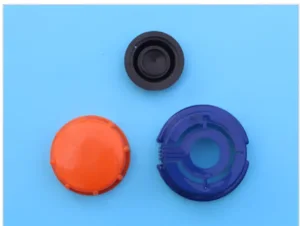
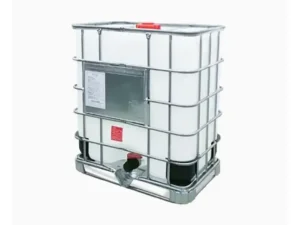
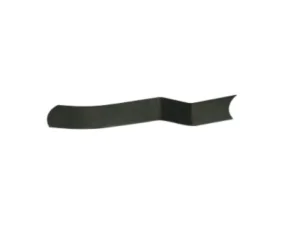
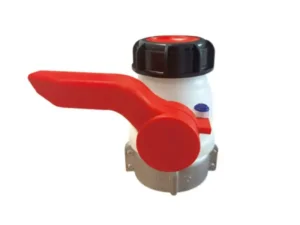
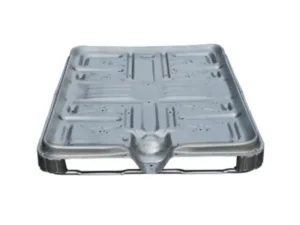
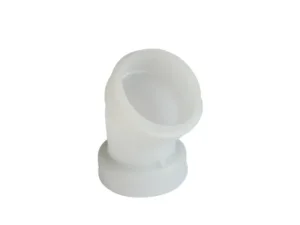
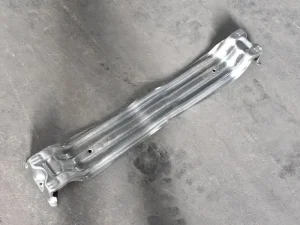
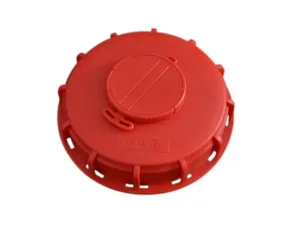
Explore our comprehensive range of valves, caps, pallet bases, and crossbeams designed to integrate seamlessly with standard IBC containers.
Frequently Asked Questions (FAQ)
Expert engineering insights regarding specifications, ordering processes, custom tooling, and regulatory compliance.