High-Performance Bulk IBC Containers & Precision Hardware
Direct-factory OEM/ODM liquid handling solutions engineered for chemical, food-grade, and industrial transport.
Global Procurement Intent & China Manufacturing Competitiveness
Analyzing TCO, Supply Chain Resilience, and Manufacturing Benchmarks for Industrial Buyers
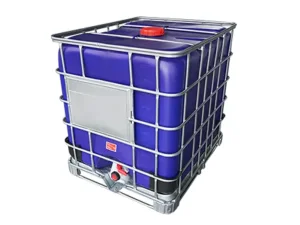
In the modern global supply chain, Intermediate Bulk Containers (IBCs)—specifically standard 1000-liter composite IBC totes—serve as the indispensable backbone for bulk liquid logistics across hazardous chemicals, food-grade ingredients, pharmaceuticals, and agricultural formulations. Procurement directors and supply chain engineers evaluating China Bulk IBC Tank Manufacturers & Factories must balance material integrity, structural safety, international dangerous goods compliance, and Total Cost of Ownership (TCO).
Supply Chain Optimization
Direct sourcing from top-tier Chinese manufacturers eliminates middle-tier distribution markups, yielding 25% to 40% cost reductions per container unit while ensuring consistent raw resin specification (virgin High-Density Polyethylene HDPE).
UN Dangerous Goods Rating
Global logistics demand strict UN certification (such as UN 31HA1/Y ratings). Leading Chinese factories maintain automated drop-test, stack-test, and hydraulic leakproofness test rigs directly on automated production lines.
Custom OEM/ODM Scalability
From anti-sloshing internal baffles and light-blocking UV protection layers to anti-static conductive outer skins for Zone 1 hazardous environments, advanced Chinese manufacturing hubs provide comprehensive customization.
Information Gain Insight: TCO Evaluation for Bulk Purchasing
When evaluating factory quotations, enterprise buyers should look beyond initial unit FOB costs. Factors such as frame wall thickness (tubular vs box profile steel), resin density (ESCR - Environmental Stress Crack Resistance), and valve seal elastomers (EPDM vs Viton vs PTFE) dictate the reusable life cycle and reconditioning potential of the IBC container fleet.
Macro Industry Solutions & Compliance Engineering
Custom-engineered containment architectures designed for extreme operational environments.
Hazardous Chemical & Solvent Containment
For aggressive solvents, acids, and volatile organic compounds (VOCs), Chinese IBC manufacturers utilize multi-layer co-extrusion technology. Incorporating EVOH barrier layers or inline fluorination treatment significantly reduces chemical permeation and container wall degradation, ensuring compliance with IMDG, ADR, and RID transportation codes.
Sanitary Food Grade & Liquid Bulk Processing
Food and beverage applications demand raw materials compliant with US FDA 21 CFR 177.1520 and EU Regulation No 10/2011. Production takes place in ISO Class 8 cleanroom environments, utilizing virgin resin without regrind polymers, paired with food-grade EPDM or silicone seals and sanitary butterfly/ball valves.
Light-Sensitive & Photodegradable Formulations
Agrochemicals, specialized resins, and organic reagents degrade under solar radiation. Opaque black or dark blue UV-stabilized HDPE inner bottles block over 90% to 99% of actinic light (wavelengths 200nm-450nm), extending product shelf life during open-air storage.
Heavy-Duty Stainless Steel (SS304/SS316L) Totes
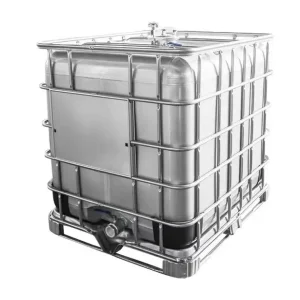
For high-pressure, high-temperature, or ultra-pure chemical processes where plastic composite totes are unsuitable, Chinese factories produce heavy-gauge SS304/SS316L IBCs. Built with conical bottoms, automatic pressure relief valves, and forklift-compatible bases, these containers offer a 20+ year operational lifespan.
| IBC Type / Feature | Inner Container Material | External Structure | Primary Compliance Standard | Target Industry Applications |
|---|---|---|---|---|
| Standard Composite 1000L | Blow-molded Virgin HDPE | Galvanized Tubular Steel Grid | UN 31HA1 / ISO 16106 | General Chemicals, Water, Oils |
| UV-Proof Opaque IBC | Carbon-Black / UV-Stabilized HDPE | Reinforced Steel Cage | UN Dangerous Goods / FDA | Agrochemicals, Light-Proof Resins |
| Food & Sanitary Grade | 100% Virgin High-Molecular Weight HDPE | Zinc-Coated / Stainless Base | FDA 21 CFR / EU 10/2011 / Kosher | Syrups, Juices, Dairy Ingredients |
| Heavy Duty SS304 / SS316L | Austenitic Stainless Steel (2mm-3mm) | Integrated Heavy Steel Frame | UN 31A / ASME / DOT 57 | Flashing Solvents, High-Temp Resins |
Industry Trends & Engineering Roadmap (2026-2030)
The Evolution of Smart IoT Containers, Circular Economy Recyclability, and Advanced Polymer Science
IoT Integration & Telematics
Next-generation bulk IBC containers manufactured in China integrate low-power NB-IoT and LoRaWAN sensors. Procurement managers can track real-time container location (GPS), internal fluid volume (ultrasonic level sensing), temperature spikes, and dynamic impact/tilt alerts directly via cloud dashboard APIs.
Sustainable PCR & Closed-Loop Design
Aligning with ESG and global decarbonization mandates, Chinese factories lead the development of PCR (Post-Consumer Recycled) multi-layer bottles—where recycled HDPE forms the non-contact middle layer while 100% virgin HDPE maintains chemical contact integrity.
Nanotechnology & Anti-Sloshing FEA
Through Finite Element Analysis (FEA) dynamic simulation, internal anti-sloshing baffles and modified ribbing geometries reduce fluid momentum shifts during transport. Nanocomposite additives enhance structural rigidity while reducing overall frame tare weight.
Localization Support, Regulatory & Quality Assurance
Rigorously Verified Testing Protocols for Overseas Freight & Port Compliance
Factory Quality Control & Standard Testing Protocols
To guarantee complete failure prevention during intermodal transit, qualified Chinese IBC manufacturers execute strict QA protocols on every production batch:
- Hydraulic Internal Pressure Test: Pressurized at 100 kPa for 10 minutes to verify seam weld and bottle burst thresholds.
- Drop Impact Testing: Dropped from a height of 1.9 meters at -18°C conditioning to evaluate cold-brittle impact resistance.
- Top Stack Load Testing: Subjected to static top load equivalent to 4600 kg for 28 days at 40°C to simulate multi-tier warehouse stacking safety.
- Vibration & Slosh Endurance: Dynamic shaker table testing matching international transport shock spectrums.
Logistics Efficiency & Global Freight Optimization
Shipping bulk IBC containers internationally requires maximizing container payload volume. Optimized factory packing designs allow maximum unit loading per standard shipping container:
- 40ft High Cube (HC) Container: Holds up to 42 to 52 units (assembled or nested knock-down components).
- Knock-Down (CKD/SKD) Supply: Inner HDPE bottles, collapsible steel cages, and pallets shipped disassembled to reduce ocean freight costs by up to 50%.
- Custom Pallet Bases: Choice of galvanized steel, 4-way entry heavy-duty plastic, or lightweight aluminum pallets matching local forklift equipment.
Frequently Asked Questions (FAQ)
Expert Engineering Insights for Procurement Directors & Chemical Logistics Managers
What is the difference between a composite IBC tank and a stainless steel IBC tank?
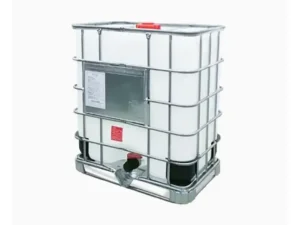
A composite IBC tank consists of a blow-molded High-Density Polyethylene (HDPE) inner bottle supported by a galvanized steel tubular grid frame. It is cost-effective, lightweight (approx. 55-65 kg tare weight), ideal for single-trip or medium-term reuse, and suitable for most general acids, bases, and water-based chemicals. Stainless steel (SS304/SS316L) IBCs are heavy-duty, fully welded metal pressure vessels designed for extreme chemical compatibility, high-temperature liquids, flashing solvents, and aggressive recondition cycles spanning over 20 years.
How do I know if an IBC tank has UN Dangerous Goods Approval?
UN-certified IBC tanks carry an embossed permanent UN mark on the inner bottle and a durable metal specification plate on the steel cage. The code format (e.g., UN 31HA1/Y/10 24/CHN/...) indicates the packaging type (31HA1 = composite IBC for liquids), hazardous packing group designator (Y = Packing Group II & III), month/year of manufacture, country of certification (CHN = China), and approved stacking/hydraulic test pressure ratings. Always request the official UN Certificate of Packaging from the factory before placing bulk chemical orders.
What outlet valve options and thread standards are available from Chinese manufacturers?
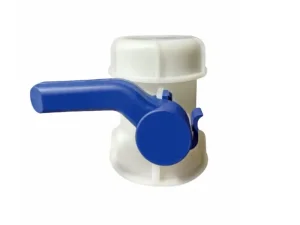
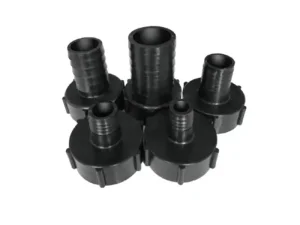
Standard Chinese IBC tanks feature DN50 (2-inch) or DN80 (3-inch) integrated butterfly or ball valves. Common outlet thread specifications include S60x6 buttress threads, Camlock quick-connect adapters, and BSP/NPT male/female threaded connectors. Valve seal materials can be customized using EPDM for general chemicals/alkalis, Viton (FKM) for corrosive hydrocarbons/solvents, or PTFE (Teflon) for ultra-aggressive media.
Why is UV protection necessary for IBC tanks used outdoors?
Unstabilized natural HDPE degrades when exposed to solar ultraviolet (UV) radiation, leading to polymer chain scission, discoloration, embrittlement, and eventual wall cracking under pressure. For outdoor liquid storage, light-resistant IBC tanks incorporate UV-inhibitor masterbatches or opaque carbon-black barriers, preventing over 90% to 99% of UV transmission while safeguarding photodegradable chemicals, paints, or agricultural fertilizers.
What is the lead time and MOQ for direct factory shipments from China?
For standard 1000L composite IBC totes and stock accessories, factories typically maintain ready-to-ship inventory with dispatch timelines within 3 to 7 days. Customized orders involving special bottle colors (black/blue), custom embossed brand nameplates, or specialized valve elastomers generally require a production lead time of 15 to 20 days. Minimum Order Quantities (MOQ) typically align with standard container loading units (e.g., 1x40HQ container = 42-52 assembled tanks).
Can Chinese manufacturers provide OEM/ODM custom mold tooling?
Yes. Leading manufacturers possess in-house CNC mold machining centers, CMM measurement tooling, and Moldflow finite element simulation capabilities. Precision mold tolerances up to 0.005mm can be achieved for custom closures, specialized filling caps, anti-sloshing internal structures, and bespoke container geometries tailored to specific industrial equipment integration.
Industrial Bulk Containers & Structural Replacement Parts
Complete product listings for modular replacement, tank maintenance, and customized packaging builds.