
Primary Industrial Drum & IBC Component Solutions
Explore high-performance modular components, steel cage frames, and engineered closure systems manufactured directly in our China Industry 4.0 facilities.
Executive Overview: The Evolution of 55 Gallon Drums & Bulk Containers
In global industrial logistics, the standard 55-gallon drum (equivalent to 208 liters) and its modular counterpart—the 1000-liter Intermediate Bulk Container (IBC)—represent the foundational backbone of hazardous and non-hazardous liquid containment. Sourcing high-grade drums and bulk liquid handling equipment directly from top-tier China suppliers requires a nuanced technical understanding of polymer engineering, structural mechanics, UN compliance testing, and Total Cost of Ownership (TCO) optimization.
Over the past decade, Chinese manufacturing has undergone a profound structural shift from high-volume, low-cost commodity molding to precision-driven Industry 4.0 production. Today’s premier Chinese chemical drum factories leverage advanced blow-molding equipment, ultra-high-molecular-weight high-density polyethylene (UHMW-HDPE) resins, continuous automated quality control, and zero-defect mold engineering to meet stringent international standards including UN 1H1/1H2 ratings, US DOT Hazardous Materials Regulations, and European ADR logistics norms.
Information Gain Key Takeaway for Procurement Officers
Evaluating 55 gallon drum suppliers based solely on initial unit cost creates substantial downside risk. Wall thickness variability, stress-crack resistance (ESCR ratings), dynamic load capacity, and valve seal elasticity directly dictate transoceanic leakage rates and environmental spill liability. Partnering with vertically integrated Chinese manufacturers guarantees traceable resin sourcing, 0.005mm tooling tolerances, and documented UN drop/stacking certification compliance.
China Factory 4.0: Supply Chain Resilience & Efficiency Advantages
How state-of-the-art Chinese industrial drum and IBC component factories achieve unmatched quality consistency and rapid global dispatch.
Polymer Science & Resin Selection
Leading Chinese drum manufacturers utilize prime virgin High-Density Polyethylene (HDPE) with high melt flow index stability and specialized Environmental Stress Crack Resistance (ESCR) additives. This polymer architecture ensures the drum retains structural integrity even when exposed to aggressive surfactants, organic solvents, and extreme temperature fluctuations during maritime export.
0.005 mm Tooling & Mold Precision
In-house CNC machining centers and automated mold polishing achieve extreme tolerances up to 0.005 mm. Precision tooling guarantees that drum bungs, cap seals, DN50/DN80 butterfly valves, and lid gasket grooves mesh perfectly without stress concentration points, completely eliminating micro-gaps that cause volatile organic compound (VOC) vapor leakage.
Automated Co-Extrusion Blow Molding
Multi-layer co-extrusion technology enables the production of light-proof outer layers combined with ultra-pure, uncolored inner liquid contact surfaces. Automated parison thickness control dynamically redistributes polymer resin to high-stress areas (such as drum rims, bottom chimes, and side ribs) to withstand 3-meter dynamic drop impacts and 3-high stacking loads.
Technical Roadmap & Future Outlook of 55 Gallon Drums & Industrial Packaging
Discover how emerging material science, IoT tracking, and circular economy design principles are redefining bulk container performance.
PCR Integration & Circular Loop Design
Driven by global corporate sustainability directives and European packaging waste regulations, Chinese factories are leading the development of multi-layer drums utilizing up to 50% Post-Consumer Recycled (PCR) HDPE in non-contact structural middle layers. This design preserves 100% virgin purity for internal media contact while drastically reducing cradle-to-gate carbon footprints.
Fluorination Level 5 Barrier Processing
For aggressive non-polar solvents, aromatic hydrocarbons, and ag-chem concentrates, advanced off-line gas fluorination (Level 3 to Level 5) modifies the interior polymer surface chemistry. This surface fluorination creates a microscopic chemical barrier that prevents solvent permeation, container panelling, and weight loss over multi-month transit cycles.
Smart IoT Telemetry Cap & Lid Integration
Next-generation 55-gallon chemical drums and IBC totes are adopting embedded IoT tracking sensors within breathable caps and lid assemblies. Real-time telemetry modules monitor GPS position, temperature spikes, ullage pressure changes, and tilt angles, communicating critical chain-of-custody data directly to enterprise ERP dashboards via cellular networks.
Macro Industry Solutions & Application Matrices
Engineered to handle diverse chemical behavior, strict sanitary protocols, and severe industrial transport environments.
| Target Sector | Dominant Media Types | Recommended Drum / Packaging Spec | Critical Seal & Valve Materials | Regulatory Compliance |
|---|---|---|---|---|
| Fine & Specialty Chemicals | Surfactants, Solvents, Acids, Catalysts | Tight-Head 55-Gal HDPE Drum / UN 31HA1 IBC | FKM (Viton) / PTFE Gaskets, Venting Lid | UN 1H1/Y1.9, ADR, US DOT |
| Food & Beverage Processing | Concentrates, Edible Oils, Syrups, Additives | Food-Grade Virgin HDPE Tight/Open-Head Drum | EPDM / Food-Grade Silicone Seals | FDA 21 CFR 177.1520, EU 10/2011 |
| Agrochemicals & Fertilizers | Pesticides, Liquid Nitrogen, Herbicides | Fluorinated (Level 5) HDPE Drum / UV-Opaque Tote | Vented Breathable Cap, Anti-Bulge Ribs | UN Hazardous Goods Marking |
| Lubricants & Energy Distillates | Engine Oils, Hydraulic Fluids, Gear Greases | Galvanized Steel Frame IBC / 55-Gal Steel-Plastic Hybrid | NBR (Nitrile) / Metal DN50 Ball Valve | ISO 9001:2015, High Drop-Impact Rating |
| Hazardous Waste & Remediation | Corrosive Waste, Toxic Effluents, Sludge | Heavy-Duty Open-Head Drum with Lock-Ring | Neoprene / Chemically Inert Poly Liner | UN 1H2/X Extreme Hazardous Rating |
Global Sourcing Matrix & Total Cost of Ownership (TCO) Optimization
When sourcing 55-gallon drums, IBC tanks, and modular liquid-handling fittings from China, global procurement teams must calculate the Total Cost of Ownership (TCO) rather than focusing exclusively on the Freight-on-Board (FOB) price per unit. Industrial packaging failures during transoceanic shipping yield severe indirect financial losses, including cargo contamination, environmental remediation fines, customer rejections, and vessel delays.
FOB Purchase Unit Price
Direct cost of raw resin, molding labor, cage fabrication, and factory overhead. China's massive industrial clusters keep base production costs 20% to 35% below Western domestic manufacturers.
Shipping Density & Freight
Optimizing container stuffing plans via nested open-head drum designs or knock-down IBC steel cages increases 40ft High Cube container volumetric utilization by up to 45%.
Zero-Defect Quality Risk
Procuring from factories enforcing ISO 9001 and automated 100% pneumatic pressure leak testing prevents costly seal failure during dynamic ocean movement.
Lifecycle & Reusability
High-grade virgin HDPE containers allow 10+ reuse cycles through professional reconditioning washes, dramatically lowering cost-per-fill metrics.
Localized Support & International Regulatory Compliance Framework
Ensuring seamlessly compliant transit across North American, European, Asia-Pacific, and Middle Eastern port authorities.
UN Dangerous Goods Rating
Full UN certification testing protocols include: 1.8-meter low-temperature drop testing (-18°C), 28-day hydraulic pressure leakage testing (200 kPa), 28-day stacking load testing under elevated temperatures (40°C), and vibration resistance validation according to UN 1H1/1H2 and 31HA1 requirements.
FDA Food Contact Approvals
For food ingredients, liquid concentrates, and pharmaceutical intermediates, all resins, color masterbatches, and internal valve components are certified strictly compliant with US FDA 21 CFR 177.1520 and EU Directive 10/2011 regulations for direct food contact safety.
Customs Documentation & Traceability
Every shipment is supported by comprehensive quality documentation, including Certificates of Analysis (COA), Resin Batch Traceability Reports, Material Safety Data Sheets (MSDS), and standardized Bill of Lading documentation to ensure swift customs clearance worldwide.
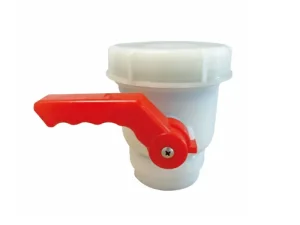
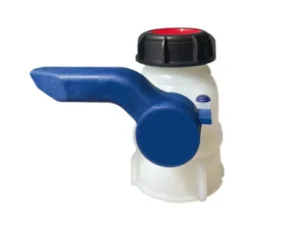
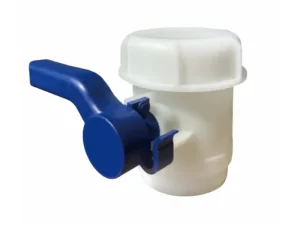
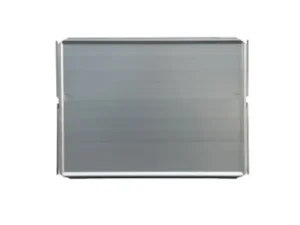
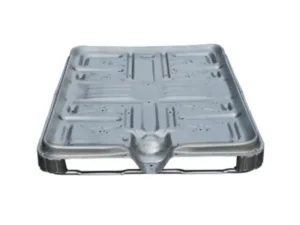
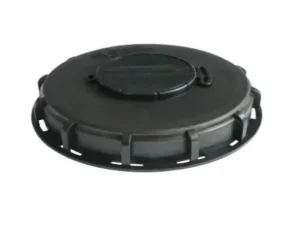
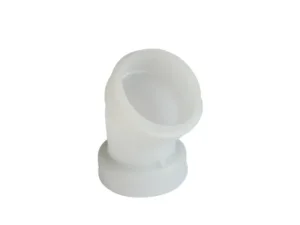
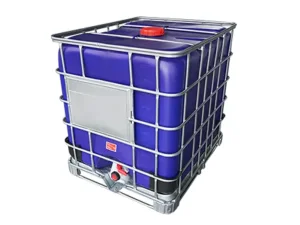
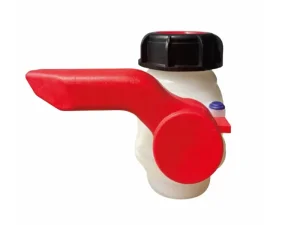
Precision Valves, Identification & Container Assemblies
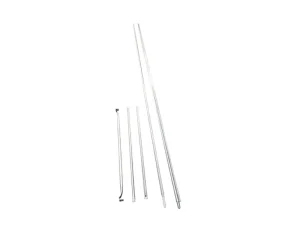
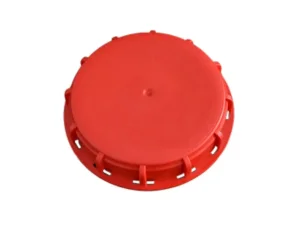
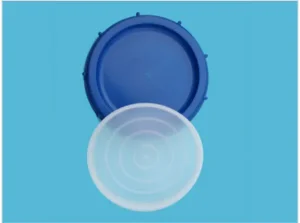
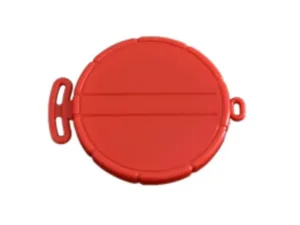
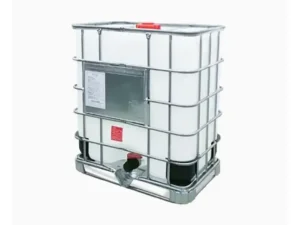
Complete your sourcing pipeline with factory-direct replacement components, heavy-duty lids, and specialized vertical IBC containment units.
Frequently Asked Questions (FAQ)
In-depth technical answers addressing critical procurement, engineering, and compliance inquiries.
What is the structural difference between a standard 55-gallon HDPE drum and a 1000L IBC tote?
While both rely on High-Density Polyethylene (HDPE) as the liquid contact surface, a standard 55-gallon (208L) drum is a self-supporting rigid container handled individually via drum handling equipment or pallets. In contrast, a 1000L IBC tote combines a blown HDPE inner bottle enclosed within a heavy-duty tubular galvanized steel cage mounted on an integrated pallet base (steel, plastic, or aluminum). IBC totes provide nearly 5x the volumetric capacity per unit footprint while supporting direct forklift handling and integrated bottom valve discharge (DN50/DN80).
How do UN ratings (e.g., UN 1H1/Y1.9/200) dictate chemical compatibility?
UN markings define the maximum hazardous severity a container can legally carry. In the code "UN 1H1/Y1.9/200": 1H1 indicates a tight-head plastic drum; Y specifies Packing Group II (medium danger) and Group III (low danger); 1.9 represents the maximum specific gravity (density) of the liquid media; and 200 denotes the hydrostatic test pressure rating in kPa. Always ensure your chemical's density and vapor pressure fall comfortably within the drum's UN stamp limits.
When should procurement specify a vented (breathable) lid versus a solid sealing cover?
Vented (breathable) caps equipped with hydrophobic PTFE membrane inserts are mandatory when carrying media that off-gas under thermal expansion (such as hydrogen peroxide, sodium hypochlorite, or organic agrochemical formulations) or when rapid filling/emptying causes extreme internal pressure differential or vacuum collapse. Solid sealing caps with EPDM or Viton gaskets are preferred for stable, volatile organic solvents requiring 100% vapor lock and zero moisture ingress.
What lead times and Minimum Order Quantities (MOQs) apply for direct China factory shipments?
Standard bulk products (such as baseline 55-gallon drums, standard DN50 butterfly valves, and 150mm replacement lids) are maintained in inventory, enabling dispatch within 3 to 5 business days. Customized projects requiring OEM logo engraving, specialized color masterbatches, or custom mold tooling typically operate on a 15 to 25-day production schedule. Typical minimum order quantities range from full container loads (FCL: approx. 80 IBC totes or 400 drums) for complete containers down to smaller LCL orders for precision valve components.
How does Fluorination (Level 5) prevent paneling and solvent permeation in plastic drums?
Non-polar organic solvents (such as toluene, xylene, and d-limonene) can permeate standard HDPE molecular chains, softening the container walls and causing atmospheric pressure collapse ("paneling"). Off-line Level 5 Fluorination exposes the drum interior to fluorine gas, substituting surface hydrogen atoms with fluorine atoms. This creates a chemically inert, Teflon-like barrier layer that drops solvent permeation rates to near zero, maintaining container shape and payload mass.