
Why Use an IBC Adapter for Global Bulk Shipping?

Time:2026-10-11 Author:Liam
0%

Global bulk shipping depends on more than vessel capacity and port access. It also depends on how safely and efficiently products move between storage, transport, and processing systems. UNCTAD’s Review of Maritime Transport 2024 confirms that maritime transport carries over 80% of global merchandise trade by volume. That scale makes small handling failures expensive. A leaking valve, poorly matched hose, or delayed transfer can affect an entire shipment schedule.

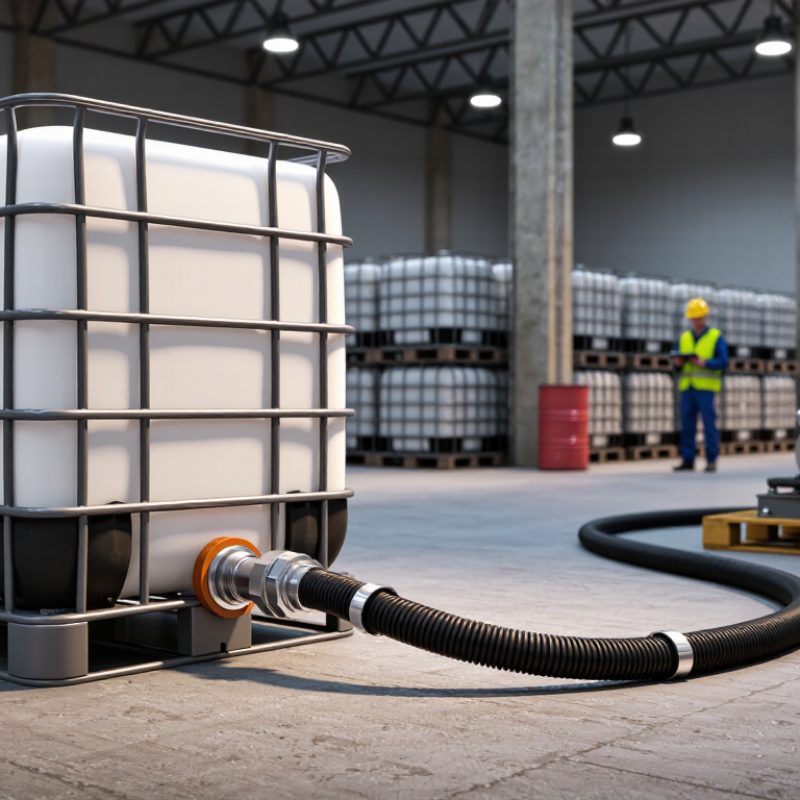
An Ibc Adapter provides a practical connection between an intermediate bulk container, transfer hose, pump, or filling line. It can support faster loading and unloading while reducing manual handling around the container outlet. In busy warehouses, this may mean fewer spills, cleaner work areas, and more consistent transfer times. The World Bank’s Logistics Performance Index 2023 highlights reliability, shipment tracking, and timely delivery as central logistics performance factors. An appropriate Ibc Adapter can support these goals when it matches the container thread, gasket material, flow requirement, and product characteristics.

The choice is not always obvious. Different IBC designs use different outlet sizes, valve types, and connection standards. A technically unsuitable adapter may create pressure loss, leakage, or contamination concerns. Experience matters here. Operators should verify dimensions, material compatibility, cleaning procedures, and applicable transport requirements before shipment. Product documentation and supplier testing also deserve careful review.

For global bulk shipping, the value of an Ibc Adapter is practical rather than decorative. It helps connect separate handling systems with fewer interruptions. It cannot solve every logistics problem. However, when selected with professional guidance, it can improve transfer control, operational consistency, and the safe movement of lawful bulk products across international supply chains.
Why Use an IBC Adapter for Global Bulk Shipping?

What Is an IBC Adapter in Global Bulk Shipping?

Why Use an IBC Adapter for Global Bulk Shipping?

An IBC adapter is a connection fitting for an intermediate bulk container. It links the container’s outlet to a hose, pump, or transfer line. Different IBC valves use different threads, sizes, and sealing methods. The adapter bridges those differences during loading or discharge. In practical operations, it can prevent improvised connections, dripping liquid, and delayed cargo handling. A reliable adapter should match the valve type, gasket material, pressure rating, and transported liquid. Small details matter. A loose seal can contaminate a clean loading area.

Global shipping makes compatibility more important. UNCTAD’s Review of Maritime Transport 2024 reported that maritime trade grew 2.4% in 2023. It also forecast approximately 2.0% growth for 2024. More cargo movement means more transfers between containers, warehouses, trucks, and vessels. An adapter supports these handoffs without replacing the full container system. It can reduce handling steps and help workers maintain a repeatable connection process.

However, an adapter is not automatically safe because it fits. Operators still need to inspect threads, confirm chemical compatibility, and check the gasket before use. The International Maritime Organization’s dangerous goods framework emphasizes correct packaging and handling controls. Even compliant equipment can fail after repeated cleaning or rough transport. That point is often underestimated. Field experience suggests that color coding and written connection checks improve consistency, although they cannot replace training or inspection.

How IBC Adapters Connect Bulk Containers to Transport Systems

Global bulk shipping depends on reliable transfers between containers, hoses, pumps, and storage lines. UNCTAD’s Review of Maritime Transport 2024 reports that seaborne trade reached about 12.3 billion tonnes in 2023. At that scale, small connection failures become costly. An IBC adapter creates a controlled interface between a bulk container outlet and a transport system. It can match outlet threads, hose diameters, seals, and pump connections. Operators can transfer liquids with less open handling and fewer improvised fittings.

A practical setup begins with compatibility checks. Confirm the outlet profile, fluid temperature, viscosity, pressure, and required flow rate. Choose seals that resist the cargo and remain stable during discharge. ISO 21898 provides requirements for polymeric IBCs used with non-dangerous goods. However, the standard cannot replace site testing. It only guides the process. Recording the adapter type, gasket condition, and connection date also improves traceability during inspections.

The overlooked risk is alignment. A correct thread can still leak when a hose bends sharply. Secure the line, inspect the gasket, and test the connection before full transfer. The World Bank’s Logistics Performance Index 2023 measures timeliness, tracking, and logistics service quality. Adapters support these goals, but they are not magic. Worn seals, rushed changeovers, and poor training can still undermine reliable transport. That uncomfortable detail deserves attention.

Which Materials and Cargoes Suit IBC Adapter Use?

An IBC adapter is useful when a bulk container must connect safely with existing hoses, pumps, or filling lines. Its best applications involve liquid cargoes with predictable flow behavior. Food ingredients, edible oils, syrups, water-based products, and non-hazardous industrial liquids often suit this setup.

Not every liquid qualifies. Viscous cargoes may need wider outlets or heated lines. Fine powders require different equipment entirely. Compatibility starts with the container outlet, adapter body, gasket, and hose material. Stainless steel suits many hygienic applications. Food-grade polymers can work well for lighter service. The seal must tolerate the cargo’s temperature and chemical properties. A small mismatch can cause swelling, leakage, or contamination.

Cleanliness matters during global shipping. Operators should inspect threads, valves, seals, and protective caps before loading. They should also confirm the adapter’s pressure rating and flow capacity. A fast connection is not automatically a safe one. In practical handling, residue often hides around the valve seat, where cleaning is difficult. That detail deserves more attention. For sensitive cargoes, dedicated adapters and documented sanitation procedures provide stronger control. For reusable equipment, records should track inspections, previous cargoes, and seal replacement. Local transport requirements still apply, especially when cargo classification changes. An adapter improves transfer efficiency, but it cannot correct unsuitable packaging or poor handling.

Why Use an IBC Adapter for Global Bulk Shipping?

Which Materials and Cargoes Suit IBC Adapter Use?

Free-flowing, dry, non-perishable materials with moderate bulk density are generally well suited to IBC-based handling and adapter-assisted transfer. Representative bulk-density values are approximate and can vary with moisture, particle size, compaction, and packaging. Always verify product compatibility, liner requirements, dust control, and safety regulations before shipment.

How IBC Adapters Improve Handling, Safety, and Compatibility

Why Use an IBC Adapter for Global Bulk Shipping?

An IBC adapter creates a controlled connection between a container outlet, hose, pump, or filling line. This simple part can reduce spills during loading and discharge. Workers can connect equipment without lifting heavy containers or improvising with mismatched fittings. A clean, dry coupling also protects the material from dust and moisture. Small details matter here.

Handling becomes more predictable when the adapter matches the outlet thread, valve size, and transfer method. Proper gasket selection helps prevent seepage around the connection. Materials should also suit the shipped liquid, temperature range, and cleaning process. In practice, operators should check the fitting before every transfer. A quick inspection can reveal worn threads, flattened seals, or trapped residue. Skipping that step is an avoidable weakness.

Safety improves when connections lock firmly and hoses remain supported during discharge. Some operations may also require grounding, pressure control, or splash protection. These needs depend on the equipment and material involved. Compatibility is not universal, despite similar-looking fittings. A trial connection with an empty container can expose alignment problems before shipment. We have seen “almost compatible” parts create delays and messy corrections. That lesson is easy to overlook. Reliable bulk shipping depends on documented dimensions, suitable materials, and trained handling—not assumptions.

What Factors Guide IBC Adapter Selection and Maintenance?

Why Use an IBC Adapter for Global Bulk Shipping?

What Factors Guide IBC Adapter Selection and Maintenance?

Global bulk shipping needs controlled transfer, not only strong containers. UNCTAD’s Review of Maritime Transport 2024 reported 12.3 billion tonnes of maritime trade in 2023. That scale magnifies small connection failures. A suitable IBC adapter can reduce leakage, contamination, and transfer delays between tanks, hoses, pumps, and filling equipment.

Selection should begin with the fluid, outlet thread, flow rate, temperature, and operating pressure. Chemical compatibility matters more than appearance. Stainless steel, polypropylene, and reinforced polymers behave differently under heat and repeated cleaning. Check gasket material carefully. A damaged seal can fail after several journeys, even when the adapter looks new. ISO 16103 provides guidance for packaging used with dangerous goods, including performance expectations for IBC-related equipment. Its principles also encourage documented testing and compatibility checks.

Maintenance is practical and sometimes overlooked. Inspect threads for cross-threading, valves for stiffness, and seals for swelling or cracking. Clean adapters immediately after unloading, then dry them before storage. The International Tank Container Organisation recommends disciplined inspection and maintenance across tank equipment, supporting safer, more reliable operations. Keep records of fitting changes, cleaning dates, and pressure tests. Shortcuts happen. They should not become procedure. A perfect checklist may still miss a brittle gasket hidden inside the coupling. That is why operators should replace uncertain parts rather than force a connection.

Why Use an IBC Adapter for Global Bulk Shipping? - What Factors Guide IBC Adapter Selection and Maintenance?

Practical selection and maintenance benchmarks for IBC adapters used in international bulk-liquid logistics. Final specifications should be confirmed against the cargo, container, route, and applicable regulations.
Evaluation Dimension Typical Data or Benchmark Why It Matters in Global Bulk Shipping Selection Guidance Maintenance and Inspection Actions
Primary Function Connects an IBC discharge outlet to hoses, pumps, filling equipment, or transfer manifolds. Creates a controlled transfer point and reduces the need for improvised hose connections during loading and unloading. Choose an adapter that matches the IBC outlet, transfer hose, valve arrangement, and required flow direction. Check the connection interface before every use for deformation, contamination, damaged threads, and missing seals.
IBC Working Capacity Common nominal sizes include approximately 600 L, 800 L, 1,000 L, and 1,250 L. Capacity affects cargo planning, pallet utilization, container loading, handling weight, and the number of units required per shipment. Confirm adapter compatibility with the specific IBC size and outlet configuration rather than selecting by capacity alone. Record the IBC type and adapter configuration used for each shipment to prevent incompatible replacements.
Outlet Compatibility Common outlet nominal sizes include approximately DN50, DN80, and DN100, depending on the IBC design. An incorrect outlet size can cause leakage, restricted flow, damaged threads, or an unsafe forced fit. Verify outlet diameter, thread or flange profile, valve design, gasket seat, and connection standard using technical drawings or physical measurement. Inspect threads and sealing faces for wear; replace adapters that no longer engage smoothly or evenly.
Flow Rate Requirement Many gravity or pump-assisted transfers operate in the approximate range of 20–100 L/min, depending on viscosity, hose length, elevation, and valve size. Flow performance influences unloading time, pump energy use, product handling, and the risk of pressure buildup. Select the internal passage and connection size according to the actual product viscosity and required transfer rate, not only the hose diameter. Remove residue from the flow path and verify that valves, screens, and quick couplings are not partially blocked.
Material Selection Common adapter materials include polypropylene, polyethylene, stainless steel, and engineered thermoplastics. Material choice affects chemical compatibility, mechanical strength, temperature resistance, weight, and service life. Compare the adapter material with the product’s chemical composition, concentration, temperature, and exposure time. Use a compatibility chart supplied by the manufacturer or qualified technical source. Look for swelling, brittleness, discoloration, cracking, corrosion, or stress whitening. Remove degraded components from service.
Seal and Gasket Compatibility Common sealing materials include EPDM, NBR, FKM, PTFE, and silicone; suitability varies by product and temperature. Seals are frequent leakage points and can contaminate cargo or introduce safety risks during international handling. Select the gasket material based on chemical resistance, operating temperature, pressure, and hygiene requirements. Inspect seals for flattening, cuts, hardening, swelling, and permanent deformation. Replace seals when the connection is opened repeatedly or whenever damage is observed.
Pressure and Vacuum Conditions Most standard IBC adapters are intended for low-pressure transfer and are not substitutes for pressure-rated piping or pressure vessels. Excessive pressure or vacuum can damage the IBC, adapter, valve, hose, or gasket and may cause uncontrolled release. Confirm allowable pressure and vacuum limits for the complete transfer assembly. Use pressure-control equipment where required. Never use an adapter with visible cracks, damaged locking parts, or unknown pressure ratings. Check for pressure-related deformation after unusual events.
Temperature Range Operating limits vary widely by polymer, metal, gasket, and cargo; many thermoplastic components require service within a moderate ambient-to-warm range. Temperature changes can alter viscosity, flow rate, seal performance, and material strength during sea, road, rail, or warehouse transport. Review the complete assembly rating, including the adapter, gasket, valve, hose, and cargo temperature. Store adapters away from direct sunlight, excessive heat, freezing conditions, and sources of ozone or chemical vapors.
Food, Pharmaceutical, or Sensitive Cargo Applications may require documented material traceability, hygienic design, cleanable surfaces, and controlled sanitation procedures. Product-contact equipment can affect contamination control, batch integrity, and acceptance by customers or authorities. Use a dedicated or validated adapter system where cross-contamination risk is significant. Confirm required food-contact or pharmaceutical documentation before purchase. Apply a documented cleaning and drying procedure. Protect clean adapters with caps or sealed packaging and maintain batch or lot records.
Hazardous or Regulated Cargo Requirements depend on the substance, hazard class, packaging arrangement, transport mode, and destination jurisdiction. Non-compliant equipment can create safety, customs, insurance, and shipment-delay risks. Confirm applicable dangerous-goods, packaging, labeling, and transport requirements with a qualified compliance professional before shipment. Keep inspection, cleaning, repair, and replacement records. Quarantine equipment involved in a spill or suspected chemical exposure until assessed.
Connection Security Secure connections may use threaded fittings, cam-and-groove couplings, clamps, flanges, or dedicated locking systems. Vibration, repeated handling, thermal cycling, and accidental impact can loosen or damage poorly secured connections. Choose a connection with positive locking and adequate clearance for the intended handling environment. Avoid mixing components without verified compatibility. Confirm full engagement and locking before transfer. Check coupling arms, clamps, bolts, locking pins, and retaining devices for wear.
Hose and Pump Integration The adapter should match hose inner diameter, coupling style, pump inlet, valve type, and anticipated transfer direction. Mismatch can increase pressure loss, create turbulence, cause pump cavitation, or produce leaks at transition points. Evaluate the whole flow path as one system. Use reducers or expanders only when they are rated for the product and operating conditions. Inspect hose tails and coupling seats for cuts, abrasion, distortion, and embedded particles. Confirm pump priming and flow direction.
Cleaning and Cross-Contamination Control Cleaning frequency should be based on cargo type, reuse policy, residue characteristics, and quality requirements. Residual material can alter the next load, block the outlet, degrade seals, or create hazardous reactions. Use dedicated adapters for incompatible or high-risk products where practical. Define approved cleaning agents and rinse requirements. Clean promptly after use, rinse thoroughly when appropriate, dry completely, and visually inspect internal and external surfaces before storage.
Inspection Frequency Basic visual and connection checks should be completed before each use; detailed periodic inspections should follow the company risk assessment and usage intensity. Frequent checks identify small defects before they become leaks, downtime, or cargo-loss incidents. Set inspection intervals based on product hazard, transfer pressure, temperature, number of cycles, and consequences of failure. Maintain a checklist covering body condition, threads, gaskets, locking parts, cleanliness, markings, and functional operation.
Spare Parts and Availability Critical spare items commonly include gaskets, caps, clamps, locking pins, valve components, and compatible adapters. Global shipments may encounter different maintenance capabilities, lead times, and port or warehouse operating conditions. Standardize connection types where possible and carry critical spares for routes with limited local supply. Store spares in clean, labeled packaging. Monitor shelf life where applicable and replace parts that have lost identification or traceability.
Total Cost of Ownership The purchase price is only one cost component; cleaning, downtime, cargo loss, replacement parts, and disposal may be more significant. A durable, compatible adapter can reduce handling interruptions and leakage-related losses over repeated shipments. Compare expected service life, repairability, cleaning requirements, spare-part availability, and compatibility across the fleet or supply chain. Track failures, replacement intervals, cleaning labor, and leakage events to support evidence-based replacement decisions.
Documentation and Traceability Useful records include specification sheets, material information, compatibility data, inspection dates, cleaning history, and repair records. Traceability supports quality control, incident investigation, customer requirements, and consistent operations across countries. Assign an internal identification code or configuration record without relying on brand names alone. Record the adapter configuration, gasket type, inspection result, date, operator, cargo category, and disposition after each significant use.

FAQS

Which liquids are suitable for an IBC adapter?

Water-based products, edible oils, syrups, food ingredients, and non-hazardous industrial liquids often work well. Their flow should remain predictable during transfer. Very thick liquids may need wider outlets or heated lines.

Can an IBC adapter handle powders?

Usually, no. Fine powders need equipment designed for dry bulk transfer. Using a liquid adapter may cause blockages, dust release, or poor flow control.

How can operators confirm material compatibility?

Check the container outlet, adapter body, gasket, and hose material together. Confirm resistance to the liquid’s temperature and chemical properties. A small mismatch can cause swelling, leakage, or contamination.

What should workers inspect before loading?

Inspect threads, valves, seals, protective caps, and visible residue. Look closely around the valve seat. That narrow area often hides material and is easy to miss.

How does an adapter reduce spills during transfer?

It creates a controlled connection between the container, hose, pump, or filling line. Workers avoid improvised fittings and heavy lifting. A firm coupling also helps keep dust and moisture away.

Does a fast connection guarantee safe handling?

No. Check pressure rating, flow capacity, gasket condition, and hose support. A quick connection is not automatically a safe one.

How can operators prevent compatibility problems?

Match the outlet thread, valve size, hose, and transfer method before shipment. Try the connection with an empty container when possible. “Almost compatible” parts can create delays and messy corrections.

When are dedicated adapters useful?

Dedicated adapters suit sensitive cargoes and repeated handling routines. They reduce cross-contact risks when paired with documented sanitation procedures. Reusable equipment should record inspections, previous cargoes, and seal replacement.

What additional safety controls may be necessary?

Some transfers may require grounding, pressure control, or splash protection. Requirements depend on the equipment and material. Local transport rules still apply when cargo classification changes.

What is the most commonly overlooked handling weakness?

Operators may rely on appearance instead of documented dimensions and material checks. Similar-looking fittings are not always compatible. This shortcut feels efficient, but it often creates avoidable problems.

Conclusion

An Ibc Adapter is a practical connection component used in global bulk shipping to link intermediate bulk containers with hoses, pumps, filling equipment, and other transport systems. By creating a secure and compatible interface, it supports the controlled movement of liquids, powders, and other approved bulk materials between storage and handling equipment. This helps simplify loading, unloading, transfer, and temporary storage across different logistics environments.

The right Ibc Adapter can improve handling efficiency, reduce leakage risks, support cleaner operations, and accommodate differences in outlet size, thread type, valve design, and connection method. Selection should consider cargo characteristics, container specifications, operating pressure, temperature, material compatibility, and required flow rate. Regular inspection and maintenance are also important to identify wear, damaged seals, contamination, or connection problems before use. With proper selection and care, an Ibc Adapter can enhance compatibility, safety, and reliability throughout the bulk shipping process.

Liam

Liam

Liam is a dedicated marketing professional with a profound expertise in the industry, where he excels at highlighting the unique advantages of our core products. With a keen understanding of market trends and consumer needs, Liam frequently updates our company’s professional blog, providing......