
Top IBC Tote Suppliers for Global Buyers?
Table of Contents
- IBC Tote Basics and Their Role in Global Supply Chains
- Key Criteria for Comparing IBC Tote Suppliers Worldwide
- Leading Supplier Categories and Regional Sourcing Options
- Quality, Compliance, and Certification Requirements
- Ordering, Shipping, and Supplier Evaluation Considerations
- FAQS
- Conclusion
- Related Posts
Choosing among the top IBC Tote suppliers for global buyers requires more than comparing prices. A supplier may offer polished catalog images, yet performance depends on construction, testing, documentation, and support. Buyers should examine valve design, pallet strength, liner quality, stacking limits, and cleaning procedures. A full tote can weigh over one thousand kilograms, so small design weaknesses become serious during handling.
David Simpson, an IBC packaging specialist, offers a useful reminder: “A reliable tote is judged at the destination, not the warehouse.” That statement reflects real purchasing experience. A container may leave a factory looking perfect, then arrive with damaged fittings or unclear markings. Strong suppliers provide traceable production records, consistent specifications, sample testing, and responsive communication across time zones.
This guide introduces leading IBC Totes suppliers for international purchasing teams. It considers manufacturing capability, customization, food-grade options, recycled materials, delivery reliability, and after-sales service. Regional warehouse coverage also matters when urgent replacement units are needed. However, no supplier is ideal for every application. Some companies excel in bulk chemical transport, while others focus on food, cosmetics, or reusable packaging systems. Buyers should verify certificates directly and request current technical documents. Website claims can age quickly. Even experienced procurement teams sometimes overlook pallet compatibility or discharge clearance. A careful comparison prevents expensive surprises and supports safer, more dependable supply decisions.
IBC Tote Basics and Their Role in Global Supply Chains
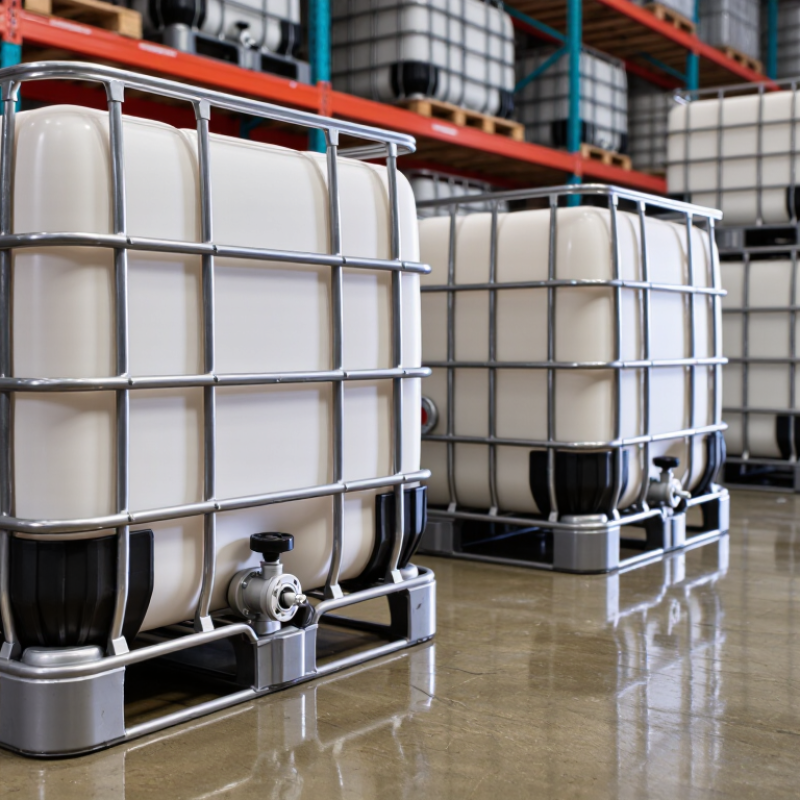
Intermediate Bulk Containers, or IBC totes, usually hold 500 to 1,250 liters. A rigid HDPE bottle sits inside a steel cage. Most models use a pallet-style base for forklift handling. This design reduces handling steps compared with smaller drums. It also improves warehouse space usage. UNCTAD’s Review of Maritime Transport 2024 reports that over 80% of global merchandise trade moves by sea. That makes container dimensions, stackability, and valve protection practical supply-chain concerns.
For global buyers, supplier evaluation should go beyond price. Check resin specifications, wall thickness, outlet design, pallet material, and closure security. Ask for batch traceability and leak-test records. ISO 16103 provides guidance for recycled-plastics IBCs used in regulated transport. Food, chemical, and industrial applications may require different documentation. A tote can look clean and still fail after repeated handling. That uncomfortable detail matters. The World Bank’s Logistics Performance Index 2023 highlights reliability as a core logistics factor, not merely speed.
Tips:
Confirm internal dimensions before ordering. Match the outlet to your filling equipment. Request sample units and inspect corners, welds, caps, and cage alignment. Review cleaning procedures, because “reusable” does not mean infinitely reusable. Suppliers should explain inspection intervals and replacement criteria clearly. A perfect tote does not exist. The right tote fits the product, route, equipment, and risk level.
Key Criteria for Comparing IBC Tote Suppliers Worldwide
Top IBC Tote Suppliers for Global Buyers?
Comparing suppliers worldwide requires more than checking unit price. Start with tank capacity, pallet dimensions, valve design, liner material, and stacking performance. ISO 21898 offers useful guidance for flexible bulk containers, while ISO 16103 addresses recycled-plastics packaging for transporting dangerous goods. These standards help buyers ask precise technical questions.
Look for documented batch testing, traceable resin certificates, drop-test records, and consistent wall thickness. A supplier should explain how it controls leakage, ultraviolet exposure, and contamination during production. The World Bank’s Logistics Performance Index 2023 highlights customs, tracking, and delivery reliability as key supply-chain factors. UNCTAD’s Review of Maritime Transport 2023 also notes that roughly 80% of global merchandise trade by volume moves by sea. Therefore, export packing and port experience deserve careful review. A low quotation can still become expensive after delays, damaged pallets, or rejected loads. I may be too cautious here, but vague answers usually create measurable risk.
Tips: Request one sample before approving a container-scale order. Compare the sample’s valve fit, weld quality, labels, and pallet stability. Ask for a recent inspection report, not a generic certificate. Confirm minimum order quantity, spare-part support, production lead time, and claims handling in writing. Check whether the supplier can provide test data for your actual liquid density and filling temperature. Small details matter. Supplier websites are useful, but independent inspection is stronger evidence.
Top IBC Tote Suppliers for Global Buyers? - Key Criteria for Comparing IBC Tote Suppliers Worldwide
A supplier-neutral comparison framework based on measurable product, compliance, quality, logistics, and commercial criteria.
| Comparison Dimension | Practical Data to Request | Common Industry Reference or Benchmark | Verification Evidence | Why It Matters to Global Buyers |
|---|---|---|---|---|
| Nominal Capacity | Available internal volume and usable fill volume | Frequently offered sizes include approximately 1,000 L, 1,200 L, and 1,250 L. | Technical drawing, product datasheet, dimensional inspection report | Determines loading efficiency, storage requirements, and compatibility with filling equipment. |
| Container Construction | Inner bottle material, frame material, pallet type, valve, cap, and gasket materials | HDPE inner bottleSteel grid framePlastic or steel pallet | Bill of materials, material declarations, component specifications | Influences chemical resistance, mechanical strength, cleanliness, and recyclability. |
| Maximum Permitted Gross Mass | Maximum product weight plus tare weight | Must be stated for the specific model; the allowable value depends on design, pallet, and certification. | Rated-load test report, product label, technical specification | Prevents overloading and supports safe road, rail, sea, and warehouse handling. |
| UN Dangerous-Goods Approval | Applicable UN design type, packing group, permitted contents, and test status | Required only when the filled product is regulated as dangerous goods; approval must match the exact IBC design. | Current UN certificate, marking photograph, test report, renewal or validity records | Incorrect or expired approval can cause customs delays, rejected shipments, and safety risks. |
| Mechanical Performance | Stacking, lifting, drop, leakproofness, hydraulic-pressure, and vibration performance | Tests should be performed according to the applicable packaging and dangerous-goods requirements for the intended use. | Independent laboratory report or controlled internal test record | Reduces leakage, collapse, and handling damage during international transport. |
| Product Compatibility | Chemical resistance against acids, alkalis, solvents, oils, food ingredients, or other contents | Compatibility must be confirmed for the specific substance, concentration, temperature, and contact time. | Chemical compatibility chart, resin data, migration or immersion test results | Avoids swelling, embrittlement, contamination, and loss of container integrity. |
| Food and Pharmaceutical Suitability | Food-contact status, cleanliness controls, traceability, and documentation for regulated products | Supplier should provide declarations applicable to the destination market and intended contact conditions. | Declaration of compliance, hygiene procedures, batch records, cleaning validation where applicable | Supports regulatory review and protects product quality in sensitive applications. |
| Valve and Outlet Configuration | Outlet size, valve type, seal material, cap design, and connection standard | Common configurations vary by application; the connection must match the buyer’s filling and dispensing system. | Valve drawing, dimensional sample, seal-material specification | Prevents compatibility problems, uncontrolled discharge, and costly line modifications. |
| Cleanliness and Odor Control | New or reused status, washing process, odor limits, foreign-particle controls, and inspection method | New packaging should have documented production hygiene; reused packaging requires defined inspection and cleaning criteria. | Cleaning record, inspection checklist, photographic evidence, certificate of cleanliness | Important for food, cosmetics, chemicals, and any product sensitive to contamination or odor transfer. |
| Traceability | Lot number, manufacturing date, resin batch, inspection record, and shipment reference | Each production lot should be traceable from raw material through final shipment. | Batch label, certificate of analysis, production and inspection records | Enables recalls, root-cause analysis, and consistent quality control across multiple shipments. |
| Quality Management | Quality system, inspection frequency, nonconformance process, and corrective-action response | A documented quality-management system with controlled inspection records is preferable for recurring supply. | Quality certificate, audit report, control plan, corrective-action examples | Indicates whether the supplier can maintain consistent specifications at commercial volume. |
| Dimensional Consistency | Length, width, height, pallet footprint, valve position, and stacking clearance | Dimensions must be compatible with standard warehouse racks, pallets, containers, and filling lines. | Approved drawing, first-article inspection, dimensional measurement report | Improves warehouse density and reduces handling or automation interruptions. |
| Pallet and Stacking Design | Pallet material, four-way entry, base reinforcement, stacking limit, and empty-container nesting | The permitted stacking height must be confirmed for both filled and empty containers. | Load-rating data, stacking test report, handling instructions | Supports safe storage and better container utilization during export shipments. |
| Export Packaging | Dust protection, stretch wrapping, corner protection, labeling, and container loading method | Packaging should protect valves, caps, frames, and clean surfaces throughout the planned transport route. | Packing specification, loading photographs, shipment damage records | Reduces transit damage and helps maintain cleanliness before use. |
| Production Capacity | Monthly output, available production lines, peak-season capacity, and allocation for repeat orders | Capacity should be evaluated against forecast demand rather than a general maximum claim. | Capacity statement, production schedule, verified factory audit | Helps prevent shortages and supports stable supply for multi-country programs. |
| Minimum Order Quantity | MOQ for standard products, custom components, printing, color, and tooling | MOQ is quote-specific and normally increases for customized valves, labels, colors, or molds. | Written quotation, tooling schedule, customization terms | Directly affects inventory exposure, launch cost, and suitability for trial orders. |
| Lead Time | Sample lead time, standard production lead time, custom-order lead time, and shipping lead time | Lead time should be stated separately for production and international transportation. | Confirmed order timeline, production milestones, shipping schedule | Allows buyers to calculate realistic replenishment cycles and safety stock. |
| Global Shipping Capability | Export experience, supported Incoterms, port options, container-loading quantity, and export documents | Supplier should clearly define responsibility for export clearance, freight, insurance, and destination delivery. | Commercial invoice sample, packing list, export references, Incoterms quotation | Reduces landed-cost uncertainty and documentation problems at borders. |
| Landed-Cost Transparency | Unit price, tooling, packaging, inland freight, ocean or air freight, duties, taxes, and destination charges | Compare total landed cost rather than unit price alone. | Itemized quotation and destination-specific cost worksheet | Reveals the true economic difference between suppliers and shipping options. |
| Sample and Approval Process | Sample quantity, sample charge, testing protocol, approval criteria, and change-control procedure | A production-equivalent sample should be tested with the buyer’s actual product or a suitable substitute. | Approved sample record, test protocol, signed specification sheet | Prevents disputes caused by unclear specifications or unapproved substitutions. |
| After-Sales Support | Response time, complaint process, replacement policy, technical support, and corrective-action timing | Service commitments should be written into the quotation or supply agreement. | Service-level terms, complaint log, corrective-action report | Provides a defined remedy when leakage, damage, or nonconformity occurs. |
| Sustainability Information | Recycled content, recyclability, material reduction, return programs, and environmental reporting | Claims should identify the percentage, calculation method, and applicable product scope. | Material declaration, recycled-content certificate, lifecycle or sustainability data | Supports corporate sustainability reporting and customer packaging requirements. |
Buyer-use note: Supplier claims should be compared only after confirming the same capacity, configuration, regulatory status, delivery term, quantity, and destination. Benchmarks shown above are general purchasing references, not a ranking of individual suppliers.
Leading Supplier Categories and Regional Sourcing Options
Top IBC Tote Suppliers for Global Buyers?
Leading Supplier Categories and Regional Sourcing Options
Global buyers usually compare three supplier categories: original manufacturers, industrial distributors, and certified reconditioners. Manufacturers offer consistent specifications, fresh components, and stronger customization support. Distributors can provide faster delivery from regional warehouses. Reconditioners may reduce purchasing costs, but buyers must verify cleaning records, valve condition, and inspection dates. No category fits every application.
Regional sourcing changes the buying experience. North American suppliers often support large industrial orders and domestic transport networks. European suppliers commonly provide detailed technical files and structured quality procedures. Asian manufacturing hubs may offer competitive production costs and flexible order volumes. Middle Eastern and African distributors can shorten delivery routes for nearby markets, although warehouse depth varies widely. These patterns help, but they are not guarantees.
Experienced procurement teams request more than a price sheet. They review container dimensions, pallet materials, discharge fittings, filling limits, and stacking performance. They also confirm traceability for each production batch.
A video factory audit can reveal storage conditions, damaged cages, or inconsistent labeling. Ask for sample units before committing to a full container. It may feel slower. It often prevents expensive surprises.
Regional assumptions can fail. A low factory price may lose its advantage after freight, duties, and inland handling. Reconditioned units may look clean but still need careful documentation. Buyers should compare total delivered cost, lead time, technical support, and replacement availability. Clear records build trust. Silent gaps deserve questions.
Quality, Compliance, and Certification Requirements
Global IBC tote buyers should examine quality beyond appearance. Over 80% of global merchandise trade by volume moves by sea, according to UNCTAD’s Review of Maritime Transport 2023. Long transit exposes totes to vibration, heat, stacking pressure, and handling damage. A reliable supplier should provide batch traceability, resin specifications, wall-thickness records, and documented drop, leak, lifting, and stacking tests.
Certification must match the cargo and destination. For regulated transport, buyers should verify the correct UN marking, packaging group, design type, and test certificate. ISO 16103 addresses recycled plastics for dangerous-goods transport packaging, while ISO 21898 applies mainly to flexible intermediate bulk containers. These standards are not interchangeable. That detail is often missed. Ask for recent laboratory reports, not only a certificate image. Confirm whether testing covered the exact valve, liner, pallet, and closure configuration supplied.
Sustainability also deserves careful review. The OECD’s Global Plastics Outlook reported 353 million tonnes of plastic waste generated in 2019, with only 9% recycled. Reusable IBCs can reduce packaging turnover, but recycled content may affect strength, chemical resistance, or certification status. Suppliers should disclose recycled-content percentages, cleaning validation, and permitted reuse cycles. Food-contact applications need separate migration documentation and traceable production controls. A polished audit file is helpful, but it can still hide weak process control. Independent inspections and random sample testing remain sensible for large international orders.
Ordering, Shipping, and Supplier Evaluation Considerations
Top IBC Tote Suppliers for Global Buyers?
Ordering an intermediate bulk container requires more than comparing unit prices. Confirm the capacity, pallet material, outlet size, liner design, and stacking limits before requesting quotations. Ask for a physical sample or detailed photographs. Small valve differences can delay filling operations. They matter.
A reliable supplier should provide production specifications, inspection records, material declarations, and traceability documents. For reusable totes, ask how cleaning is verified and recorded. For new units, confirm the manufacturing date and storage conditions. Request a written quotation showing packaging, minimum order quantity, lead time, and payment terms. Vague answers create expensive surprises.
Shipping decisions deserve equal attention. Compare freight quotes using the same Incoterm, container plan, and delivery port. Check whether the supplier can protect valves and cages during loading. A damaged corner may look minor but can stop acceptance at arrival. Confirm customs paperwork before dispatch, including commercial invoices, packing lists, and required transport documentation.
I have seen buyers focus on the cheapest freight option and overlook unloading equipment. That was a costly oversight. Supplier evaluation should include response speed, corrective-action records, export experience, and references from comparable markets. No supplier is perfect. A transparent response to a mistake is often more valuable than polished promises.
FAQS
Buyers commonly compare manufacturers, industrial distributors, and certified reconditioners. Manufacturers offer consistent specifications and customization support. Distributors may ship faster from regional warehouses. Reconditioners can reduce costs, but cleaning records require careful review.
North American suppliers often support large orders and domestic transport networks. European suppliers commonly provide detailed technical files. Asian production hubs may offer lower costs and flexible volumes. Regional patterns help, but they are not guarantees.
Confirm capacity, pallet material, outlet size, liner design, and stacking limits. Check filling limits too. Small valve differences can delay operations. They matter.
Samples reveal physical details that photographs may miss. A video audit can show damaged cages, poor storage, or inconsistent labels. It may feel slower. It can prevent expensive surprises.
Request production specifications, inspection records, material declarations, and batch traceability documents. For reusable units, verify cleaning records. For new units, confirm manufacturing dates and storage conditions.
Compare freight quotes using the same Incoterm, container plan, and delivery port. Include duties, inland handling, and unloading equipment. The cheapest freight option may become expensive later. I have seen that happen.
Review cleaning verification, valve condition, inspection dates, and replacement availability. A clean-looking unit may still lack proper documentation. Appearance is not enough.
Check response speed, export experience, corrective-action records, and comparable-market references. Ask for written payment terms, minimum order quantities, and lead times. No supplier is perfect. Transparent mistakes may reveal more than polished promises.
Conclusion
IBC Totes are widely used for storing and transporting liquids, powders, and other bulk materials across global supply chains. Their standardized dimensions, reusable design, and efficient handling make them suitable for industries such as food processing, agriculture, chemicals, and manufacturing. When comparing suppliers worldwide, buyers should assess container capacity, construction materials, durability, customization options, production consistency, pricing, lead times, and after-sales support. Regional sourcing may offer advantages in cost, logistics, communication, or production flexibility, so the best supplier category depends on the buyer’s destination, application, and order volume.
Quality and compliance are essential when selecting IBC Tote suppliers. Buyers should request clear information about material safety, testing procedures, traceability, cleaning standards, and applicable certifications for the intended contents and transport conditions. Ordering decisions should also consider minimum quantities, sample approval, packaging, shipping terms, customs documentation, inspection arrangements, and contingency planning. A structured supplier evaluation process, supported by documentation and performance reviews, can help global buyers secure reliable IBC Totes while reducing quality, delivery, and supply-chain risks.

Blog Tags: