
10 IBC Tank Buying Tips for Global Buyers
Buying Ibc Tanks for international operations involves more than comparing prices. A unit may look sturdy in a catalog, yet arrive with different fittings, dimensions, or documentation than your site requires. Small mismatches can delay filling, handling, or delivery. Details matter.
Start with the product and how it will be moved. A liquid shipment, for example, may need a compatible inner bottle, a suitable pallet, and a discharge valve your operators already know. Confirm capacity, tare weight, stacking limits, and forklift access against real warehouse conditions. A narrow loading bay can change the practical choice. So can a return route that does not exist.
The ten buying tips in this guide help global buyers ask clearer questions before placing an order. They cover material compatibility, new or reconditioned units, closures, testing records, supplier checks, transport planning, and after-sales support. Specifications and requirements can vary by cargo, destination, and intended use, so verify them with qualified technical staff and relevant authorities. Do not rely on a product photo alone. Request drawings, written specifications, and current inspection documents, then compare them with your own operating needs.
Price still matters. But the cheapest offer may leave out a fitting, a protective feature, or useful support. Some details are easy to overlook until the tank is on site. A careful checklist cannot remove every uncertainty; it can make the remaining questions visible before they become costly surprises.
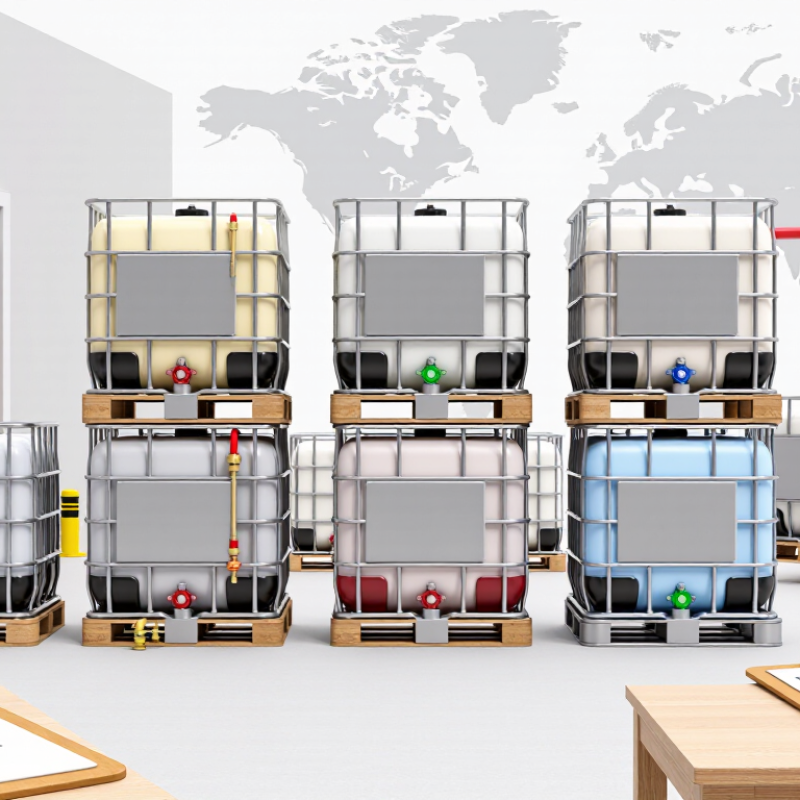
Understanding IBC Tank Types and Their Applications
Intermediate bulk containers come in several practical forms. Composite IBCs use a rigid plastic inner bottle inside a metal cage, often with a pallet base. They suit liquid ingredients, cleaning solutions, and other compatible products moved by forklift. Stainless-steel IBCs handle repeated use, temperature changes, or demanding wash cycles. Foldable plastic models save warehouse space when empty. They are not interchangeable. Check chemical compatibility, filling temperature, outlet design, and cleaning access before choosing.
Dry goods need a different setup. A rigid or flexible IBC with a suitable liner can carry powders and granules, while a liquid container may leave residue in corners or valves. For global shipping, confirm stackability and handling details with the carrier; a small base mismatch can slow loading. Grand View Research’s industry report forecasts continued growth in the global IBC market through 2030, reflecting broad use across chemicals, food, and pharmaceuticals. Growth alone does not prove a container fits your operation. A less obvious point: returnable units can reduce packaging waste, but only when collection and inspection are reliable. Missed returns happen. Reuse plans need real tracking, not optimism.
| No. | Buying Tip | IBC Type or Feature | Typical Applications | What to Check Before Buying |
|---|---|---|---|---|
| 1 | Match the tank material to the contents. | Composite IBCs generally combine a plastic inner bottle with a protective outer cage; stainless-steel IBCs use a metal vessel. | Composite units are widely used for compatible liquids and some solids. Stainless-steel units can suit applications requiring a reusable, cleanable metal vessel. | Confirm chemical compatibility with the complete wetted system, including the bottle or vessel, gasket, valve, and fittings. Check with the chemical supplier when compatibility is uncertain. |
| 2 | Choose capacity and dimensions for your handling system. | Common nominal composite IBC capacities include approximately 1,000 litres; other capacities are available. Footprints and heights vary by design. | Warehousing, production supply, and bulk liquid distribution. | Compare the unit’s actual dimensions and gross loaded weight with pallet spaces, doorways, racks, lifts, and vehicle payload limits. Do not rely on nominal capacity alone. |
| 3 | Verify whether dangerous-goods approval is required. | UN-marked IBC designs may be approved for specified dangerous-goods transport, subject to their marking, design type, and conditions of use. | Transport of regulated hazardous liquids or solids when the applicable rules permit the selected IBC. | Check the current transport regulations for every route and mode. Match the UN marking and packaging instruction to the substance, packing group, filling, and transport conditions. |
| 4 | Specify food-contact suitability for food and beverage use. | Food-contact IBCs are made and documented for the intended food-contact conditions; suitability is not established by appearance alone. | Ingredients, edible oils, syrups, and other food or beverage materials where the packaging is suitable. | Request applicable food-contact declarations and confirm suitability for the product, temperature, cleaning method, and intended market. Review seals, valves, and cleanliness requirements too. |
| 5 | Consider reconditioned units only where appropriate. | Reconditioned IBCs have been inspected and may have components replaced or the inner bottle renewed; the exact work varies. | Some industrial liquids where reuse is permitted and the previous contents are compatible with the new use. | Request the reconditioning and inspection history, previous-content information, current markings, and evidence that the unit is suitable for the intended product and transport. |
| 6 | Check valve, outlet, and filling connections. | IBC designs may differ in outlet size, valve type, thread, cap, gasket, and top opening. | Production lines, pumps, hoses, dispensing stations, and filling operations. | Confirm connection dimensions and materials against existing equipment. Check that the outlet can be accessed safely and that compatible closures are available. |
| 7 | Review temperature and environmental limits. | Plastic and metal IBCs have different operating limits; allowable conditions depend on the design and contents. | Indoor storage, outdoor distribution, temperature-controlled operations, and process supply. | Confirm the manufacturer’s limits for filling, storage, transport, and cleaning temperatures. Consider sunlight, weather exposure, and any required protective measures. |
| 8 | Plan safe stacking and warehouse storage. | Stacking capability is specific to the IBC design and may depend on whether the unit is filled, empty, or in transit. | Warehouses and freight operations where vertical storage is planned. | Check the rated stacking load, floor and rack capacity, unit condition, and local handling procedures. Never assume that all IBCs can be stacked to the same height. |
| 9 | Assess cleaning, reuse, and end-of-life requirements. | Reusable metal and plastic IBCs require cleaning and inspection procedures suited to their construction and previous contents. | Closed-loop supply chains and operations that refill or return containers. | Estimate cleaning access, residue handling, return logistics, repair options, and local recycling or disposal requirements. Confirm that residues can be managed safely. |
| 10 | Check documentation and import requirements for each destination. | Documentation may include product specifications, material details, inspection records, and applicable transport or conformity documents. | Cross-border procurement and international shipment. | Confirm customs, labeling, language, and regulatory requirements for the destination. Agree on inspection criteria, spare parts, lead time, and delivery terms before ordering. |
FAQS
Match the tank with the liquid, transport route, destination rules, and storage conditions. Check density, temperature, capacity, material, valve design, and test date. A certificate alone is not enough.
Ask which road, rail, sea, or storage requirements apply. Request inspection records and pressure-test results. Verify documents with an accredited inspection body when possible. Copied paperwork creates risk.
Inspect the cage, frame, pallet, lifting points, welds, seals, and valve. Look for cracks, corrosion, distortion, and leakage. A small leak is still a serious warning.
Measure doors, forklift paths, ventilation, stacking height, and unloading space. Confirm the floor can support the gross weight. An approved tank may still fail your site conditions.
Request a clear factory address, recent inspection reports, material specifications, batch records, and production photographs. Ask whether repeat orders receive consistent quality. Websites can look impressive. Evidence matters more.
It should state capacity, outlet type, cage design, pallet type, quantity, packaging, transport, insurance, and customs preparation. Compare total delivered cost, not only unit price. Cheap can become costly.
No. Inspect samples by hand, then request batch records and leakage testing for production units. Independent inspection adds protection. I have trusted samples too quickly before. That was not wise.
Confirm packed height, gross weight, stacking limits, loading plans, delivery terms, and transport documents. Protect valves and caps from impact and moisture. Ask about spare gaskets, replacement parts, response times, and claims. Keep inspection photos and identification references. Records make disputes easier.
Conclusion
Buying Ibc Tanks for international operations requires more than comparing prices. Start by identifying the appropriate tank type for the intended application, then confirm the required capacity, construction material, and compatibility with the stored product. These details help prevent leakage, contamination, and performance problems during handling or transport. Buyers should also review safety features, testing records, labeling, and applicable regulatory requirements to ensure the tanks are suitable for their destination and industry.
Supplier evaluation is equally important. Consider manufacturing consistency, product quality, communication, lead times, and the clarity of quotations. Before shipment, establish an inspection plan covering dimensions, valves, closures, cleanliness, and packaging condition. It is also essential to clarify shipping arrangements, documentation, warranty terms, replacement procedures, and after-sales support. A careful purchasing process allows global buyers to select reliable Ibc Tanks that meet operational needs, reduce avoidable risks, and deliver better long-term value.
