
What Are the 2026 Top IBC Top Caps for Global Buyers?

Time:2026-10-26 Author:Ethan
0%

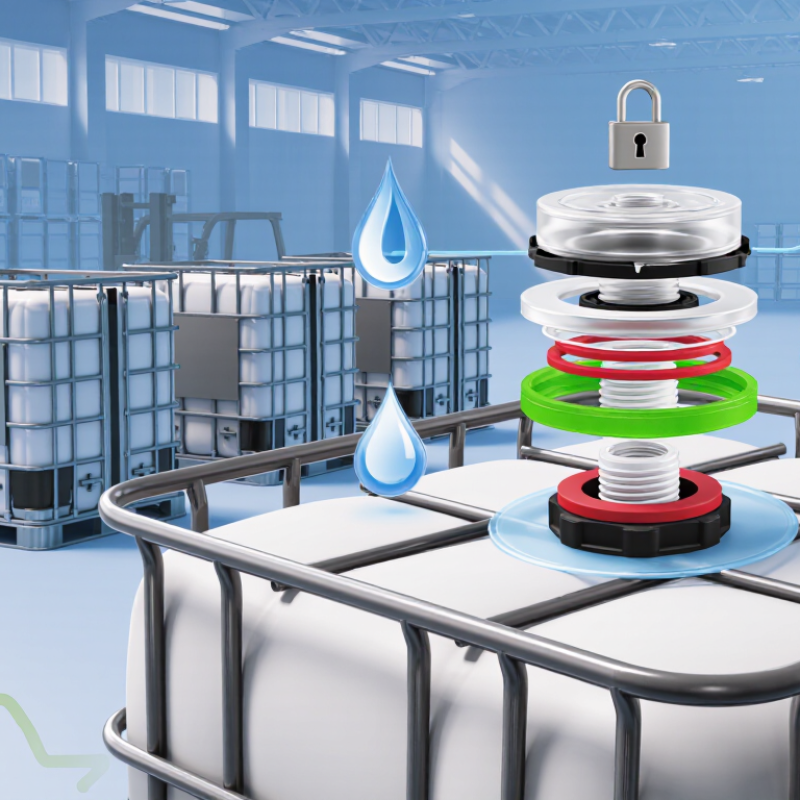
In 2026, Ibc Top Caps are becoming a critical buying decision for global industrial packaging users. The right cap must control leakage, protect contents, and support efficient filling. It must also match the container neck, gasket material, thread design, and discharge system.

Market evidence supports this careful approach. Smithers’ global packaging outlook identifies sustainability, reusable transport packaging, and resource efficiency as major industry priorities through 2028. Grand View Research also reports continuing growth in industrial bulk packaging, driven by chemicals, food ingredients, pharmaceuticals, and agricultural products. These trends increase demand for stronger and more adaptable closures. However, market data can hide important differences between regions and applications.

Packaging engineer Walter Soroka wrote, “Packaging is the interface between the product and the environment.” That principle applies directly to Ibc Top Caps. A cap is not merely a plastic lid. It is the first barrier against dust, moisture, pressure changes, and handling damage. In practice, a 150-millimeter cap with the wrong gasket can fail faster than a lower-cost cap with better chemical compatibility.

Buyers should compare HDPE grades, liner performance, venting options, tamper evidence, and documented torque requirements. UN Recommendations on the Transport of Dangerous Goods and ISO packaging guidance provide useful compliance references. Still, certification alone does not guarantee field performance. Supplier testing, batch records, and application-specific trials matter.

There is no single “best” cap. That assumption needs challenging. The strongest 2026 choice will balance safety, total cost, recyclability, and dependable supply across markets.
What Are the 2026 Top IBC Top Caps for Global Buyers?

What Are IBC Top Caps and Why Do They Matter?

IBC top caps are the protective closures fitted to the upper openings of intermediate bulk containers. They control access, reduce dust entry, and help prevent leakage during storage or transport. A cap is not merely a plastic lid. Its thread, gasket, venting design, and material can affect the container’s entire performance.

In 2026, global buyers should examine cap dimensions, resin quality, and sealing consistency before comparing prices. A correctly matched gasket can resist moisture, temperature changes, and repeated handling. For food, water, or industrial liquids, buyers should request material documentation and production inspection records. Fit matters. Even a strong container can fail when the cap thread is poorly molded. I have seen minor deformation create slow seepage around the seal, especially after long transport vibration.

Top caps may include tamper-evident rings, pressure-relief features, or different opening sizes. The right choice depends on filling equipment, liquid viscosity, cleaning routines, and warehouse conditions. Buyers should test sample caps on their own IBCs rather than trust photographs or general descriptions. Small flaws spread. A gasket that looks acceptable may harden in cold storage or lose compression under heat. Global procurement also requires clear packaging, stable supply, and traceable quality checks. Some specifications remain unclear across suppliers, so written drawings and sample approval are safer than assumptions.

Which Materials and Designs Define the 2026 Top Caps?

For global buyers, the 2026 top cap is defined by material discipline, not appearance. High-density polyethylene remains common because it resists impact, moisture, and many industrial liquids. Polypropylene is also gaining attention for threaded components and improved dimensional stability. PlasticsEurope reported 413.8 million tonnes of global plastic production in 2023. That volume increases pressure to design caps with fewer mixed materials. Simpler construction can support sorting and recycling.

Gasket selection is equally important. EPDM suits many water-based products, while other applications may require chemically resistant elastomers. A cap can look secure yet fail through seal compression or thread distortion. Fit matters. The OECD’s Global Plastics Outlook projects plastic waste could nearly triple by 2060 without stronger circularity measures. This makes replaceable gaskets, recyclable polymers, and controlled material labeling more valuable. Tamper-evident rings, pressure-relief options, and molded grip surfaces also define practical 2026 designs.

Recent packaging assessments increasingly connect performance with traceability and reuse. Buyers should verify torque ranges, temperature limits, drop performance, and compatibility testing. ISO 16103 provides guidance for recycled plastics used in dangerous-goods packaging, although compliance alone does not guarantee every cap will perform well. No single design wins every application. That assumption is convenient, but incomplete. Real selection still depends on filling equipment, transport conditions, closure size, and the liquid inside.

How Do Global Buyers Compare Size, Fit, and Compatibility?

For global buyers, the best 2026 IBC top cap is not simply the largest or most popular. Comparison begins with the container neck. Measure the outside diameter, opening, thread pitch, and cap depth. A 150 mm cap will not replace a 163 mm neck, even when both look similar. Small differences matter. In warehouse fit checks, a cap may turn smoothly yet fail to compress the gasket. That hidden gap can cause leakage during transport.

Size is only one part of fit. Buyers should compare thread standards, sealing surfaces, gasket thickness, and vent design. Some caps use coarse threads; others use finer profiles. BSP and NPS threads should not be treated as interchangeable.

Ask for a technical drawing, not only a product photo. A sample cap, caliper, and spare gasket can reveal more than a sales description. Test the closure by hand first. Then inspect sealing pressure around the full circle.

Compatibility also depends on service conditions. Check whether the cap material suits water, chemicals, oils, or temperature changes. Confirm the gasket material with the stored liquid and cleaning method. Regional supply chains can introduce confusing specifications. Translation errors happen. Specifications can drift. My buying checklist is useful, but it is not perfect. Old containers may have worn threads or distorted necks. A “universal” cap can create false confidence. Request batch identification, inspection records, and replacement-part details before ordering. If the cap fits only after force, stop and investigate. That pause may prevent a costly return, though it can slow purchasing decisions.

What Safety and Compliance Standards Should Buyers Check?

For global buyers, an IBC top cap is a safety component, not a simple plastic lid. Check the complete closure system, including threads, gasket, vent, seal, and torque requirements. A cap may fit physically but still fail chemical compatibility or pressure testing. Materials should resist the filled product, temperature changes, ultraviolet exposure, and repeated transport handling. A clean cap is not proof of compliance.

For regulated cargo, verify the IBC’s UN performance marking and test documentation under the UN Recommendations on the Transport of Dangerous Goods. The closure must match the tested packaging design. Buyers should also compare requirements under ADR, IMDG Code, or applicable national transport rules. The 2024 UNCTAD Review of Maritime Transport states that more than 80% of global merchandise trade by volume moves by sea. That figure makes leak prevention during long voyages especially important. Inspectors should check gasket compression, visible cracks, vent blockage, and tamper evidence before loading.

Procurement teams should request material declarations, batch traceability, dimensional drawings, and recent pressure or drop-test records. ISO 16103 provides guidance for recycled plastics used in dangerous-goods packaging, but recycled content still requires documented performance evidence. Do not rely on a supplier’s phrase, “industry standard.” It is too vague. In practice, cap selection is sometimes treated as a small purchasing detail, and that is where mistakes begin. Even experienced teams can overlook torque variation between operators, tools, and cold-weather conditions. A written receiving checklist remains necessary.

What Are the 2026 Top IBC Top Caps for Global Buyers?

Common IBC top-cap formats are specified by nominal neck-opening size. The chart shows widely encountered reference sizes in international industrial packaging; the exact cap must match the container neck finish, thread profile, gasket, and closure design.

Safety and Compliance Standards Buyers Should Check

  • Confirm the UN packaging approval, such as the applicable 31HA1 IBC designation, for the intended dangerous-goods service.
  • Check ADR requirements for road transport in applicable European and neighboring markets.
  • Check the current IMDG Code requirements for ocean transport.
  • For shipments involving the United States, verify the applicable U.S. Department of Transportation requirements under 49 CFR.
  • Review ISO 16103 guidance where performance-tested recycled plastics or recycled-content IBC components are involved.
  • Verify gasket chemical compatibility, pressure or venting requirements, tamper evidence, leak resistance, and traceability before purchase.

Nominal inch-to-millimetre conversions: 2 in = 50.8 mm, 3 in = 76.2 mm, and 6 in = 152.4 mm. Actual dimensions and regulatory applicability vary by container design, contents, transport mode, and destination.

How Can Businesses Select Reliable IBC Top Cap Suppliers?

What Are the 2026 Top IBC Top Caps for Global Buyers?

For 2026, reliable IBC top caps should match container size, thread design, gasket material, and filling equipment. Common options include wide openings for faster filling and smaller threaded ports for controlled pouring. A cap may look identical to another cap, yet its seal can differ under heat, pressure, or repeated handling. Buyers should request dimensional drawings, material declarations, and leak-test records. Clear documentation matters more than attractive product photos.

How Can Businesses Select Reliable IBC Top Cap Suppliers?

Start by checking the supplier’s manufacturing experience and quality controls. Ask whether each production batch receives thread, torque, and sealing inspections. Request samples before placing a large order. Test them on your actual IBCs, not only on a sample neck. The gasket should sit evenly, without twisting or visible gaps. A polished catalog is not proof of reliability. That assumption can become expensive. Suppliers should also explain traceability, packaging protection, minimum order quantities, and replacement procedures. An honest supplier will admit compatibility limits instead of promising universal performance.

Tips: Confirm cap dimensions in writing. Compare material grades with your liquid requirements. Review recent test reports. Check cartons for dust, deformation, and missing seals. Keep a small reserve for urgent production needs. Do not judge quality by price alone. Supplier selection is rarely perfect, and early testing may reveal assumptions that need revision.

What Are the 2026 Top IBC Top Caps for Global Buyers? - How Can Businesses Select Reliable IBC Top Cap Suppliers?

The following comparison covers commonly specified IBC top-cap configurations and practical supplier-selection criteria. Dimensions, thread designations and sealing materials should always be verified against the IBC bottle, neck drawing, transport regulations and end-use chemicals.

IBC Top-Cap Configuration Typical Opening / Thread Common Material Seal or Gasket Options Typical Use Key Performance Characteristics Recommended Buyer Checks
Standard solid screw cap Approximately 150 mm opening; thread designation may include S60 × 6 or another manufacturer-specific profile Injection-moulded HDPE or PP PE foam, LDPE, EPDM or other application-specific gasket General storage and transport of non-volatile liquids Simple construction, low maintenance and good protection against dust, moisture and leakage when correctly matched Confirm thread pitch, neck outside diameter, gasket compression and torque requirements; do not rely on nominal diameter alone
Large-opening screw cap Approximately 225–250 mm opening; often used for easier filling and cleaning HDPE or PP PE foam, EPDM, FKM or chemical-resistant elastomer Viscous liquids, powders, food ingredients and applications requiring manual access Improves filling access and internal inspection; larger sealing circumference requires accurate moulding and gasket fit Check cap-to-neck compatibility, internal clearance, gasket position and whether the complete package has required transport approval
Vented screw cap Commonly fitted to 150 mm or 225 mm closures; vent aperture and valve design vary HDPE or PP body with polymeric or elastomeric vent component EPDM, FKM, PTFE-based or other chemically compatible seal Liquids that may generate pressure or vacuum during temperature changes, filling or discharge Helps equalize pressure while limiting liquid escape; vent performance depends on valve design and orientation Request air-flow, liquid-tightness and pressure/vacuum test data; verify compatibility with the product and dangerous-goods requirements
Tamper-evident screw cap Usually available for standard 150 mm or large-opening closures HDPE or PP with an integral breakaway ring or tear strip PE foam, EPDM or application-specific gasket Food, chemical, agricultural and industrial liquids requiring visible opening evidence Provides a visual indication that the closure has been opened; does not by itself prove product security Check ring break force, bridge consistency, cap reclosure performance and whether the design remains intact during vibration and handling
Child-resistant or safety-oriented cap Size and thread depend on the IBC neck design; commonly supplied as a special configuration HDPE or PP, sometimes with a multi-part locking feature EPDM, FKM or PE-based gasket selected for the contents Hazardous or regulated products where accidental access must be reduced Requires a specific opening sequence and can add protection against unintended access Confirm the applicable local safety standard, opening-force limits, user instructions and compatibility with filling equipment
Cam-lock or quick-access top closure Flanged or quick-connect design; dimensions are application-specific rather than universal PP, HDPE or engineering polymer with a separate locking component EPDM, FKM, silicone or other compatible elastomer Frequent filling, sampling, blending or process connections Fast operation and reduced thread wear; correct locking and gasket compression are essential for leak prevention Verify connection geometry, lock position, pressure rating, hose compatibility and resistance to repeated opening cycles
UN-performance-compatible closure Any approved neck and cap combination tested as a complete packaging assembly HDPE or PP with approved seal components Specified in the tested packaging design; material must suit the filled substance Transport of regulated dangerous goods where UN performance packaging is required May be evaluated through drop, leakproofness, hydrostatic pressure, stacking and vibration tests, depending on the packaging type Request the complete packaging certificate, approved closure instructions, test configuration and required tightening torque; a cap alone is not automatically UN-approved
Food-contact-oriented top cap Standard or large-opening configuration matched to the food-grade IBC bottle Food-contact-grade HDPE or PP Food-contact-grade PE foam, EPDM, silicone or other legally suitable material Water, syrups, edible oils, ingredients and other food-related liquids Designed to limit contamination and odour transfer when produced, stored and handled correctly Request the applicable food-contact declaration, migration documentation, lot traceability and cleaning validation information
Chemical-resistant top cap Standard or large-opening thread matched to the container neck HDPE or PP; material selection depends on chemical exposure FKM, EPDM, PTFE-based or other chemically compatible seal Acids, alkalis, solvents, additives and industrial process liquids Resistance depends on concentration, temperature, exposure time and mechanical stress; no single seal suits every chemical Obtain a chemical-compatibility assessment, temperature range, permeation information and batch-level material traceability
Reusable-service top cap Thread and opening selected for repeated filling and cleaning cycles Impact-resistant HDPE or PP Replaceable EPDM, FKM, silicone or PE-based gasket Closed-loop logistics, returnable IBCs and repeated industrial use Should maintain sealing performance after cleaning, handling and repeated installation when used within its design limits Check gasket replacement availability, service-life testing, cleaning-temperature limits, torque consistency and inspection procedures
Supplier selection reminder: A reliable supplier should provide dimensional drawings, resin and gasket specifications, sample approval, leak and torque test records, production traceability, quality-control procedures, packaging certificates where applicable, and documented change-control practices. Final approval should be based on the complete cap-and-IBC assembly rather than the cap specification alone.

FAQS

Which materials are common for top caps in 2026?

High-density polyethylene remains common because it resists impact, moisture, and many industrial liquids. Polypropylene supports threaded parts and dimensional stability. Simpler material structures may improve sorting and recycling.

How should buyers choose a gasket material?

Match the gasket with the stored liquid, cleaning method, and temperature range. EPDM may suit many water-based products. Chemical services may require a more resistant elastomer. Fit matters.

What measurements should buyers check before ordering?

Measure neck diameter, opening size, thread pitch, and cap depth. A 150 mm cap cannot replace a 163 mm neck. Small differences matter.

Can similar-looking threads be used interchangeably?

No. Thread profiles may differ in pitch, depth, and sealing behavior. Request a technical drawing. Do not guess.

How can buyers test whether a cap seals correctly?

Install a sample by hand first. Check gasket compression around the full circle. Inspect for uneven gaps, thread distortion, or excessive force. A smooth turn proves little.

Which design features may improve practical performance?

Tamper-evident rings can show opening. Molded grips may improve handling. Pressure-relief options can support suitable applications. These features still require application-specific testing.

What performance information should suppliers provide?

Ask for torque ranges, temperature limits, drop results, compatibility tests, and inspection records. Request batch identification and replacement-gasket details. Paperwork helps, but it is not flawless.

Why can a universal cap create problems?

Older containers may have worn threads or distorted necks. Regional specifications can also vary. If installation needs force, stop and investigate. That pause may prevent a costly return.

Conclusion

Ibc Top Caps are essential components of intermediate bulk containers, helping protect stored liquids and powders from contamination, leakage, moisture, and unauthorized access. In 2026, global buyers are increasingly evaluating top caps by material quality, thread design, sealing performance, ventilation options, and resistance to chemicals, temperature changes, and repeated handling. The right cap should match the container’s neck size, closure system, gasket type, and intended application to ensure a secure and practical fit.

When comparing suppliers, businesses should review product dimensions, compatibility data, manufacturing consistency, and quality-control procedures. Safety and compliance are also important, so buyers should request documentation related to material suitability, food-contact use where applicable, transport requirements, and relevant regional standards. Reliable suppliers should provide clear technical specifications, samples, traceability, responsive communication, and stable production capacity. By assessing performance, compatibility, documentation, and supplier reliability together, companies can select Ibc Top Caps that support safer storage, efficient logistics, and long-term operational value.

Ethan

Ethan

Ethan is a seasoned marketing professional with a deep expertise in our company's innovative product line. With a passion for sharing knowledge and insights, he takes the lead in regularly updating our corporate blog, where he explores industry trends, product features, and effective marketing......